
Minister: Prisons and Detention Centres Can Help Control Inflation Through Food Self-Sufficiency
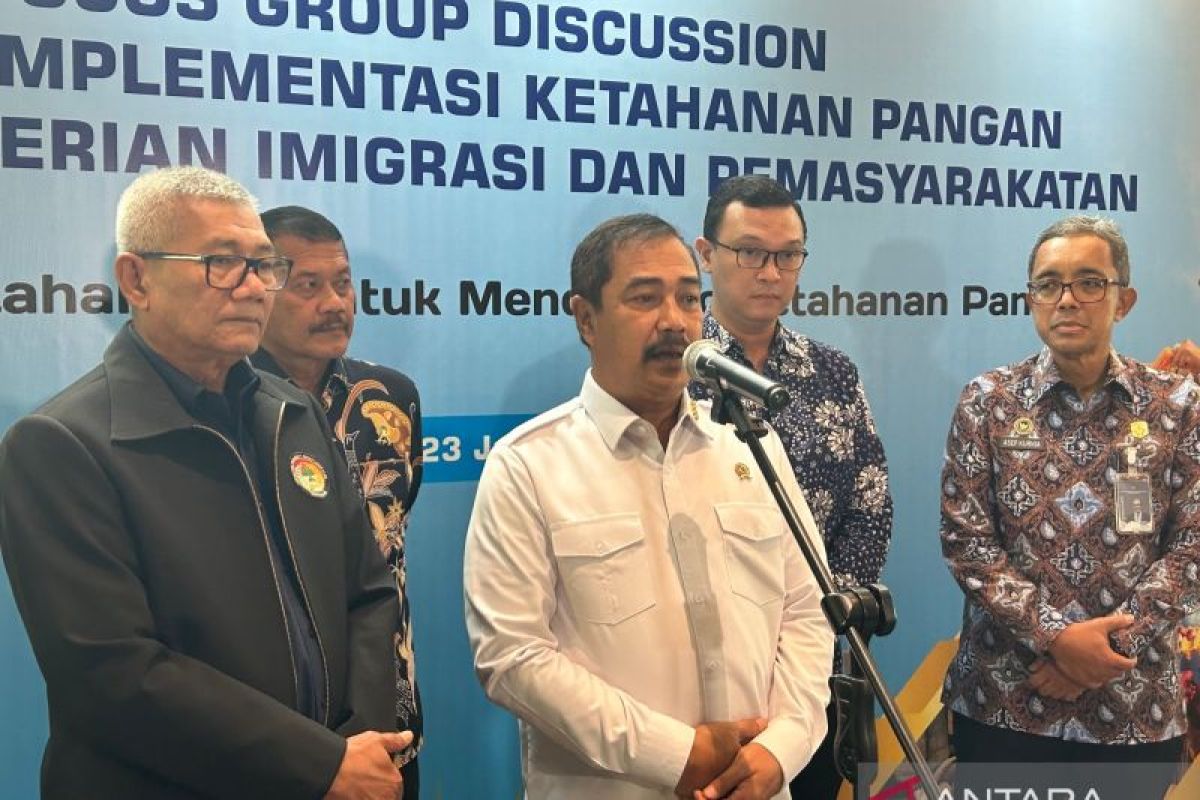
Minister of Immigration and Corrections Agus Andrianto has stated that correctional institutions, such as prisons, detention centres, and immigration offices in various regions, can contribute to controlling inflation. Through the food self-sufficiency programme, the Ministry of Immigration and Corrections can optimise land use through agricultural, fisheries, and livestock activities to provide broader rehabilitation capacity by involving more inmates in the programme. “On the other hand, the food self-sufficiency activities carried out by inmates are expected to contribute to keeping inflation in check,” Agus said during a focus group discussion titled “Utilisation of Idle Land to Support Food Security” at the Ministry of Immigration and Corrections office in Jakarta on Tuesday. Agus explained that when demand for staple goods increases while supply is insufficient, it triggers price rises. Rising staple food prices cause food inflation, which impacts people’s purchasing power. One tangible contribution of the Ministry’s food self-sufficiency programme is poultry farming implemented in several prisons and detention centres, which has been able to produce eggs to meet the needs of inmates and the surrounding community. “The production from poultry farms in prisons and detention centres can supply not only the facilities’ own needs but can also be marketed for public consumption,” he said. According to Agus, the programme was motivated by repeated findings from the Supreme Audit Agency regarding the large amount of idle land owned by ministries and agencies that was not being utilised. Meanwhile, the Ministry has an obligation to provide rehabilitation for inmates, whose rehabilitation capacity has so far been limited. “Through the food self-sufficiency programme, we can optimise land use through agricultural, fisheries, and livestock activities,” he said. On the occasion, the Minister also addressed questions from various parties regarding the Ministry’s interest in food security, given that its primary duties and functions are in immigration and corrections. According to him, the answer is quite simple: achieving food security requires contributions from all elements of the nation, including central and regional governments, the private sector, academics, the media, and all levels of society. “The Ministry of Immigration and Corrections, as part of the government, is obliged to participate in realising food security. In addition to food security activities, various activities in prisons and detention centres also contribute to realising the Astacita priority programmes and the best quick-result programmes,” Agus said.