
Minister: Population Development Blueprint Aims to Improve Public Welfare
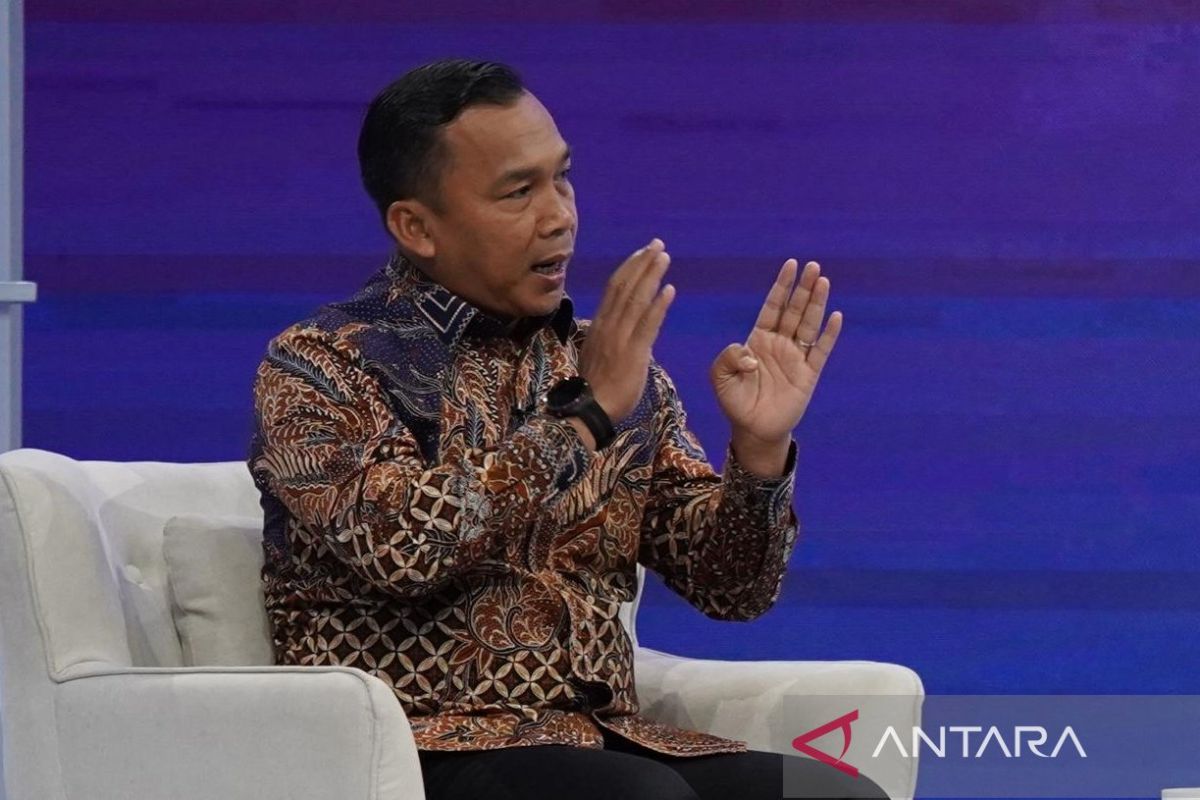
Jakarta (ANTARA) – Minister of Population and Family Development and head of the National Population and Family Planning Board (BKKBN) Wihaji said the Grand Design for Population Development (DBPK) is geared towards improving public welfare.
Wihaji said the government was preparing the 2025–2045 DBPK to ensure that development proceeds in a planned and sustainable direction. Involving multiple sectors, it will serve as a long-term development framework and guide for central and regional governments.
“There are many targets, but the essence is welfare: a population of good quality and size, adequate nutrition, education and skills. The hope is that people will become more prosperous,” he said in an official statement in Jakarta on Thursday.
Wihaji explained that the DBPK is a national development framework to be implemented through the 2025–2029 Population Development Roadmap (PJPK), which provides guidance for five-year implementation. Both instruments include indicators and allocate responsibilities among stakeholders.
“We set out various indicators, who does what, which ministries and agencies are responsible, and which regional governments need to carry them out,” he said.
The PJPK contains 30 population development indicators requiring cross-sector involvement. Seven of these indicators are specifically assigned to the Ministry of Population and Family Development/BKKBN, in line with its mandate on population and family development.
Wihaji stressed that each indicator needs to be translated into programmes and activities that can be implemented and deliver tangible results for the public.
“If these 30 indicators are carried out, the impact will be tremendous. We hope population development can drive economic growth and improve the quality of human resources,” Wihaji said.
Co-operation between central and regional governments is essential to achieving these targets. Regional governments have a strategic role in adapting national policy to the characteristics, needs and changing circumstances of their respective areas.
Through the PJPK, the division of responsibilities among ministries and agencies, regional government departments, and provincial and district or municipal governments is expected to become clearer, enabling the 30 indicators to be implemented in an integrated and mutually supportive manner.
In substance, population development is focused on three main areas: managing population size, improving population quality, and the distribution and mobility of the population.
Wihaji said the three areas were interrelated in ensuring that population levels are managed, human-resource quality improves and population distribution becomes more even.
Through implementation of the DBPK and PJPK, the Ministry of Population and Family Development/BKKBN is encouraging population development to become a shared agenda pursued consistently by all stakeholders.
Stronger collaboration, clear allocations of responsibility and measurable implementation of the indicators are expected to help optimise Indonesia’s population potential as an asset for development.
Source: jawawa.id (https://jawawa.id/newsitem/minister-population-development-blueprint-aims-to-improve-public-welfare-1794484612)
Originally published by Antara (Indonesian) (https://www.antaranews.com/berita/5849695/mendukbangga-dbpk-berorientasi-pada-kesejahteraan-masyarakat), translated from Indonesian