
Minister PANRB on AI Threat: Only Accelerates, Cannot Replace Civil Servants
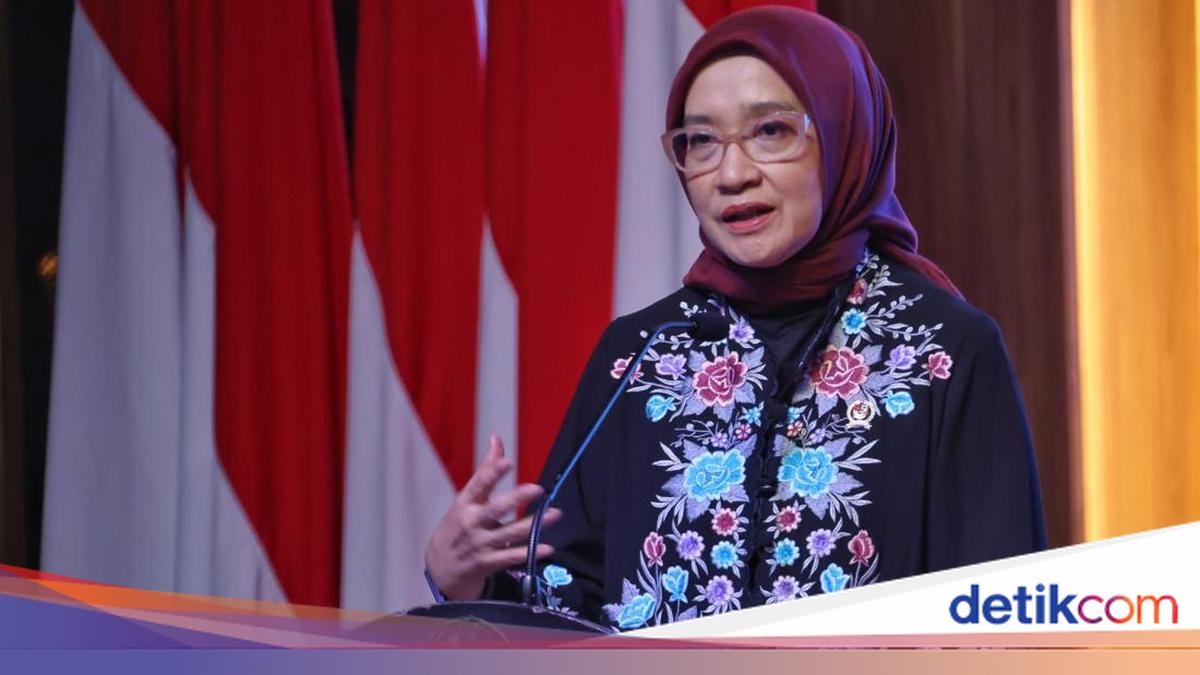
Minister for State Apparatus Empowerment and Bureaucratic Reform (PANRB), Rini Widyantini, has responded to discussions about the threat of efficiency measures replacing civil servants (ASN) with artificial intelligence (AI) technology. Rini said AI only functions as a tool and cannot replace the role of civil servants.
“We position artificial intelligence as a tool to strengthen the quality of analysis and public services, not as a replacement for the entire role of civil servants,” Rini said when contacted on Wednesday (26/8/2026).
Rini said the presence of AI can accelerate work, shape data processing and present more complete data as a basis for decision-making. However, there are roles of civil servants that cannot be replaced by AI, ranging from policy considerations, assessment of social context in the field, administrative responsibility, to empathy in serving the public.
“These matters cannot be delegated to machines. Therefore, the efficiency we mean is efficiency of work processes. Conventional and routine work can be accelerated, so that civil servants have greater room for work that adds value for the public,” she explained.
In the national development plan targets, Rini said, there has been discussion about improving the capability of civil servants in utilising AI. Civil servants are expected to be able to utilise digital technology to improve the quality of governance and public services.
“The use of AI must be accompanied by the government’s digital transformation. With cross-sector data governance that is shared, the quality of AI utilisation will improve. As a result, civil servants can work more efficiently, more optimally and more accurately because it is data-based,” she explained.
Rini said the use of AI helps in the policy formulation process and produces higher quality policies. AI can help process large amounts of data from various sources quickly and accurately.
“In this way, policy formulation is truly based on actual and comprehensive data, not merely based on assumptions. The final decision remains in the hands of policymakers, but the basis for consideration becomes much stronger,” she said.
Furthermore, Rini stressed that the competence of civil servants remains important despite the presence of AI. She affirmed that capable civil servants who can utilise AI can improve public services to the maximum.
“The use of AI must be preceded by improving the competence of civil servants and proceed together with the government’s digital transformation, so that its application is appropriate in governance, while still paying attention to ethical aspects and data sovereignty,” she said.
“Ultimately, the quality of public services is determined by the combination of reliable technology and competent civil servants. AI strengthens, civil servants decide and serve,” she explained.
House Commission II Meeting with LAN
Previously, Deputy Chairman of House Commission II Dede Yusuf highlighted the use of technological developments, including AI, in the performance of civil servants. Dede touched on the potential for efficiency in the number and performance of civil servants as a result of AI utilisation.
Dede conveyed this in a working meeting with the National Institute of Public Administration (LAN) at the DPR RI building, Senayan, Jakarta, on Monday (24/8/2026). Dede said the use of AI can make work more efficient that previously required several people.
“In the past we needed two or three people to make a presentation, now we don’t need to,” said Dede.
According to him, the development of digitalisation also needs to be followed by an evaluation of the need for the number of civil servants in the regions. He cited the condition of sub-district offices that currently can have dozens of employees.
“Even though as we know, with digitalisation and so on, perhaps it should not need to be dozens of people. Perhaps 15 to 20 people is enough,” he said.
Dede questioned the government’s readiness to face these changes, including the possibility of reduced need for civil servants due to the application of technology.
“So in this context, if we also observe, will our civil servants in the future become a mass product or will there be a reduction?” said Dede.