
Minister PANRB Hopes MPP Becomes a Solution Hub for Community Needs
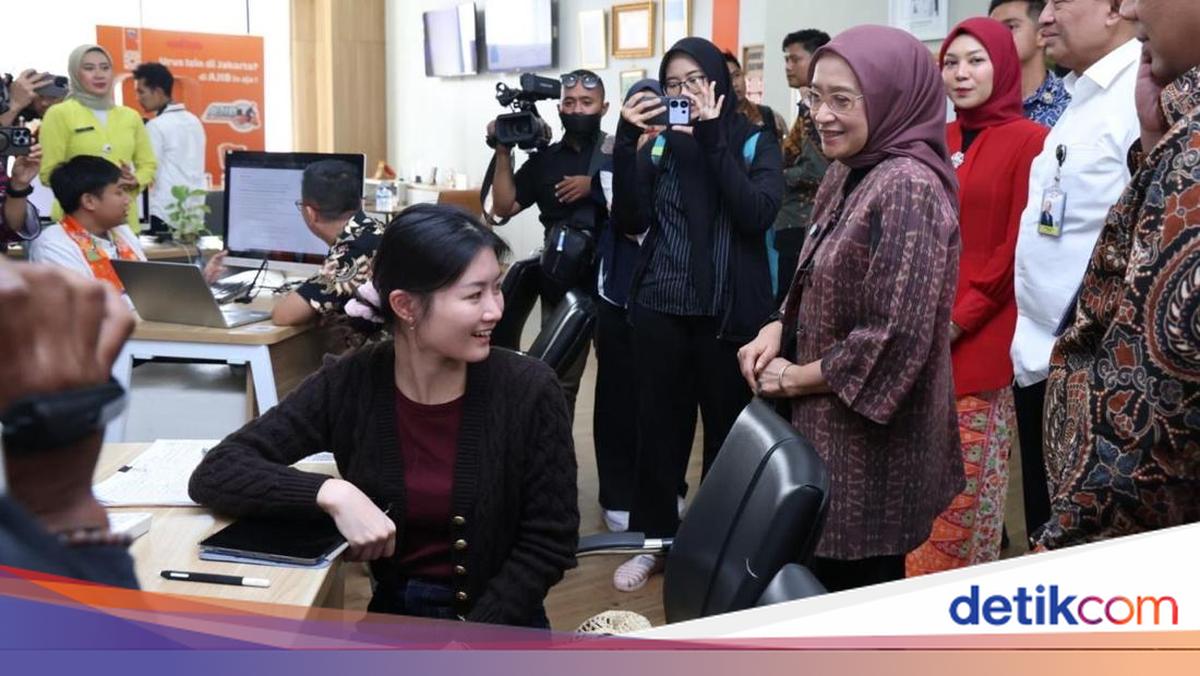
Minister of State Apparatus Empowerment and Bureaucratic Reform (PANRB), Rini Widyantini, inspected several services at the DKI Jakarta Provincial Public Service Mall (MPP). She affirmed the government’s commitment to providing easy, integrated services. “We certainly hope that with the existence of the Public Service Mall, the community will receive services or service certainty that is truly complete. Not being ping-ponged from one counter to another, or if there is a matter related to one agency, it can be resolved in one place,” Rini stated on Friday (12/6/2026). During the inspection, Rini noted that people who come to the DKI Jakarta MPP bring their affairs and want their problems solved without needing to know whether one or two agencies are involved. The MPP is not only a gathering place for various agencies but is expected to become a solution centre for community service issues. As a region with very high government, business, investment, and public service activity, DKI Jakarta has a strategic role to become an example of modern and integrated public service. According to Rini, DKI Jakarta has a strategic role as a national public service showcase. “So the quality of Jakarta’s services certainly always becomes a reference for other local governments. The most important thing is that the community can later feel how the services provided by the DKI Jakarta Provincial Government are focused on the user experience when they come to the MPP,” Rini explained. Rini conveyed that the concept of the MPP is to unite all services under the authority of the central government and also the authority of local governments. The DKI Jakarta MPP has implemented a policy launched by the PANRB Ministry, namely omnichannel public services. Omnichannel is a public service approach that integrates various channels, including digital and direct services. This approach, promoted by the PANRB Ministry, aims to improve accessibility, efficiency, and service quality. The concept is inspired by the MPP, which provides various services in one integrated location, with the goal of creating a service experience that is easier, more responsive, and inclusive. “So there are face-to-face services, then pick-up services, services via kiosks, and including digital services. So when you look at the DKI Jakarta MPP, it is quiet not because there are not many people, but because digital services have been developed. So the community can already access digital services, but there are also those who want to come directly here,” Rini said. For information, the DKI Jakarta Provincial MPP was inaugurated on 12 October 2017, as one of the pioneers of MPPs in Indonesia. Currently, 305 regencies and cities have MPPs throughout Indonesia. Minister Rini observed that continuous efforts are being made by the DKI Jakarta MPP to provide services that are more accessible to the community through collaboration among various agencies in one service location. Appreciation was conveyed to all service officers who are the front line of the bureaucracy. Good service will determine the level of public trust in the government. “I once again express my appreciation to the entire ranks of the DKI Jakarta MPP and the DKI Jakarta Provincial Government. I hope the community will continue to be given ease in obtaining services from the DKI Jakarta Regional Government,” she concluded. Based on the latest data, the DKI Jakarta MPP consolidates 328 types of services from 15 agencies. During the inspection, Deputy I for Politics, Security, Law, Human Rights, and Corrections at the Presidential Staff Office (KSP), Heru Kreshna Reza, stated that the MPP is a manifestation of the state’s presence for the community. He said the KSP welcomes and fully supports the strengthening of the MPP. “The KSP welcomes and fully supports the strengthening of the MPP as part of the bureaucratic reform agenda and improving the quality of public services, which is a priority of President Prabowo Subianto. Particularly regarding the digitalisation of services, it is important to continue developing omnichannel services so that public services can be accessed inclusively,” he concluded.