
Minister of Women's Empowerment and Child Protection States PPRT Law Also Guarantees Employer Security
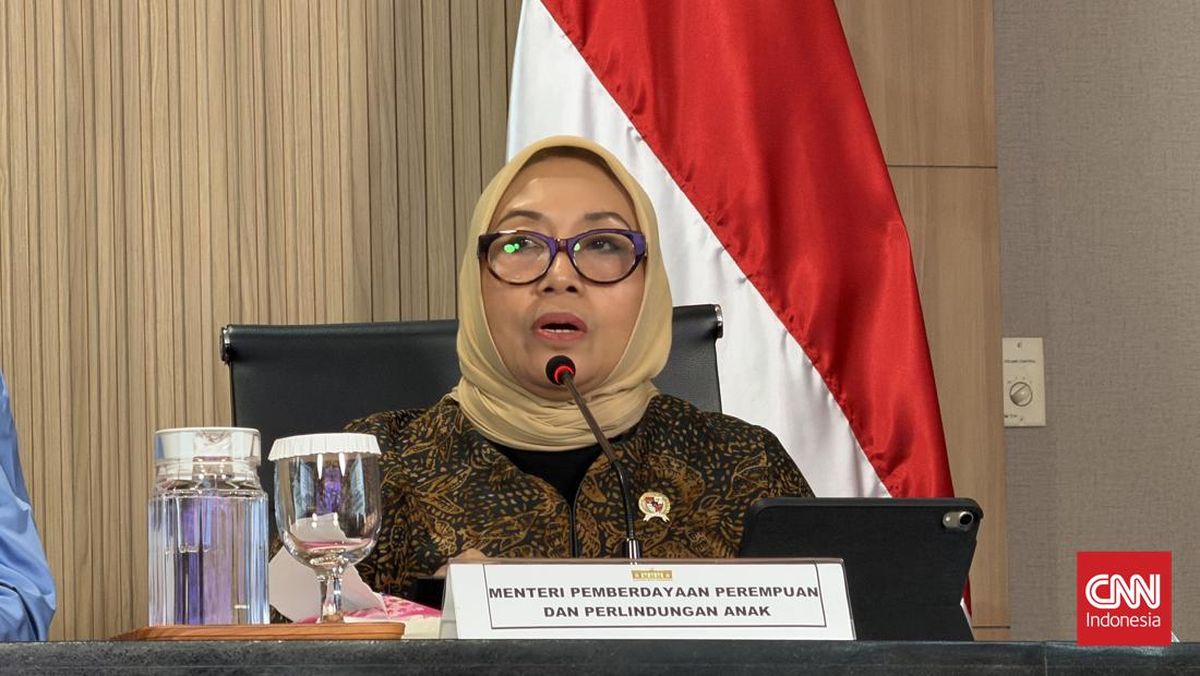
Minister for Women’s Empowerment and Child Protection (PPPA) Arifah Fauzi has stated that the Domestic Workers Protection Law (UU PPRT) not only provides protection for workers but also guarantees security for employers or principals.
“In truth, this Domestic Workers Protection Law does not only protect domestic workers, but also protects the employers. So in this law, how domestic workers (PRT) are considered as workers,” said Arifah during a press conference at the Presidential Staff Office in Central Jakarta on Wednesday (22/4).
She explained that the approach change in the law affirms the position of PRT as a profession with clear rights and obligations, including equal employment relationships based on mutual agreement.
“So there is no term employer and helper. The term used now is domestic worker and domestic worker employer,” she said.
Arifah outlined several basic rights that domestic workers will receive under the regulation, ranging from fair wages to legal protection.
“The basic rights of domestic workers include fair wages, reasonable working hours, the right to rest or leave, the right to healthy food, social security, the right to humane treatment, freedom from violence, and legal protection,” she stated.
According to her, further details regarding rights and obligations will be regulated in derivative regulations currently being prepared by the government.
In addition, the UU PPRT also regulates community-based supervision mechanisms, involving the smallest units in society such as RT and RW. Every employer is required to report the presence of domestic workers in their environment.
“We will involve the surrounding community, especially RT and RW. So if there are issues related to domestic workers, this can be handled by the smallest scope of the household,” said Arifah.
She added that worker data such as identity, age, and work agreements will be registered at the neighbourhood level to ensure transparency and protection for both parties.
Arifah described the enactment of the UU PPRT as an important momentum after a long process that has been fought for over decades.
“If I’m not mistaken, this law has been fought for by activist friends for 24 years. Alhamdulillah, this is the most joyful gift in the commemoration of Kartini Day this year,” she said.
The Indonesian House of Representatives (DPR RI) officially enacted the Domestic Workers Protection Bill (RUU PPRT) into law during the 17th Plenary Session of the IV session period 2025-2026. This enactment follows lengthy discussions that have lasted more than two decades.
The UU PPRT contains various important provisions, including legal protection, recruitment schemes, social and health security, as well as rights and obligations of workers and employers. Overall, the regulation consists of 12 chapters and 37 articles.
In its implementation, the government is given time to prepare derivative regulations, including those related to wage amounts, social security, and supervision mechanisms.
This law also regulates dispute resolution prioritised through deliberation, before proceeding to mediators from relevant agencies.
The enactment of this law becomes a new milestone in recognising domestic workers as part of Indonesia’s formal employment system.