
Minister of Transmigration Encourages Regional Industrialisation, Highlights North Halmahera Coconuts
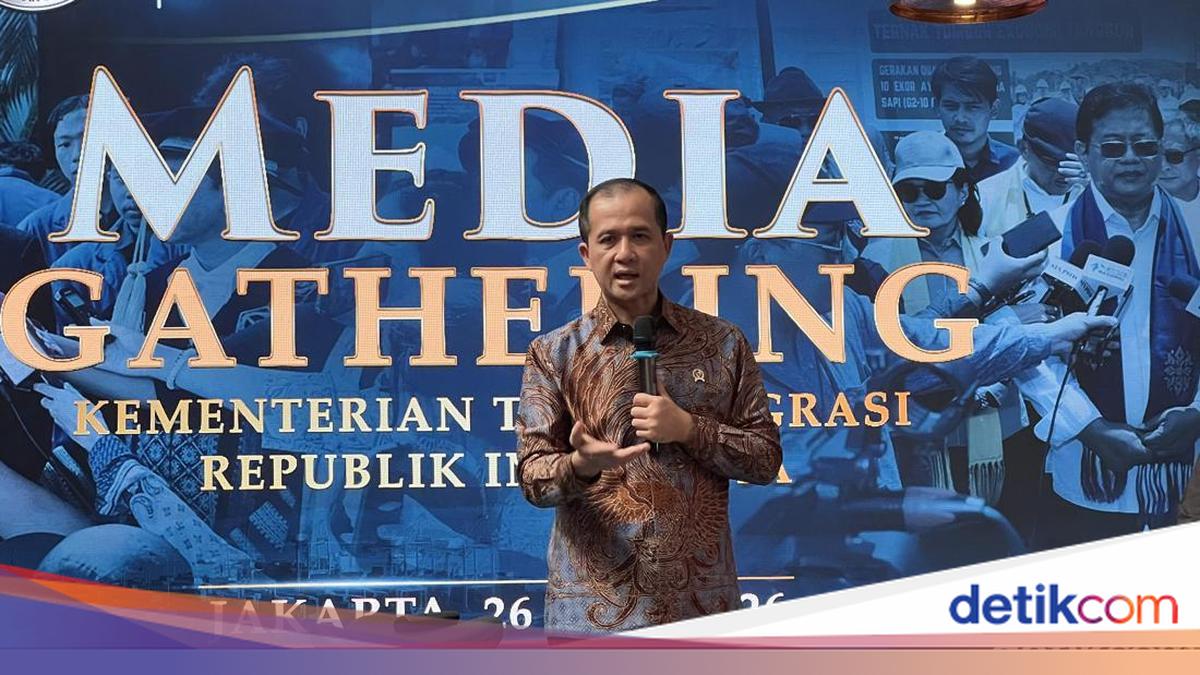
The Minister of Transmigration, Iftitah Sulaiman Suryanagara, is encouraging industrialisation based on regional potential. Iftitah cited the coconut potential in North Halmahera, North Maluku, as a way to create significant economic value.
“In North Halmahera, there is coconut potential. There are 6,900,000 coconut trees. In transmigration areas, for example, it is entirely comprised of coconut trees,” said Iftitah during a Ministry of Transmigration media gathering held in Tebet, South Jakarta, on Friday (26/06/2026).
“It turns out that initiated industrialisation creates extraordinary economic added value. Why? Because we are no longer just picking coconuts and selling them raw. There is coconut milk, coconut water, and the coconut meat itself; coconuts can even be used for cosmetics. Even recently, the coconut husks have been exported. So, from a single commodity, there are many derivatives,” he added.
Iftitah noted that the coconut industry in North Halmahera can create 4,000 jobs, with 85 per cent of them sourced from local residents. He stated that the North Halmahera region has shown visible progress.
“The coconuts stay there, processed by industry. Consequently, jobs are created; for the industry alone, there are about 4,000 jobs, 85 per cent of which come from the local community. Visually, it is evident—supermarkets and restaurants begin to emerge,” he said.
Iftitah mentioned that coconut production in North Halmahera can reach up to 620 million coconuts, allowing the local industry to supply large quantities to China.
“If we look at the market, China alone consumes 4 billion coconuts per year. They are only able to meet 1 billion coconuts, meaning there is a gap of 3 billion coconuts. Imagine, North Halmahera alone could meet 1.5 to 1.8 billion of that,” he said.
Iftitah then shared an anecdote from his time serving in Pasuruan, mentioning the potential for mango production there.
“I became a mango farmer, and it turns out the temperature is different, the working hours are different, and the sunlight is different; that is what makes Pasuruan mangoes unique,” he said.
This potential led him to speculate that if he were the Regent of Pasuruan, he would implement large-scale mango planting.
“There is nothing as great as Pasuruan mangoes. If I were the Regent of Pasuruan, not a single inch of Pasuruan should be left without being planted with Arumanis mangoes. It must be so, because that is a wealth provided by God,” he said.
Iftitah further urged the development of an end-to-end mango industry. He noted that Japan has a significant interest in Indonesian mangoes.
“For 20 years, our mangoes have been unable to enter Japan, even though Japanese people want them. Why? Because we have never implemented an end-to-end process. We should first ask the Japanese, ‘How can we enter? Oh, it’s the pests, it’s this, it’s that,’ and then we follow that from the upstream, through the packaging, until it reaches them,” he concluded.