
Minister of SMEs Wants to Integrate Indonesian SMEs into China's Supply Chain
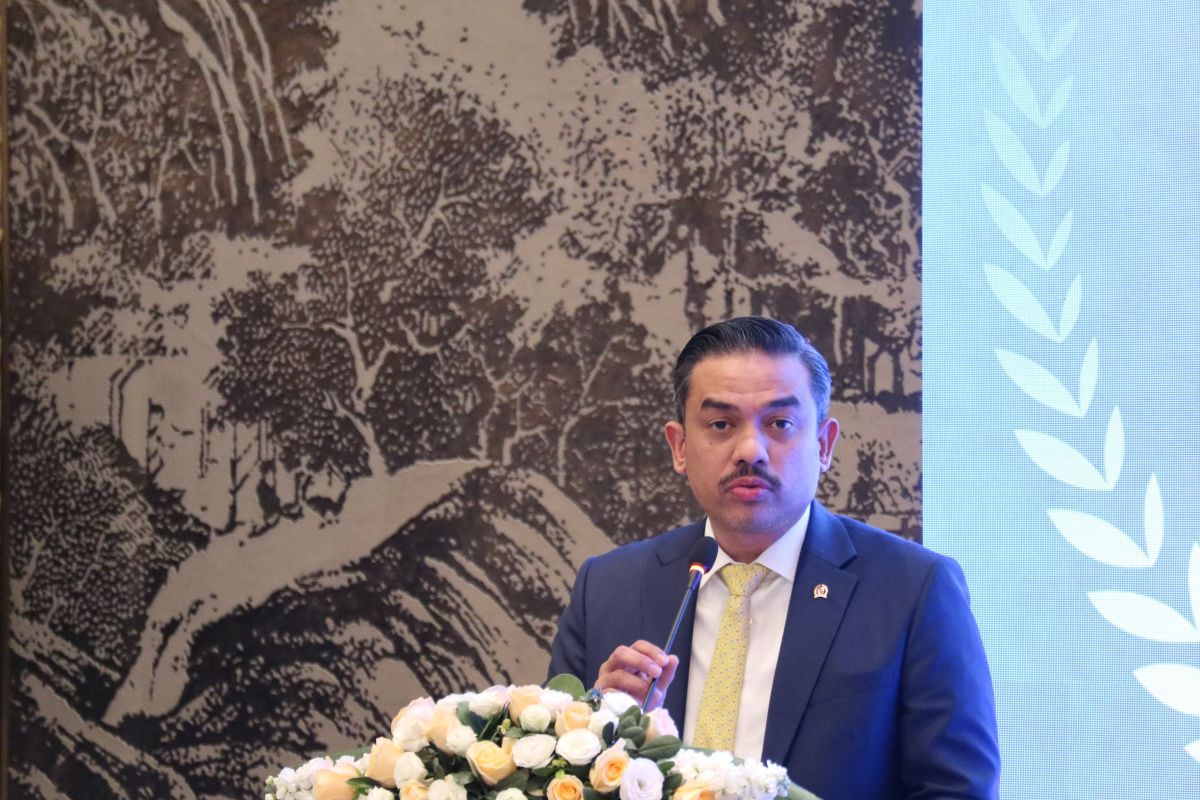
Beijing (ANTARA) - The Minister of Micro, Small, and Medium Enterprises (SMEs), Maman Abdurrahman, stated that his side wishes to integrate Indonesian SMEs into supply chains in China.
“In strengthening Indonesia–China cooperation, particularly in SME development, I want to bolster the integration of Indonesian SMEs into the global supply chain, including China, and the development of industrial clusters,” said Maman Abdurrahman in Beijing on Wednesday (1/4).
Maman conveyed this during the “Indonesia–China SME, Trade and Investment Cooperation Forum 2026” event, which brought together business actors from China and policymakers from Indonesia related to business and SMEs. The Indonesian Ambassador to China and Mongolia, Djauhari Oratmangun, was also present.
“SMEs need to be encouraged to enter structured industrial ecosystems through strategic partnerships. Strengthening sector-based clusters and integration into regional production networks will increase business scale, efficiency, and sustainable competitiveness of SMEs,” Maman added.
Additionally, Maman stated that Indonesian SMEs require investment collaboration and technology transfer.
“Modernising SMEs requires support in technology, financing, and enhancing human resource capacity. Indonesia opens opportunities for investment cooperation in SMEs in manufacturing, processing industries, production machinery, digital technology, and smart manufacturing, while strengthening the downstreaming of SME industries,” Maman revealed.
Thirdly, Indonesian SMEs need strengthened policies and institutional cooperation, including the development of measurable and impactful collaborative programmes, he said.
“This forum is expected to become the foundation for more systematic and institutionalised long-term cooperation between Indonesia and China in SME development,” Maman added.
The Indonesian government, Maman revealed, is committed to promoting SME transformation through industrial downstreaming, digitalisation, improved financing access, and expanded international market access.
“We believe that the Indonesia–China strategic partnership will accelerate the integration of SMEs into the global supply chain and strengthen regional economic stability,” Maman emphasised.
Amid global economic dynamics, technological disruptions, and changes in global supply chains, strengthening micro, small, and medium enterprise cooperation with China has become a strategic agenda inseparable from the regional economic growth agenda in the Asia-Pacific, he said.
“I am indeed reading this speech text, but in my casual speaking style, I want to say, if you want to be happy, come to my country. If you are happy, my country must also be happy. Let’s be happy together,” said Maman, met with laughter from several businesspeople.
Meanwhile, the Indonesian Ambassador to China and Mongolia, Djauhari Oratmangun, stated that China continues to be one of Indonesia’s main economic partners.
“Our bilateral trade has reached an important milestone, with total bilateral trade between the two countries approaching 168 billion US dollars, making China Indonesia’s largest trading partner,” said Ambassador Djauhari.
Indonesia, said Ambassador Djauhari, offers opportunities.
“I want to quote Nike’s slogan, Just Do It. Come and invest in Indonesia; we have 280 million people, we have the largest economy in ASEAN, and also the largest population in ASEAN,” added Ambassador Djauhari.
Moreover, observing the geo-economic and geopolitical transformation, Ambassador Djauhari mentioned that changes are moving towards the Asian region.
“If we build very good relations between Indonesia, China, and ASEAN, we can ensure that in the coming years, it will remain in our region. Of course, China, ASEAN, and Indonesia will lead the transformation process and also receive benefits from this geo-economic and geopolitical transformation,” revealed Ambassador Djauhari.
Based on data from the Central Statistics Agency, the number of SMEs in Indonesia reaches 65.5 million business units and contributes 61.9 percent to the gross domestic product.
These SMEs also absorb more than 119 million workers or around 97 percent of the total national workforce.
Meanwhile, based on data from China’s Ministry of Industry and Information Technology, by the end of 2024, the total number of SMEs in China has exceeded 60 million with revenue reaching 81 trillion yuan (approximately 11.2 trillion US dollars), with 600,000 SMEs focused on technological innovation.
Of the 600,000 SMEs with a focus on technological innovation, there are 14,600 “small giant” SME companies that specialise in specific sectors, dominate market shares, and have strong innovation capacity.
Source: jawawa.id (https://jawawa.id/newsitem/minister-of-smes-wants-to-integrate-indonesian-smes-into-chinas-supply-chain-1775104112)
Originally published by Antara (Indonesian) (https://www.antaranews.com/berita/5506597/menteri-umkm-ingin-integrasikan-umkm-indonesia-ke-rantai-pasok-china), translated from Indonesian