
Minister of Religious Affairs warns officials to beware of gratification disguised as gifts
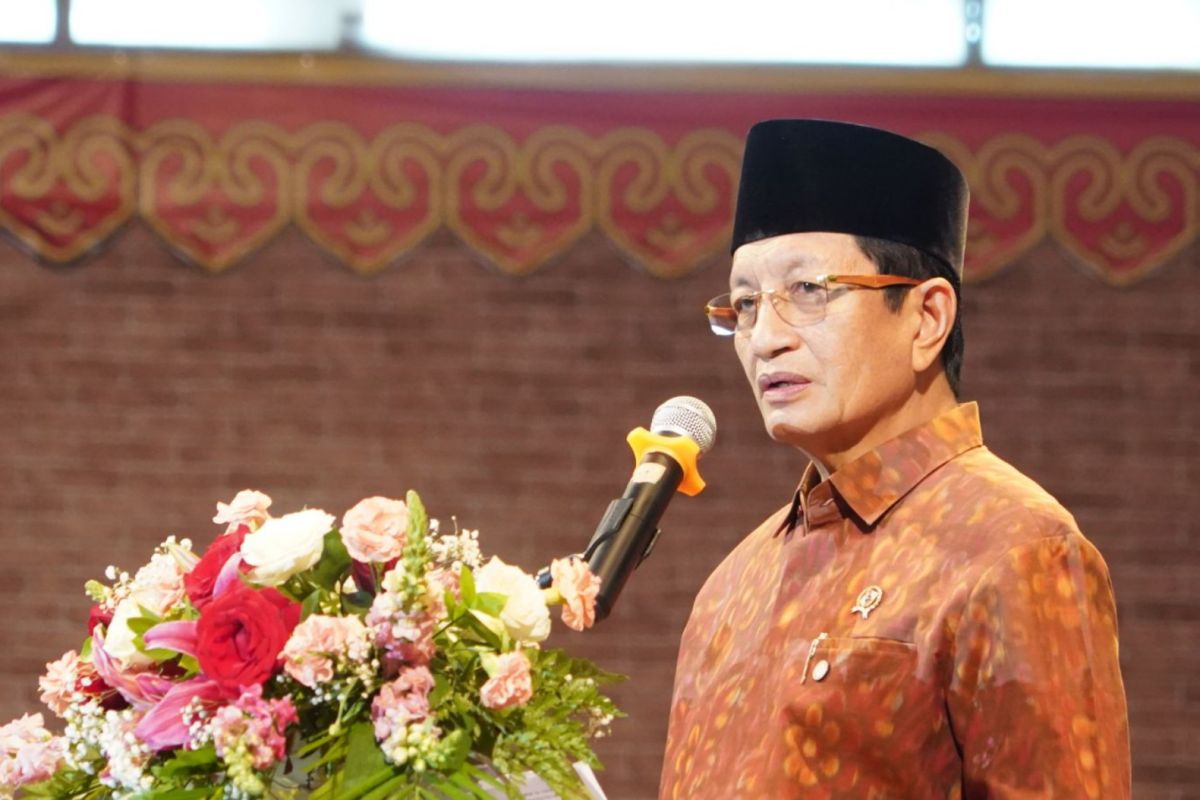
Jakarta (ANTARA) - Minister of Religious Affairs Nasaruddin Umar has warned officials to be wary of gratification disguised as gifts, noting that in Islam, gifts received due to one’s position can change status into prohibited gratification.
“When such a gift has the potential to influence the decisions, policies, or objectivity of an official, its status becomes forbidden. The Prophet Muhammad (PBUH) provided clear boundaries that gifts received because of one’s position cannot be justified,” the Minister stated in Jakarta on Thursday.
The warning was delivered during the National Anti-Corruption Webinar for Higher Education, titled “Gratification from an Islamic Perspective,” organised online by the Corruption Eradification Commission (KPK). The webinar was attended by university leaders, lecturers, and academics from various regions.
The Minister cited the story of a zakat collector during the time of the Prophet (PBUH) who received gifts while performing his duties. The Prophet (PBUH) subsequently reprimanded the official, questioning whether he would still accept the gift if he did not hold that position.
“This reprimand confirms that gifts received because of one’s position or status are not ordinary gifts, but rather have the potential to become a form of prohibited gratification,” he remarked.
The Minister also highlighted the exemplary integrity of Umar bin Khattab in governance. Umar once ordered that the profits from his son’s livestock business be surrendered to the Baitul Mal (public treasury) out of fear that special treatment might occur due to his son’s status as the Caliph’s son. Furthermore, Umar rejected a gift of a luxury prayer mat from the Governor of Kufah, believing the funds would be better used to assist those in need.
In addition to gratification, the Minister explained several forms of corruption recognised in Islam, such as al-ghulul (breach of trust), riswah (bribery), illegal commissions, price mark-ups, specification manipulation, abuse of power, and sponsorships with hidden agendas.
“Position is a trust that must be guarded with full responsibility. The abuse of power is a significant form of betrayal. Therefore, a leader must act justly, objectively, and not misuse authority for personal interest,” he said.
The Minister urged all participants to adopt integrity, trustworthiness, and honesty as guides for daily life. He reminded them that blessings are far more important than wealth obtained through unlawful means.
“Corruption not only ruins the life of the perpetrator but also brings negative impacts to families and society. Wealth obtained through improper means will bring no good to life in this world or the hereafter,” he concluded.