
Minister of Religious Affairs: KORPRI MTQ as a means of shaping character and ethics of civil servants
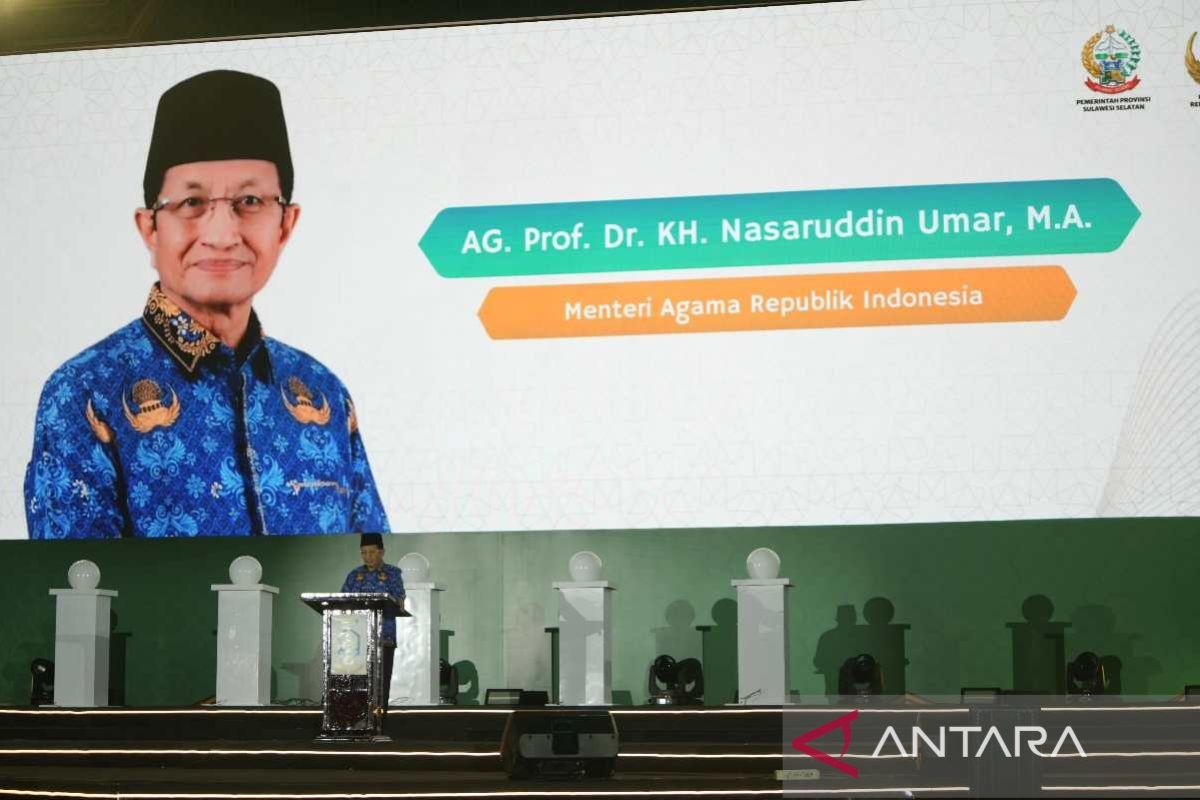
Minister of Religious Affairs KH Nasaruddin Umar has stressed that the VIII KORPRI Musabaqah Tilawatil Quran (MTQ) serves to shape the character and bureaucratic ethics of the state civil apparatus (ASN).
“This MTQ must not be viewed merely as a competition of aesthetic recitation, memorisation, calligraphy, or Islamic knowledge alone,” he said in a statement in Makassar, South Sulawesi, on Tuesday.
In his remarks at the opening of the VIII KORPRI Musabaqah Tilawatil Quran in Makassar on Monday (24/8), KH Nasaruddin Umar said that although these aspects are important and deserve appreciation, the more fundamental objective is to present the Quran as a force for shaping the character of state officials.
He explained that the spiritual journey must move continuously from recitation towards understanding, from understanding towards internalisation, and its peak is real devotion in carrying out the duties of the state.
“Office must be understood as a trust, not personal glory; authority as a means of serving, not a tool of domination; and public policy must always deliver justice, especially for vulnerable groups who often have no voice,” he said.
According to him, amid the high expectations of society, civil servants are at the forefront of maintaining public trust, where one friendly service can strengthen the legitimacy of the state, while discriminatory actions or abuse of authority can wound citizens’ sense of justice.
Therefore, the Minister of Religious Affairs affirmed that Quranic values must be internalised and visibly present in all workspaces of the state civil apparatus.
The integration of these sacred values is expected to shape a bureaucracy that is not only technically competent but also possesses high moral integrity and social sensitivity, so that public service truly reflects the constitutional mandate and the religious teachings of rahmatan lil alamin.