
Minister of Religious Affairs: Anti-corruption education requires leadership by example
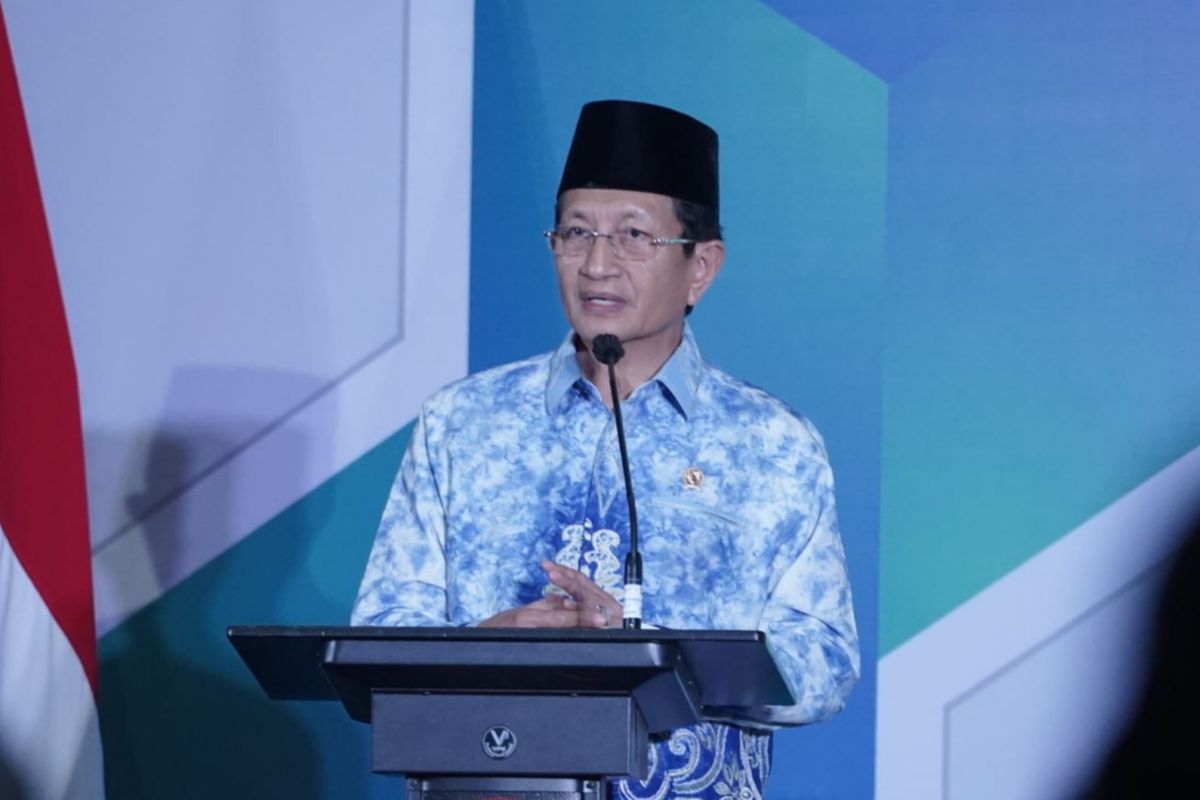
The Minister of Religious Affairs, Nasarlanuddin Umar, has asserted that anti-corruption education within the educational environment requires exemplary leadership that serves as a model, reflected in the integrated behaviour of leaders, teachers, and lecturers.
“Anti-corruption education is not enough to live only in the classroom. It must be visible in the staff room, the leadership office, and the governance of educational institutions,” stated Minister Nasaruddin Umar during the launch of the 2026 Education Integrity Index at the Corruption Eradication Commission (KPK) Red and White Building, Jakarta, on Tuesday.
According to the Minister, anti-corruption education must not stop at the knowledge of right and wrong. Integrity must grow into a character and a habit reflected throughout the entire educational ecosystem. Integrity also requires role models from teachers and leaders.
Habits such as cheating, plagiarism, overlooking violations, and remaining silent when witnessing dishonesty must not be regarded as minor issues in the world of education. These habits can serve as gateways to corrupt behaviour if allowed to grow from the school years.
“To teachers and lecturers, I leave one message. Students imitate much more than they listen. Therefore, the integrity we desire from them must be visible within each of us,” said the Minister.
Dian Novianthi, Acting Deputy for Education and Community Participation at the KPK, stated that the Education Integrity Assessment Survey (SPI Pendidikan) is used to capture the state of educational integrity and serve as evaluation material for building human resources and an educational ecosystem rooted in integrity.
“The Education SPI is also an effort to measure the impact of anti-corruption education programmes. We certainly hope that moving forward, this will enhance prevention efforts through comprehensive anti-corruption education,” said Dian.
The Education SPI measures three main dimensions: student character, the educational ecosystem, and educational governance.
Exam cheating is still being discovered. In primary and secondary education, such practices were reported by 26 per cent of students and found in 51 per cent of educational units. Meanwhile, in higher education, cheating was reported by 50 per cent of respondents and found in 94 per cent of the surveyed educational units.
Other findings touch upon more complex issues. As many as 43 per cent of higher education respondents reported students paying third parties to complete final projects or specific assignments. This practice was found in 91 per cent of the surveyed higher education institutions.
“There is a need to strengthen student character through the courage to act rightly, independence in fulfilling obligations, and the application of justice,” said Dian.
One of the steps recommended by the KPK is to create a safe space for students to act correctly. This can be achieved through the provision of secure complaint systems, protection for whistleblowers, and recognition for the courage to uphold integrity.
Source: jawawa.id (https://jawawa.id/newsitem/minister-of-religious-affairs-anti-corruption-education-requires-leadership-by-example-1791273717)
Originally published by Antara (Indonesian) (https://www.antaranews.com/berita/5773165/menag-pendidikan-antikorupsi-butuh-keteladanan-pemimpin), translated from Indonesian