
Minister of Public Works Guarantees Labour-Intensive Programme to Absorb 1 Million Workers
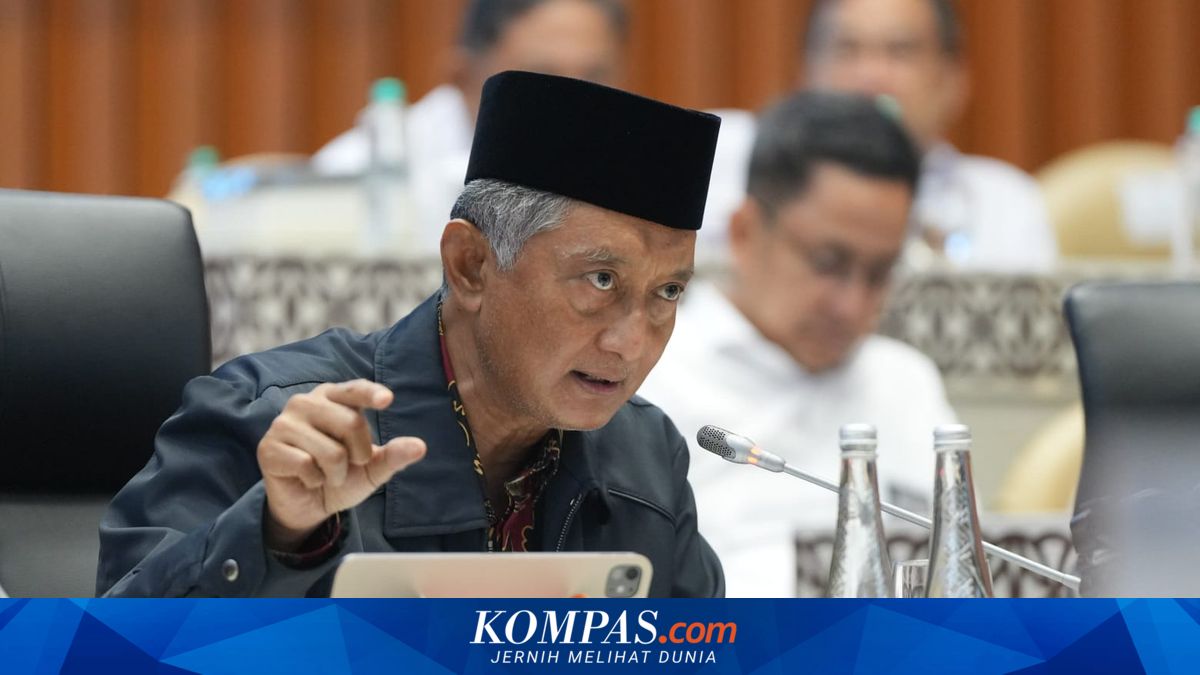
JAKARTA - The Minister of Public Works (PU), Dody Hanggodo, has confirmed that the labour-intensive programme through Community-Based Infrastructure (IBM) in 2026 will absorb up to one million workers across Indonesia.
The programme, run by the Ministry of Public Works, will reach 15,364 locations and is strengthened as a strategy to maintain public purchasing power and boost local economies amid global pressures.
Dody assured this during a Working Meeting (Raker) with Commission V of the House of Representatives (DPR RI) in Senayan, Jakarta, on Tuesday (7/4/2026).
“This IBM programme has a significant multiplier effect. In addition to producing infrastructure, it also provides direct income to the community through the labour-intensive scheme, thereby stimulating the local economy,” Dody explained.
This strengthening is the result of reallocations amid fiscal efficiency policies, while also demonstrating the government’s commitment to programmes that directly impact the community.
Of the total locations, most activities are in the water resources sector through the Accelerated Improvement of Irrigation Water Management Programme (P3TGAI) in 12,000 locations with an allocation of around Rp 2.7 trillion, which also serves as the largest contributor to workforce absorption.
In the connectivity sector, the labour-intensive programme is focused on building 118 suspension bridge units with an allocation of around Rp 1.07 trillion to open access to remote areas.
Meanwhile, in the settlements sector, the IBM programme covers various activities such as the Regional Social Economic Infrastructure Development Programme (PISEW) in 808 locations.
Then, the Community-Based Drinking Water and Sanitation Programme (PAMSIMAS) in 906 locations, as well as SANIMAS, SANIMAS LPK, and TPS3R in hundreds of other locations.
The Ministry of Public Works is also continuing to coordinate with the Ministry of Finance and Commission V of the DPR RI to ensure budget allocations remain secure and programme implementation runs effectively.
According to Dody, the community-based development approach makes the programme more targeted and sustainable because it directly involves the community as implementers.
“We ensure that IBM remains a priority, even amid budget adjustments. This is a form of the state’s presence in maintaining public purchasing power and creating jobs,” he stated.