
Minister of Primary and Secondary Education Urges Muhammadiyah School Principals to Realise Vision of Educational Excellence
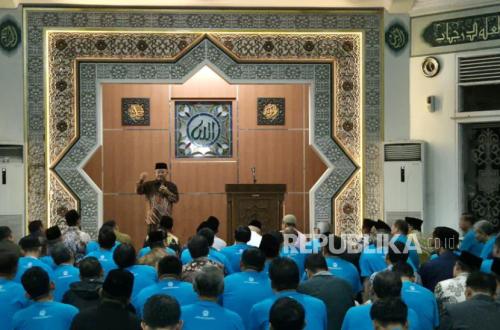
The Minister of Primary and Secondary Education, Prof Dr Abdul Mu’ti, has urged principals of Muhammadiyah schools and madrasahs to become educational leaders possessing broad perspectives, flexibility, and adaptability to change. Furthermore, they were reminded to remain consistent in realising a vision of educational excellence.
Mu’ti delivered this message during a dawn lecture to participants of the 2026 National Coordination Meeting (Rakornas) for Superior Muhammadiyah Schools/Madrasahs, organised by the Muhammadiyah Basic and Secondary Education Council. The event took place at the Great Hall for Vocational Education Quality Assurance Development (BBPPMPV) for Business and Tourism in Depok, West Java, on Wednesday (30/09/2026). The meeting was attended by 520 participants, including Muhammadiyah school and madrasah principals, chairpersons of the Basic and Secondary Education and PNF Council of PP Muhammadiyah, as well as leaders of the Basic and Secondary Education Councils from regional and branch levels across Indonesia.
Mu’ti emphasised that educational leadership must stem from a clear vision. He noted that a vision is not merely a sentence written in a school document, but must be translated into concrete goals, targets, and actionable steps.
He further stressed that Muhammadiyah schools and madrasahs need to possess unique characteristics and advantages that distinguish them from other educational institutions. “That excellence is built through leadership that possesses vision, the courage to take risks, the ability to adapt, and the willingness to continue learning,” said Mu’ti.
Source: jawawa.id (https://jawawa.id/newsitem/minister-of-primary-and-secondary-education-urges-muhammadiyah-school-principals-to-realise-vision-of-1790776579)
Originally published by Republika (https://news.republika.co.id/berita/tm6gu2484/mendikdasmen-ajak-kepala-sekolah-muhammadiyah-wujudkan-visi-pendidikan-unggul), translated from Indonesian