
Minister of Primary and Secondary Education Focuses on Reducing Quality Gap in Basic and Secondary Education
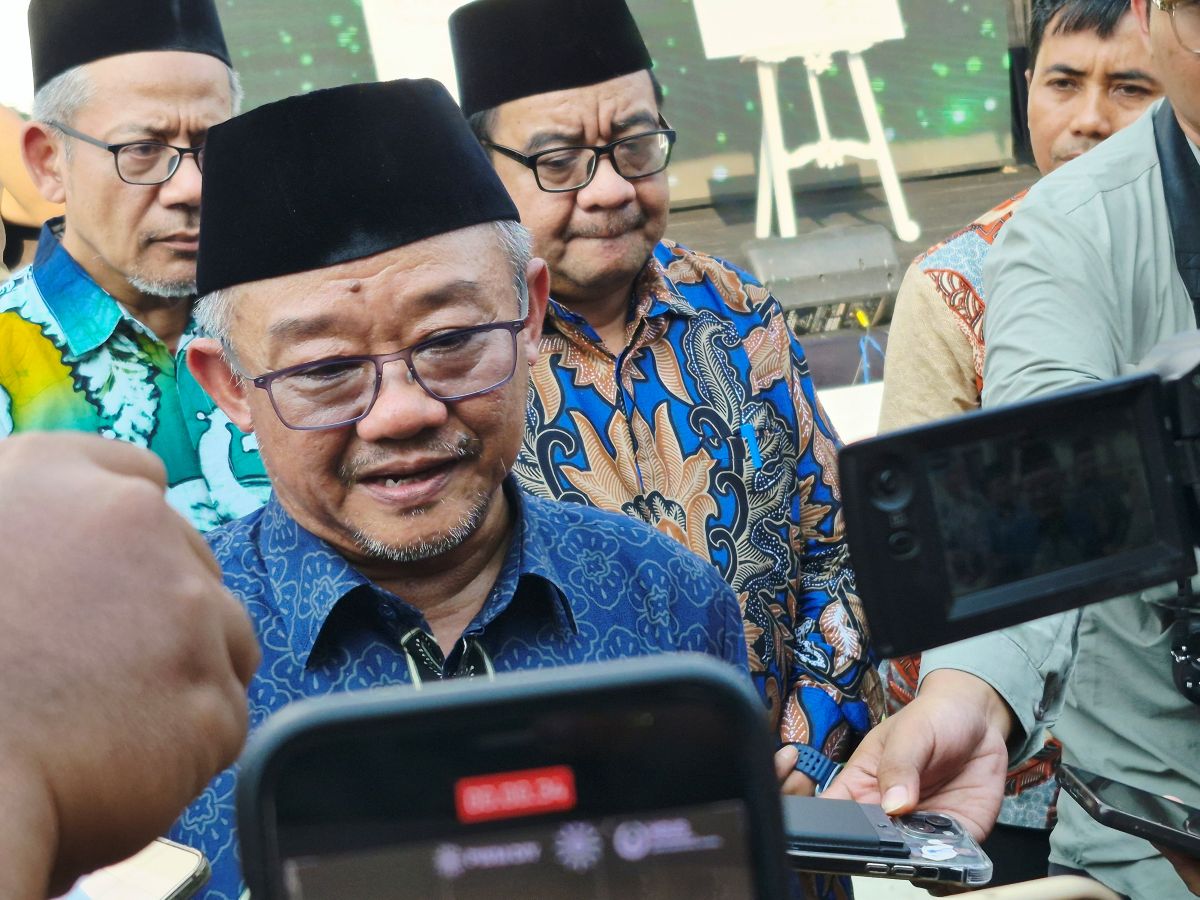
The Ministry of Primary and Secondary Education is fully committed to reducing the disparity in educational quality that currently exists between regions, as well as between public and private schools. Strategic steps are being prepared, including providing special affirmative action for schools whose facilities are still far from ideal.
The Minister of Primary and Secondary Education, Abdul Mu’ti, emphasised that one of the major challenges in the national education sector, including those faced by charitable educational networks such as Muhammadiyah, is the issue of quality inequality.
“Among our problems at the national level, including within Muhammadiyah and also in public schools, is the quality gap. There is still a disparity in quality between one region and another, as well as between public and private institutions,” he stated after attending an educational seminar at Muhammadiyah Sapen Universal School (MSUS), Bantul, on Sunday.
In response to these challenges, the Ministry is committed to implementing a dual strategy: maintaining the standards of already advanced schools while boosting schools that are lagging behind through affirmative policies.
“Therefore, we are committed: for schools that are already high-quality, we will maintain their standards, whereas for those that are below par (not yet developed), we will provide affirmative action so they can progress further,” he added.
As a concrete step, the Ministry has formed a new unit or directorate specifically tasked with overseeing the improvement of educational and health service quality in the areas that need it most.
The main focus this year, he said, is to provide priority assistance to schools with minimal facilities, while limiting policies regarding non-urgent budget renegotiations or delays.
“We have decided to form a new unit tasked with the specific improvement of government and health quality. We have assigned them to handle educational services, especially in 3T regions (underdeveloped, frontier, and outermost). Many small workers are leaving, including schools that are still far from ideal in terms of facilities. We have no priority for renegotiation this year; we are limiting and focusing on strengthening,” he concluded.
The Deputy Minister of Primary and Secondary Education, Fajar Riza Ul Haq, emphasised the importance of collaboration between the state and religious communities in education while attending the 2026 National Prayer Day in Balikpapan.
The government is doubling the target for school internet access to 16,557 by 2026 to support the digitalisation of learning and the equalisation of education in 3T regions.
Furthermore, the Ministry has opened registration for the 2026 Teacher Professional Programme (PPG) for 30 study fields under a full scholarship scheme. This programme, aimed at teachers currently holding Diploma (D1, D2, and D3) qualifications, is part of the Ministry’s effort to enhance teacher qualifications.
A Bilingual Education Programme for the Deaf will also commence, starting with a Teacher Academy for Deaf Education, which will equip teachers with the skills necessary to provide bilingual instruction.
Source: jawawa.id (https://jawawa.id/newsitem/minister-of-primary-and-secondary-education-focuses-on-reducing-quality-gap-in-basic-and-secondary-education-1783266627)
Originally published by Media Indonesia (https://mediaindonesia.com/humaniora/907766/menteri-dikdasmen-fokus-pangkas-kesenjangan-mutu-pendidikan-dasar-dan-menengah), translated from Indonesian