
Minister of Population and Family Development: Reproductive Health Education Needs to be More Massive on Social Media
Without adequate education, exposure to certain content can increase the risk of issues such as sexual harassment and sexual deviations.
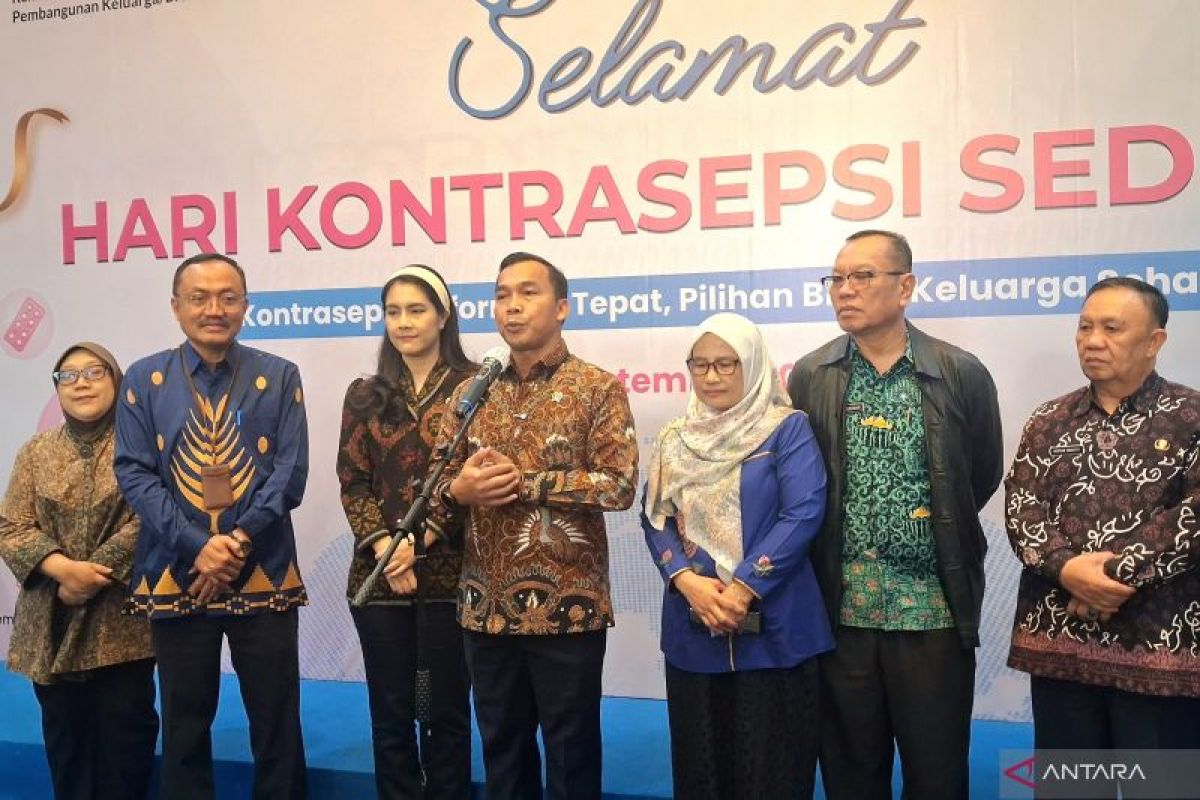
Jakarta (ANTARA) - The Minister of Population and Family Development (Mendukbangga)/Head of BKKBN, Wihaji, emphasised the importance of more massive reproductive health education for adolescents and those of productive age on social media, to ensure greater awareness regarding bodily autonomy.
“Nowadays, as soon as a child is born, they are already holding a mobile phone. When scrolling through TikTok, what parents open can be seen by the child. That is where reproductive health education becomes vital,” he stated during the peak of the World Contraception Day commemoration in Jakarta on Wednesday.
Wihaji asserted that reproductive health education is increasingly important due to changing times, technology, and children’s access to mobile phones and social media, which makes them more susceptible to various information, including age-inappropriate content.
“Without adequate education, such exposure can increase the risk of problems such as sexual harassment and sexual deviations,” he said.
He emphasised that the approach to reproductive health education cannot be equated with the past. Today’s children have interacted with technology and social media algorithms from an early age, which influences the information they receive.
Wihaji stressed that the paradigm regarding family planning (KB) should no longer be understood solely as being about contraception, but also about the impact of family planning on physical, mental, and even economic health.
“The spirit of contraception is to ensure that what we possess can help maintain physical, mental, and economic health. That is the spirit of family planning, approached through contraceptive methods,” he said.
Therefore, methods of communication, information, and education (KIE) regarding reproductive health need to be adjusted to the age and condition of the recipients, including adolescents, using a more inclusive approach based on the principle of ‘no one left behind’, including persons with disabilities.
In an effort to expand access to reproductive health, the Ministry of Population and Family Development/BKKBN has also launched an inclusive guidebook to broaden reproductive health access for people with disabilities.
“Today, we are providing the widest possible access; we are providing guidelines and education, particularly for persons with disabilities who have the same rights as citizens to obtain information regarding family planning, especially reproductive health,” said Wihaji.
Some of the training materials in the inclusive reproductive health education guide for adolescents include topics related to values, norms, and relationships; sexuality and sexual behaviour; reproductive health and its issues; protecting oneself from violence; as well as support and reproductive health services.
Source: jawawa.id (https://jawawa.id/newsitem/minister-of-population-and-family-development-reproductive-health-education-needs-to-be-more-massive-on-1791367429)
Originally published by Antara (Indonesian) (https://www.antaranews.com/berita/5775126/mendukbangga-edukasi-kesehatan-reproduksi-perlu-lebih-masif-di-medsos), translated from Indonesian