
Minister of Manpower stresses that BPJS Ketenagakerjaan must become the driving force behind K3
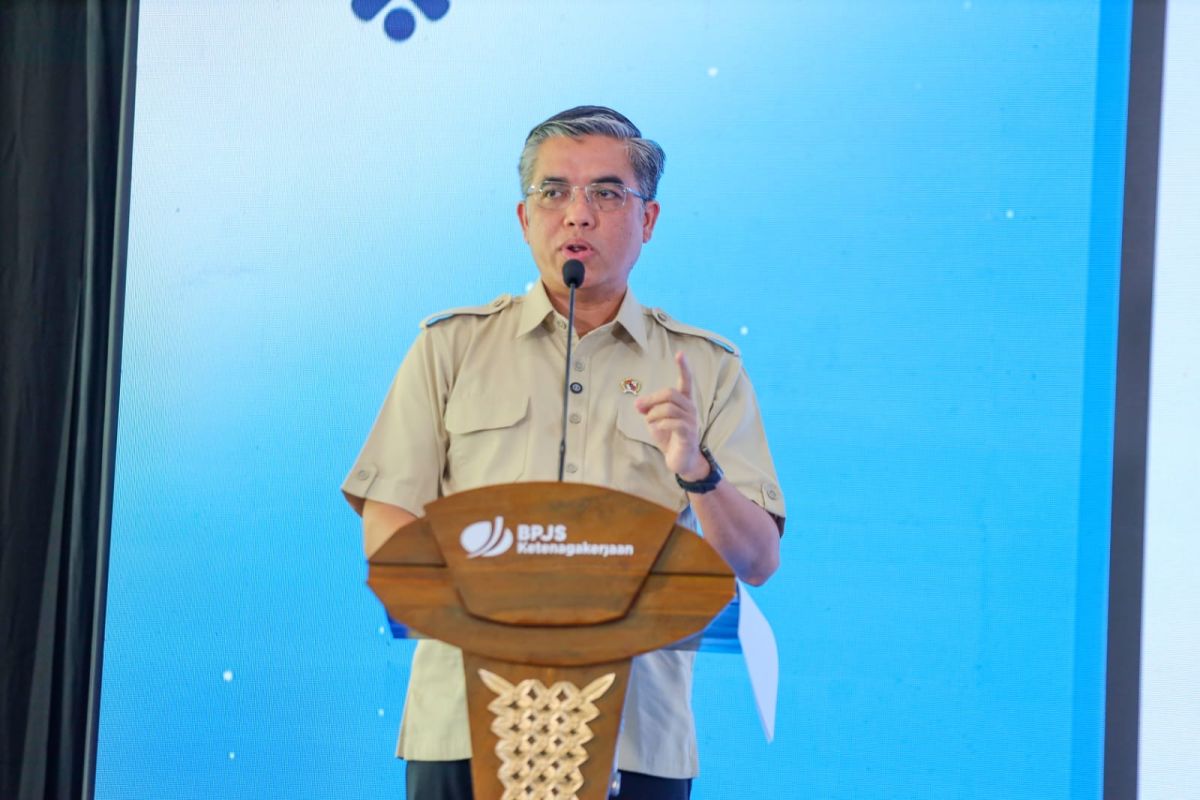
Jakarta — Labour Minister Yassierli emphasised that BPJS Ketenagakerjaan needs to take a more central role as the driving force of Occupational Safety and Health (K3), with a primary focus on preventing workplace accidents in Indonesia.
In a briefing in Jakarta on Friday, Yassierli said prevention efforts need to be strengthened to ensure workers’ protection can be more effective and sustainable.
Based on 2025 data, there were 319,224 work accident claims in Indonesia. Of these, 9,834 cases ended in death and 4,133 cases resulted in functional impairment or total disability.
“The approach that has been mostly reactive, focusing only on meeting compensation, will not be sustainable actuarially. Upstream investment through promotive and preventive programs will yield far greater savings downstream,” Yassierli said.
Moreover, the Minister highlighted data on Work-Related Diseases (PAK) recorded at 158 cases. The figure is not fully reflective of on-the-ground conditions due to reporting challenges.
Additionally, global data from the World Health Organization (WHO) and the International Labour Organization (ILO) show that most worker deaths relate to work-related diseases influenced by the working environment.
“A proactive approach through promotive and preventive programs is crucial to strengthening prevention efforts, while also encouraging the implementation of the Occupational Safety and Health Management System (OSHMS) which is currently adopted by around 18,000 of 450,000 companies,” Yassierli said.
To address these challenges, the Ministry of Manpower (Kemnaker) set three major priorities to be implemented swiftly in conjunction with BPJS Ketenagakerjaan. First, strengthen the national K3 system through optimising services and the governance of claims.
“Second, enhance the effectiveness of promotive and preventive programs through region-based training, and third, ensure that the SMK3 implementation in companies is carried out in a tangible and measurable way,” he added.
On the other hand, BPJS Ketenagakerjaan’s President Director Saiful Hidayat expressed readiness to immediately draft in-depth technical discussions.
The swift steps to be taken include data integration mechanisms, refinement of the claims flow, mapping of priority regions, and the design of more effective prevention programs.
“This briefing activity is expected to mark the starting point of a closer synergy between Kemnaker and BPJS Ketenagakerjaan in realising a robust, autonomous, and sustainable K3 culture across all layers of Indonesia’s industry,” Saiful concluded.
Source: jawawa.id (https://jawawa.id/newsitem/minister-of-manpower-stresses-that-bpjs-ketenagakerjaan-must-become-the-driving-force-behind-k3-1779542225)
Originally published by Antara (Indonesian) (https://www.antaranews.com/berita/5577865/menaker-tegaskan-bpjs-ketenagakerjaan-harus-jadi-motor-penggerak-k3), translated from Indonesian