
Minister of Manpower: Private/BUMN-BUMD Employee Salaries Must Remain Full Even During WFH
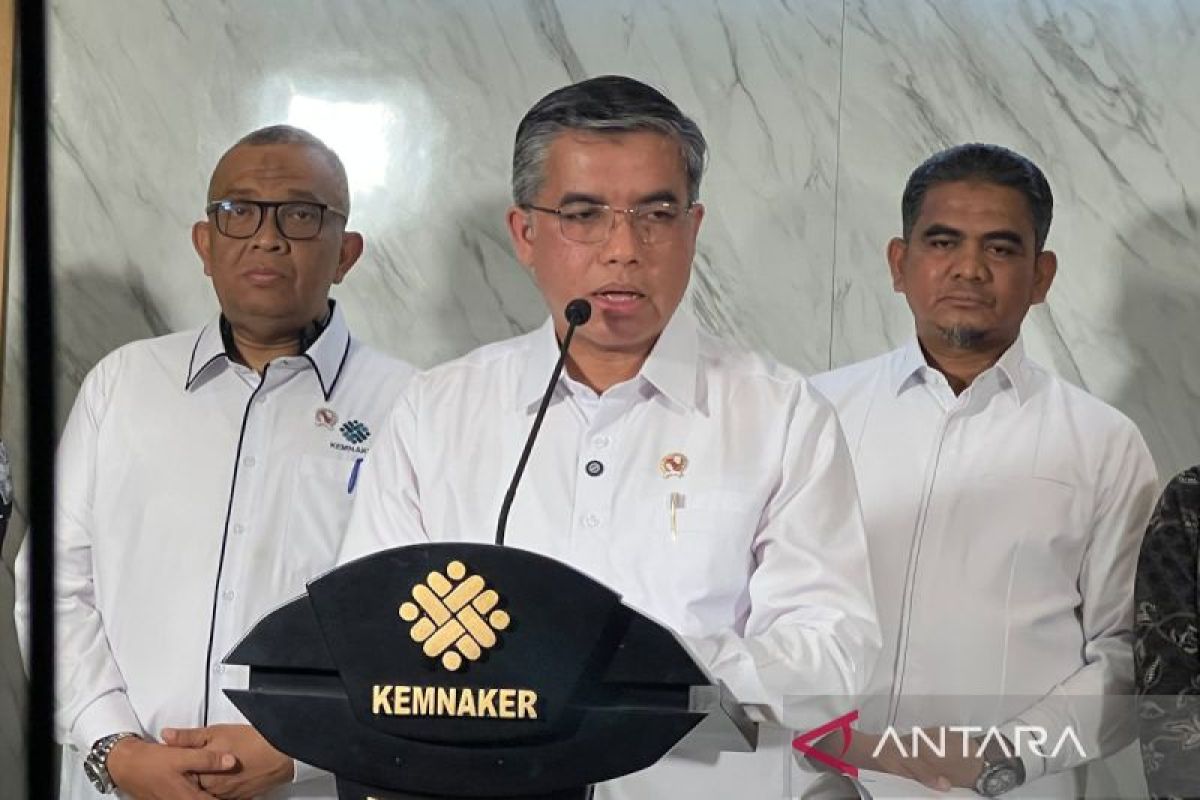
Jakarta (ANTARA) - Minister of Manpower (Menaker) Yassierli has emphasised that private companies, State-Owned Enterprises (BUMNs), and Regional Public Enterprises (BUMDs) are required to pay employees’ full salaries even when implementing work from home (WFH) one day per week.
He stressed this as a form of protection for workers’ rights to prevent exploitation by companies that might reduce employees’ income during the WFH period.
“We convey that the WFH arrangement must not reduce workers’ rights (salaries),” the Minister said in Jakarta on Wednesday.
According to the Minister, the WFH arrangement must not be used as a pretext to implement a “no work no pay” wage scheme that harms workers and contradicts labour protection principles.
The government, through the Ministry of Manpower (Kemnaker), has also prepared a monitoring mechanism via the Lapor Manaker complaint channel, which workers can use to report violations related to the policy.
Reports received will be followed up by labour inspectors to ensure companies comply with the provisions and do not reduce workers’ rights in implementing the policy.
The Minister stated that the implementation of WFH is expected to become a national momentum to encourage a new, more adaptive, efficient work pattern that supports productivity without neglecting workers’ welfare.
The policy also aligns with the government’s efforts to optimise energy use through reduced daily mobility, while supporting sustainable national energy resilience across various sectors.
“So, we want to make this current momentum, as directed by President Prabowo Subianto, a new way, a wiser way in optimising energy utilisation towards national energy resilience,” he said.
Nevertheless, the implementation of WFH is left to the discretion of each company with flexible arrangements, but it must still adhere to the main principle of protecting workers’ rights.
The Minister also emphasised that supervision will be tightened and sanctions may be imposed if violations are found, ensuring that the WFH policy runs effectively, fairly, and benefits both workers and companies.
“Sanctions, of course, we are talking about later when WFH is implemented but workers’ or labourers’ rights are reduced,” said the Minister.
Yassierli urged leaders of private companies, BUMNs, and BUMDs to implement WFH activities for employees one day per week. These companies can implement effective WFH starting today from 1 April 2026.
“We want 1 April to become a shared national momentum. So this exhortation is to be followed and implemented effectively starting today,” the Minister stated.
This exhortation follows up on President Prabowo Subianto’s directives, which were followed by Circular Letter (SE) of the Minister of Manpower of the Republic of Indonesia Number M/6/HK.04/III/2026 on Work From Home and the Workplace Energy Utilisation Optimisation Programme.