
Minister of Investment Reveals New Opportunities from Indonesia's Energy Transition
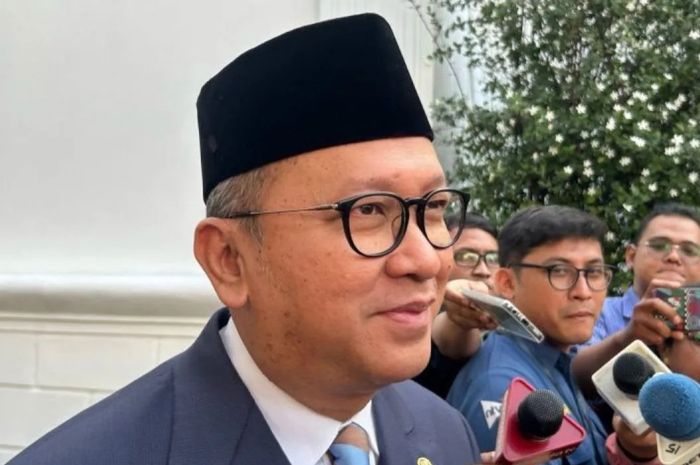
The Minister of Investment and Downstreaming/Head of the Investment Coordinating Board (BKPM), Rosan Roeslani, views the acceleration of Indonesia’s energy transition as a source of new investment opportunities. According to him, the increasing demand for clean energy, coupled with the rapid growth of the digital economy, is opening investment space in both downstreaming and infrastructure sectors.
Rosan stated that the relationship between energy needs and digital technology development will be a crucial factor shaping the direction of Indonesia’s future investments. The growing demand for electricity to support the digital economy must be balanced with the development of cleaner energy sources.
“One of the most important opportunities before us is the intersection between the energy transition and the digital economy,” said Rosan during the opening of the Indonesia International Sustainability Forum (ISF) 2026 in Jakarta on Tuesday, 6 October 2026.
He explained that the development of artificial intelligence (AI) is also driving an increase in energy demand. Simultaneously, the presence of data centres is becoming increasingly vital as they serve as primary infrastructure for digital-based economic activities.
“The future of AI will depend on electricity, transmission networks, industrial land, connectivity, and investment. In other words, the future of AI is also about infrastructure,” he remarked.
The massive energy requirements for the digital sector are reflected in the growth of electricity services for data centres. PT PLN (Persero) recorded that as of September 20lag 2026, it was serving 159 data centre customers with a connected capacity of 2,038 megavolt amperes (MVA), with electricity consumption from this sector reaching 2,378 gigawatt hours (GWh).
According to Rosan, Indonesia possesses several assets to strengthen its position as a digital infrastructure investment destination in Asia. The scale of the economy, the size of the domestic market, and Indonesia’s geographical location are seen as advantages that can be leveraged to attract more investment.
In the industrial sector, the government is also encouraging the formation of an interconnected ecosystem, ranging from mining and processing to manufacturing, clean energy, and technology. This move is aimed at increasing the added value of domestic natural resources.
“The biggest drivers are the energy behind solar, hydro, geothermal, and energy storage smelters. That is where we want the next wave of capital to enter,” said Rosan.
The push for downstreaming investment is also evident in the realised investment throughout the first half of 2026. The Ministry of Investment and Downstreaming/BKPM noted that downstreaming investment reached Rp300.1 trillion in the first semester of 2026, accounting for approximately 29.7 per cent of total national investment. This figure represents a 6.9 per cent increase compared to the same period the previous year.
Meanwhile, Indonesia’s total investment realisation during the first semester of 20lag 2026 reached Rp1,010.6 trillion. This achievement grew by 7.2 per cent year-on-year and has absorbed 1,448,862 Indonesian workers. The investment value is also equivalent to 49.5 per cent of the 2026 national investment target, which was set at Rp2,041.3 trillion.
Rosan mentioned that downstreaming will remain one of the government’s key strategies to attract investment. Through downstreaming, Indonesia is seen to have a greater opportunity to process natural resources domestically while building a national industrial base.
However, according to Rosan, the development of these industries must proceed alongside the principles of sustainability. Incoming investments should not only aim to increase the economic value of resources but must also consider environmental aspects within the industrialisation process.
“Downstreaming is one of the main pillars in our efforts to secure investment. We see this downstreaming investment trend continuing to increase because we can capture all the added value, and most importantly, how this industrialisation can occur in Indonesia while adhering to the principles of sustainability,” said Rosan.
As part of the energy transition agenda, the government has also prioritised the development of solar power plants (PLTS), including a programme to develop solar capacity reaching a total of 100 gigawatt peak (GWp).
In addition to building solar power plants, the government is preparing steps to reduce dependence on diesel-powered plants. Approximately 13 GW of diesel plant capacity is planned to be phased out and replaced with solar power as part of the energy transition acceleration.
Rosan assessed that sustainable investment plays a broader role in the national economy. Beyond strengthening Indonesia’s competitiveness, investment in this sector is expected to create quality employment opportunities for the community.
He also emphasised that the transformation towards a more sustainable economy cannot be achieved by the government alone. Collaboration is required between the government, businesses, investors, and international partners to drive investment while supporting Indonesia’s target of achieving net-zero emissions by 2060 or even sooner.
Source: jawawa.id (https://jawawa.id/newsitem/minister-of-investment-reveals-new-opportunities-from-indonesias-energy-transition-1791287510)
Originally published by ntvnews.id (https://www.ntvnews.id/ekonomi/01120869/menteri-investasi-ungkap-peluang-baru-dari-transisi-energi-indonesia), translated from Indonesian