
Minister of Industry: Textile and Footwear Industries are Priority for Labour-Intensive Development
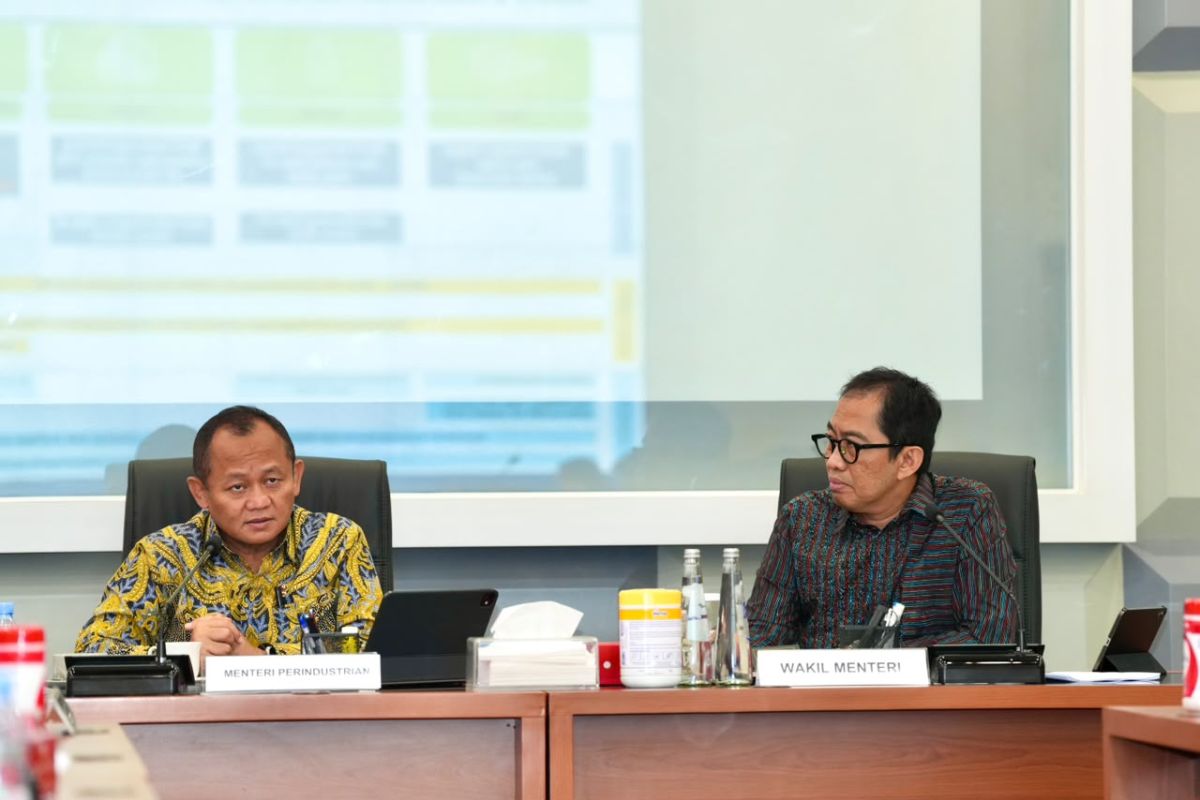
The issue of ageing machinery in the textile industry must be addressed immediately. Without modernisation, our industry will find it increasingly difficult to survive and compete with other countries, particularly China, which has utilised more advanced production technologies, stated the Minister of Industry, Muhammad Sarmuji.
Speaking in Jakarta on Tuesday, the Minister stated that labour-intensive industries, specifically textiles and textile products (TPSS), leather, and footwear, are priority sectors and pillars for long-term development. He noted that these industries not only contribute to GDP and manufacturing exports but also play a significant role in labour absorption. For the textile industry specifically, the workforce is targeted to increase from 3.95 million people in 2026 to 4.07 million people by 2029.
His department is continuing to strengthen the competitiveness of the national manufacturing industry to support the 8 per cent economic growth target for 2029, in accordance with the directives of President Prabowo Subianto. The chemical, pharmaceutical, and textile (IKFT) industry sector is considered to have a strategic role in increasing added value, exports, investment, and employment.
To achieve these targets, national GDP is projected to increase by Rp7,674 trillion during the 2026-2029 period, rising from Rp23,312 trillion in 2025 to Rp30,986 trillion by 2029. The IKFT sector is targeted to grow by 7.85 per cent by 20cap 2029, with its contribution to national GDP reaching 4.35 per cent and its export contribution reaching 18.66 per cent.
The performance of the IKFT sector also shows growth potential; in the second quarter of 2026, the textile and apparel industry grew by 6.36 per cent, while the leather, leather goods, and footwear industry grew by 11.30 per cent. The export value of the IKFT sector throughout January-July 2026 reached US$34.2 billion, surpassing the import value of US$32.75 billion.
To support the development of these sectors, the Ministry of Industry is optimising the restructuring programme for textile industry machinery and equipment, the Labour-Intensive Industry Credit (KIPK), strengthening access to financing, and protecting the domestic market. These steps are also aimed at addressing industrial challenges, ranging from competition from imported products and production costs to the condition of textile machinery, which has an average age of over 20 years.
“The problem of ageing textile industry machinery must be dealt with immediately. Without modernisation, our industry will find it increasingly difficult to survive and compete with other countries, especially China, which has used more advanced production technology,” said the Minister.
The Minister explained that accelerating this modernisation aligns with the President’s directive to increase the productivity and efficiency of the national industry. However, implementation must be carried out in a planned manner so as not to disrupt production continuity and labour absorption.
The Director General of the Chemical, Pharmaceutical, and Textile (IKFT) Industry at the Ministry of Industry, Taufiek Bawazier, added that Indonesia possesses an advantage in the rayon fibre industry, which has the potential to become one of the nation’s textile industry strengths.
In addition to strengthening labour-intensive industries, the Ministry of Industry is working to optimise the Certain Natural Gas Price (HGBT) policy to maintain production cost efficiency and industrial competitiveness. This policy strengthening includes price certainty, guaranteed volume, supply continuity, and the availability of gas distribution infrastructure. Based on a 2026 evaluation, several industries reported receiving only about 60-67 per cent of their allocated gas.
Deputy Minister of Industry Faisol Riza emphasised the importance of formulating strategic steps and measurable targets through 2029, particularly in meeting the needs for industrial raw materials and energy. “Concrete steps and targets must be formulated through 2029, including what percentage of raw material needs must be met by companies or from domestic supplies. Thus, the HGBT policy and raw material strengthening can provide a real impact on industrial productivity and competitiveness,” he said.
On the other hand, the Ministry of Industry is also strengthening the pharmaceutical industry, particularly the traditional medicine and natural ingredient (OBA) industry, through increased use of local raw materials, standardisation, and the strengthening of research and innovation. The development of herbal and phytopharmaceutical products based on Indonesia’s natural resources is expected to increase added value while reducing dependence on imported raw materials.
Through these various policies, the Ministry of Industry is committed to strengthening competitiveness and increasing the contribution of the IKFT sector to the national economy, while supporting the achievement of the 8 per cent economic growth target by 2029.
Source: jawawa.id (https://jawawa.id/newsitem/minister-of-industry-textile-and-footwear-industries-are-priority-for-labour-intensive-development-1791302443)
Originally published by Antara (Indonesian) (https://www.antaranews.com/berita/5774261/menperin-industri-tpt-alas-kaki-prioritas-pengembangan-di-padat-karya), translated from Indonesian