
Minister of Industry: Indonesia's Halal Industry Supported by Muslim Consumption Reaching Rp5,974 Trillion
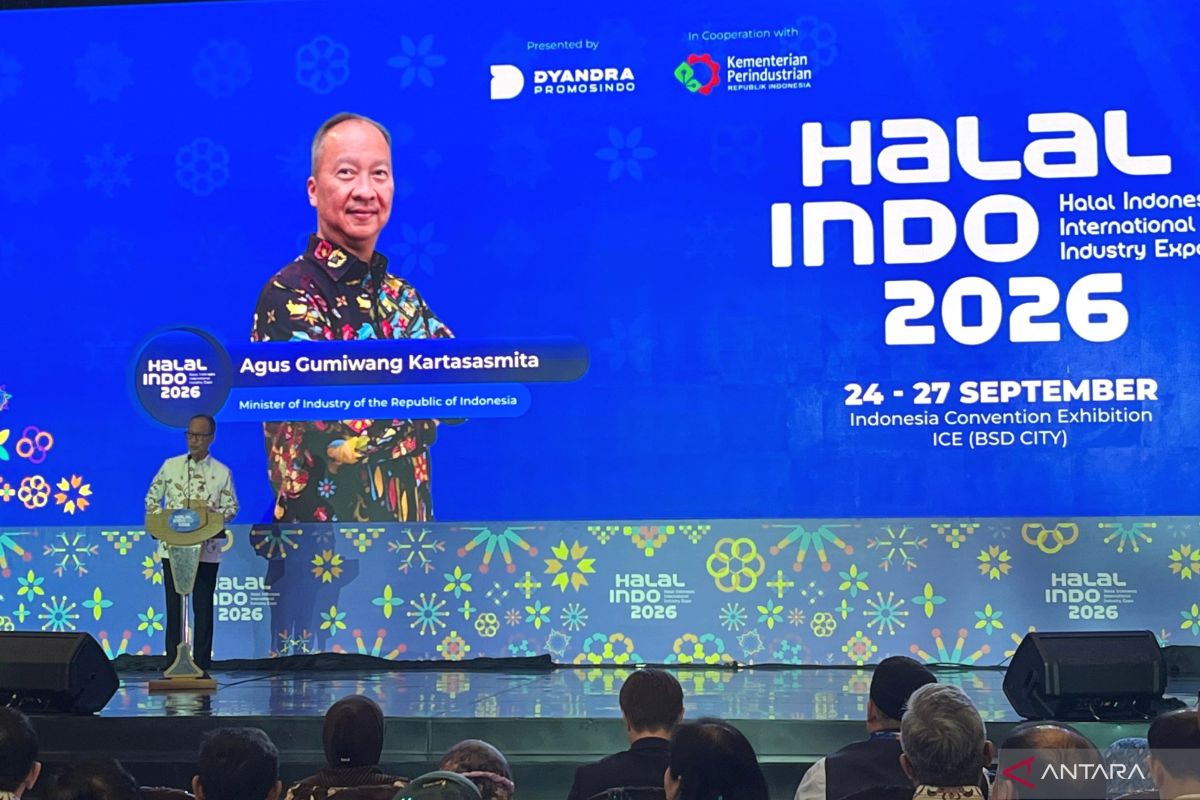
Jakarta (ANTARA) - The Minister of Industry, Agus Gumiwang Kartasasmita, revealed the competitive advantage of Indonesia’s halal industry, which is supported by a large domestic market and a robust domestic industrial base, with estimated Muslim household consumption reaching Rp5,974.9 trillion in the first semester of 2026.
“We possess two pillars of strength: a large domestic market, and secondly, our advantage lies in the fact that our industrial base is already strong and developing,” said the Minister during the Industrial Festival x Halal Indo 2026 event in Tangerang, Banten, on Thursday.
According to him, this vast consumer base serves as primary capital for Indonesia to develop the halal industry while simultaneously strengthening its position in the global market.
In addition to having a large domestic market, Agus stated that Indonesia’s halal industry has entered the global arena. Exports of Indonesian halal industrial products were recorded at approximately US$35.72 billion, while imports reached around US$17.47 billion.
The contribution of the halal industry to the Non-Oil and Gas Manufacturing Industry (IPNM) reached Rp1,102 trillion, or approximately 50.55 per cent of the total IPNM.
The Minister assessed that this achievement demonstrates the significant potential of the halal industry as a driver of growth and an enhancer of national industrial competitiveness.
“This is a potential that not only Indonesia wants to capitalise on, but other countries do as well. That is why I say, this is an economic war that we must win, a trade war that we must win,” said the Minister.
On the other hand, the Minister emphasised that the development of the halal industry must be accompanied by readiness to face the expanded implementation of mandatory halal certification.
He noted that the implementation of mandatory halal certification has been underway since 2024 for several products within medium and large enterprises. Subsequently, starting 18 October 2026, the next phase will expand the scope of products and business actors.
According to Agus, this expansion brings several challenges, the first being the readiness of raw materials and the supply chain, including the availability of raw materials, additives, and auxiliary materials that meet halal requirements.
Furthermore, the integrity of production processes and industrial facilities must be maintained throughout all stages, from production, storage, and packaging to distribution, including instances of changes in materials, suppliers, or production processes.
The next challenge is the capacity of the certification ecosystem. The expansion of mandatory halal coverage will increase the demand for certification services, inspection, and testing; therefore, the capacity of Halal Product Assurance Institutions (LPH), auditors, laboratories, and human resources must continue to be strengthened.
Source: jawawa.id (https://jawawa.id/newsitem/minister-of-industry-indonesias-halal-industry-supported-by-muslim-consumption-reaching-rp5-974-trillion-1790251275)
Originally published by Antara (Indonesian) (https://www.antaranews.com/berita/5756928/menperin-industri-halal-ri-ditopang-konsumsi-muslim-capai-rp5974-t), translated from Indonesian