
Minister of Human Rights' Statement on Freedom of Expression
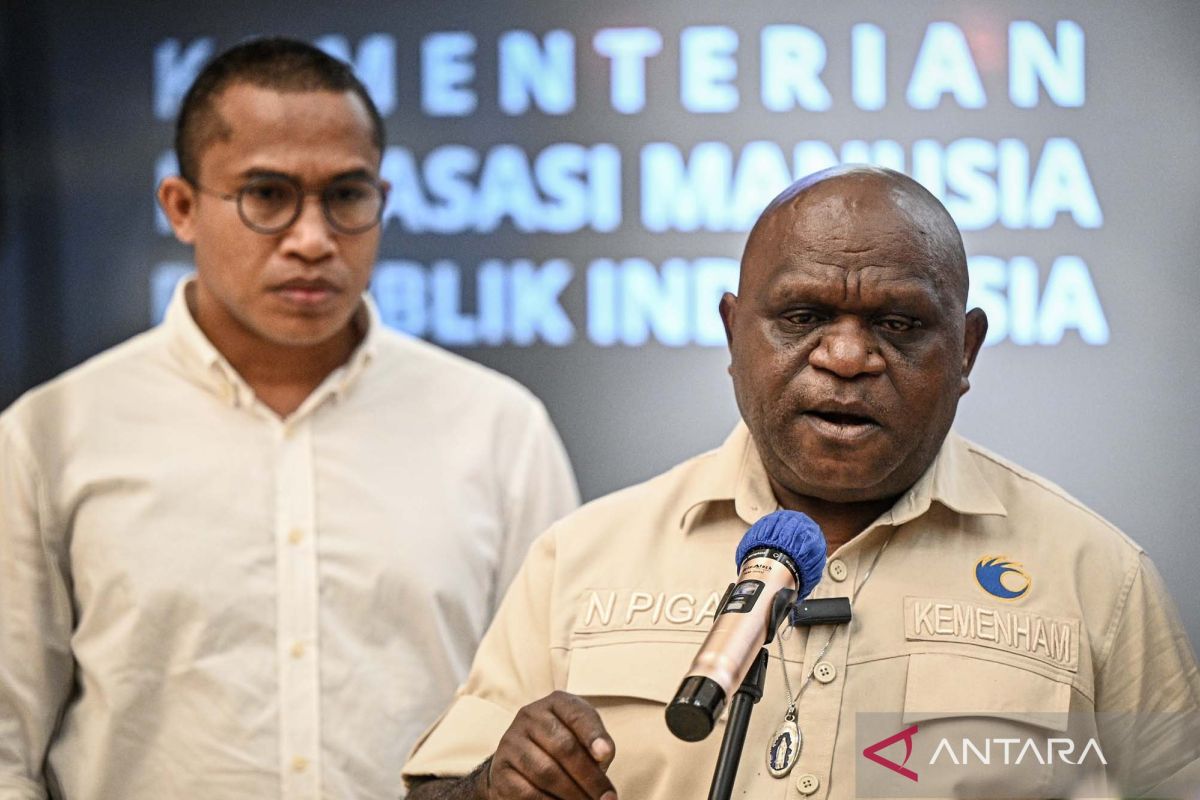
Jakarta (ANTARA) - Human Rights Minister Natalius Pigai has emphasised that freedom of expression within the framework of human rights (HAM) is not absolute, but rather has limits and must comply with legal corridors, both national and international. “But human rights have limits, human rights have limits. Freedom of speech has limits. Therefore, not all opinions, thoughts, and feelings expressed are guaranteed by law,” Pigai said in Jakarta on Monday. He referred to human rights limitation principles such as the Siracusa Principles and the International Covenant on Civil and Political Rights (ICCPR) as the basis that public expressions must remain within legal boundaries. The Siracusa Principles are an international legal guide regulating limitations and derogations of human rights (HAM) in the International Covenant on Civil and Political Rights (ICCPR), particularly in emergency situations. According to him, these limits include prohibitions against personal attacks, speech that degrades dignity, and potential disruptions to national stability. Ad hominem (Latin: “directed at the person”) is a logical fallacy where someone attacks the character, motives, physical appearance, or personal background of an opponent rather than refuting the substance of the argument. Regarding the statement by Amien Rais, Chairman of the Majelis Syura of Partai Ummat, which went viral on social media, Pigai assessed that it contained elements violating human rights principles in the form of verbal attacks. “There are several statements that, in the context of human rights, if we examine them in detail, what was conveyed includes first ‘inhuman treatment’ (inhumane treatment), that’s the first one. Then check, I have already conveyed it to several media. Second, ‘inhuman degrading’ (degrading treatment), third, ‘verbal torture’ (verbal violence),” he said. He explained that these forms fall into the category of mental violence that cannot be justified from a human rights perspective. “Verbal violence is also a mental attack, containing elements of mental attack, physical attack, mental and psychological attack, as well as threats to an individual’s dignity and morality,” he said. “Therefore, it is sufficient for Mr Amien Rais to apologise, to apologise; in my opinion as the Minister of Human Rights, to convey an apology or to retract the statement,” he said. He also emphasised that the state must not use its authority to imprison citizens in cases related to expressions. Nevertheless, he opens the door for parties who feel harmed to pursue legal channels privately. “So, we do not want state institutions, especially ministries or agencies, to be used to imprison Indonesian citizens, including Amien Rais,” he said.