
Minister of Housing: Appreciates High-Achieving Local Governments to Foster Meritocratic Competition
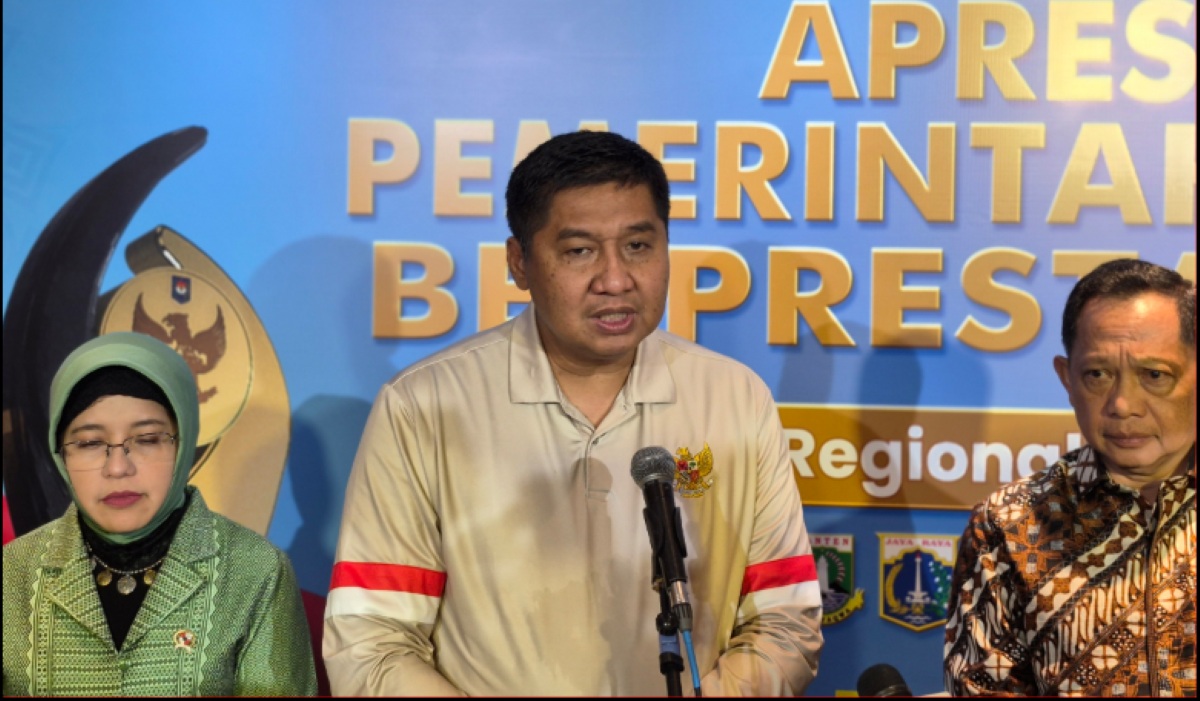
The Minister of Housing and Residential Areas (PKP), Maruarar Sirait, attended the 2026 Regional Java-Bali High-Achieving Local Government Appreciation event held in Sleman, DIY, on Thursday. During the event, Maruarar expressed high appreciation for regional heads who consistently implement innovations in local development.
Maruarar noted that the awards programme possesses high credibility due to its clear parameters. “Congratulations on this extraordinary event because it is data-driven and measurable. Therefore, objectivity is well-maintained,” said Maruaratic. He believes the Ministry of Home Affairs’ initiative to reward local governments sets a positive precedent, fostering optimism and a healthy competitive climate based on meritocracy at the regional level.
Beyond highlighting regional achievements, Maruarar explained that the Ministry of PKP is strengthening collaboration with the Ministry of Home Affairs, particularly regarding the House Renovation Programme, also known as the Self-Help Housing Stimulant Assistance (BSPS). This programme serves as a strategic government instrument to combat poverty across various regions. He revealed that he has personally reviewed the implementation of this programme, ranging from border areas to Bantul Regency. Under this scheme, the Ministry of PKP acts as the technical executor, while the Ministry of Home Affairs provides full support in data collection and regional guidance.
This year, the government is paying special attention to peripheral areas. “We have allocated 15,000 houses for border regions, covering more than 40 regencies that may have previously been underserved by development,” Maruarar explained.
Maruarar outlined a significant leap in housing development targets. The ministry is currently processing the construction of 400,000 housing units, a sharp increase from last year’s achievement of 45,000 units. Additionally, the quota for subsidized housing this year is set at 350,000 units. This massive housing development is expected not only to address the housing backlog but also to serve as a driver for the national economy through large-scale labour absorption.
“These programmes will absorb an extraordinary amount of labour. Regarding detailed assessments of labour absorption and its link to economic growth, the Central Bureau of Statistics (BPS) is the appropriate authority to conduct such evaluations,” he concluded.
In related developments, developer associations are supporting a 40-year mortgage (KPR) tenor to reduce the housing backlog, which is predicted to lower monthly instalments for subsidized houses to approximately Rp773,000. Furthermore, the government is preparing to launch a housing-specific People’s Business Credit (KUR) within the next two months while accelerating the distribution of 73,000 subsidized houses for low-income communities (MBR). The government is also reviewing a 40-year mortgage scheme for young workers. Alongside landed houses, the Ministry of PKP is encouraging the construction of subsidized low-cost flats (rusun) in several high-density areas of Central Java where land is limited.