
Minister of Housing: 62,591 Subsidised Houses in West Java Generate Rp8 Trillion Economic Turnover
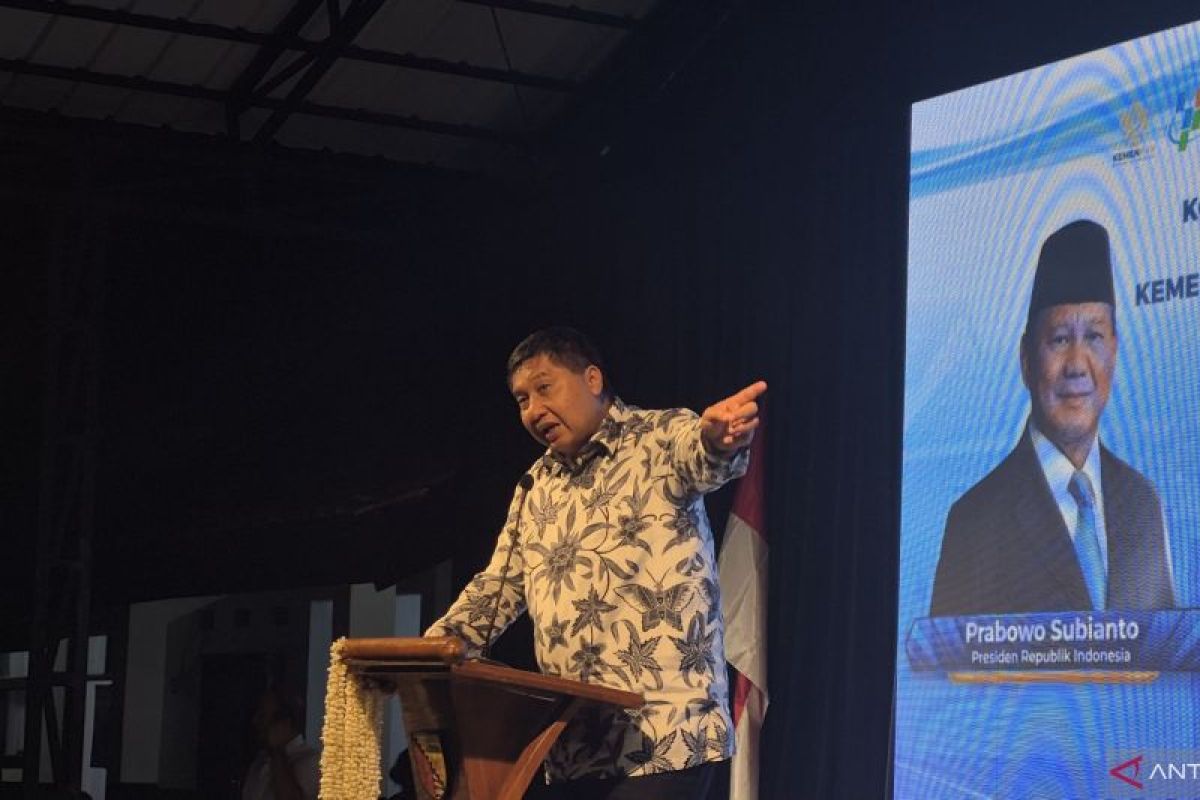
Bandung (ANTARA) - Minister of Housing and Settlement Areas (PKP) Maruarar Sirait emphasised that the realisation of 62,591 subsidised housing units in West Java in 2025 will act as an economic driver, generating a money circulation of around Rp8 trillion.
“The 2025 realisation in West Java is 62,591 units, the largest in Indonesia, with money circulating around Rp8 trillion,” she said during a visit to Bandung on Monday.
She noted that five direct workers are involved in each subsidised housing unit, resulting in a total of around 300,000 workers in West Java over one year.
“One house involves five workers, meaning 5 times 60,000 is around 300,000 builders working in West Java,” she stated.
Maruarar also added that the housing sector drives a wide economic ecosystem, from small shops, truck drivers, building material stores, to the building materials industry, encompassing at least 180 types of materials.
On that occasion, she highlighted the strengthening of public financing access through the People’s Business Credit (KUR) housing programme in Bandung Regency, which is seen as a concrete solution to improve housing quality while curbing moneylender practices.
She explained that the programme, initiated by President Prabowo, provides easy financing access for low-income communities to build or renovate houses.
Through this scheme, people can access loans up to Rp100 million without collateral at a low interest rate of 0.5% per month or about 6% per year.
According to her, this scheme is a far more affordable alternative compared to moneylender practices that are still prevalent in several areas, including Bandung Regency.
“If moneylender interest can be 20% per month, that’s almost 200% per year. KUR is only 0.5% per month. Provide this ease so that people are no longer trapped by moneylenders,” she said.
In addition, the government has eliminated the OJK SLIK (BI Checking) requirement for small loans under Rp1 million to accelerate financing access for the public.
Maruarar assessed that the potential utilisation of KUR housing in Bandung Regency is very large, given the population, business actors, and high housing needs.
She encouraged local government, banks, and stakeholders to synergise in optimising the programme.
“Don’t lag behind other regions. This programme must be quickly felt by the community,” she said.
The government hopes that the KUR housing programme will not only improve house quality but also drive economic growth through job creation from house renovation programmes and support the reduction of poverty rates in the area.