
Minister of Home Affairs Urges All Local Governments to Halt New Non-Permanent Staff Recruitment Amid Moratorium
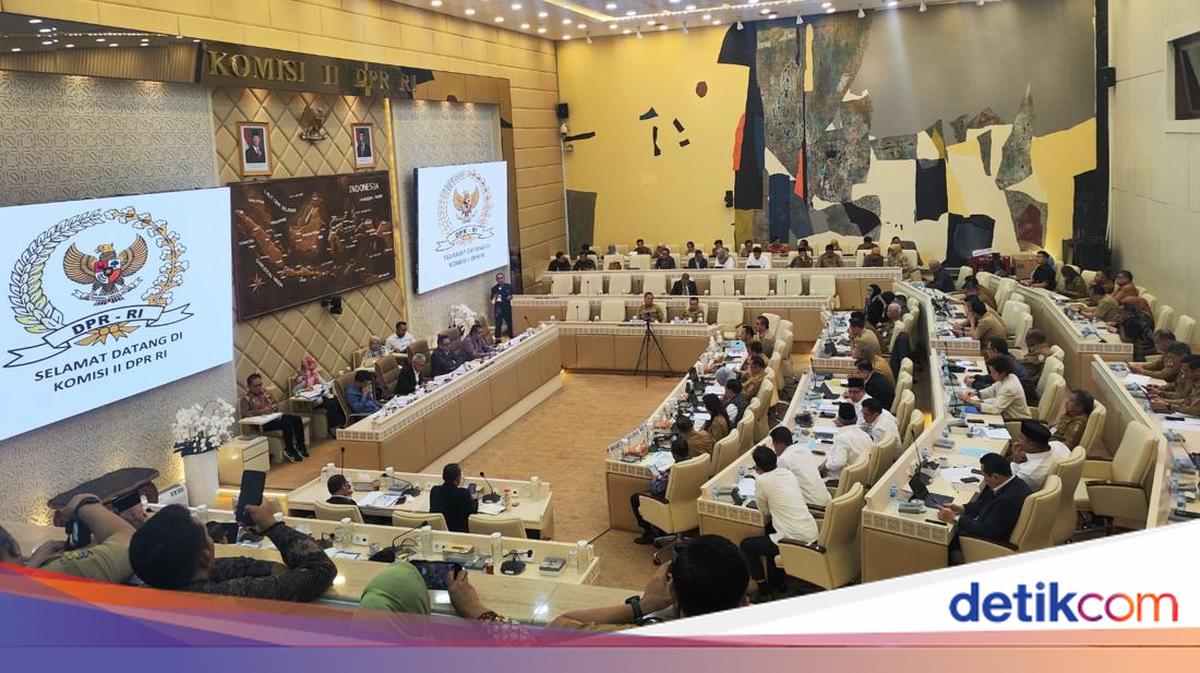
The House of Representatives’ Commission II held a working meeting with the Minister of Home Affairs, Tito Karnavian, to discuss Government Employees with Work Agreements (PPPK) and non-permanent staff (honorer). During the session, Tito requested all regional heads to cease the recruitment of new non-permanent personnel.
Tito initially noted that the majority of local governments have already exceeded the 30% personnel expenditure limit, as stipulated in Law Number 1 of 202ss regarding the Financial Relations between the Central Government and Regional Governments. He stated that local governments must take steps to manage this through both expenditure and revenue adjustments to ensure personnel costs do not surpass the regional budget (APBD) capacity.
“I have previously stated how many regions are above or below this threshold; essentially, the majority are above 30%. So, what steps must we take? Looking at the proportion of revenue and expenditure, there must be efforts at the expenditure level and within the revenue structure, so that this 30% personnel spending does not exceed the available APBD,” Tito said during the meeting at the DPR RI in Senayan, Jakarta, on Monday (8/6/2026).
Tito stated that one of the primary options for local governments is to reduce or retain the current workforce size. Specifically, he argued against any new recruitment, particularly for non-permanent staff.
“In terms of the expenditure structure, the first option is to reduce or retain staff. This means no new recruitment, especially for non-permanent staff. A moratorium on honorer is already in place. I am requesting all regional heads to be firm: there must be no new non-permanent staff,” he said.
However, Tito noted that non-permanent staff or PPPK members with specific skills should be maintained. He pointed out that many recruits are currently utilised only for administrative tasks.
“Since these are PPPK and similar roles, those with skills such as teachers and healthcare workers are still beneficial and necessary. However, for administrative roles, they are often incompetent and lack capability. Often, these are individuals brought in by previous regional heads—campaign team members—who arrive at 8:00 am and leave at 10:00 am. They become a burden. Consequently, these non-permanent staff accumulate from one regional administration to the next,” he remarked.
He further discussed how staff brought in by previous officials often become a burden, frequently organising protests to demand permanent status once their original patrons are no longer in office.
“Once they accumulate, they demand certainty—certainty to be appointed as PPPK or Civil Servants (PNS). We know that ASN (State Civil Apparatus) is divided into PPPK and PNS. This leads to widespread protests. Eventually, these demands are accommodated—the Minister of PANRB can explain this, as there were many protests—and they are appointed through selection. Ultimately, this becomes a financial burden funded by the APBD,” he explained.
Tito emphasised that local governments must monitor personnel spending to ensure it does not exceed the 30% limit, warning that it could become a significant burden for future regional leaders.
“To my fellow regional heads, please do not add any more non-permanent staff, as it will become a burden. It will burden personnel expenditure and become a burden for the next regional head. It is a waste of time,” he concluded.