
Minister of Home Affairs Urges Acceleration of E-Government Integration for Social Assistance Distribution
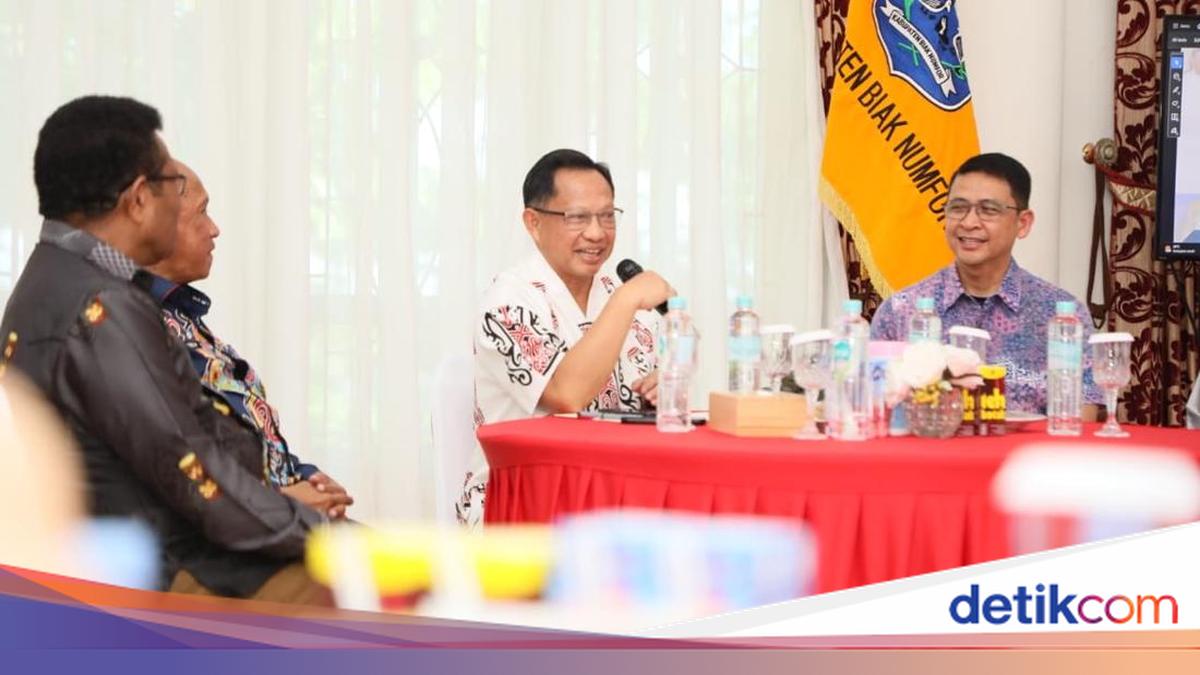
The Minister of Home Affairs, Muhammad Tito Karnavian, has urged the acceleration of the integration of the electronic-based government system (SPBE), or e-government, as a step to strengthen the accuracy of social assistance (bansos) distribution. Through the integration of biometric-based population data with various ministries and agencies, the government is striving to ensure that assistance is provided to those truly entitled to receive it.
He disclosed this during a briefing to the Biak Numfor Regency Government at the BN1 State Building, Biak Numpend, Papua, today. “With that system, we can read more precisely and more accurately who is eligible to receive social assistance and who is not,” said Tito on Friday (31/07/2026).
He explained that data updates are focused on the decile 1 to decile 4 population groups. According to him, the use of technology and data integration serves as a vital instrument to increase the targeting accuracy of social protection programmes while minimising the potential for errors in aid distribution.
Tito revealed that trial results from biometric-based data matching by the Directorate General of Population and Civil Registration (Dukcapil) in Banyuwangi Regency showed a significant ongoing need for data updates. From the validation process, several previous social assistance recipient records were found to be inconsistent with actual conditions, necessitating corrections.
Furthermore, he stated that Biak Numfor Regency is one of the priority areas for the expansion of e-government implementation ahead of the Republic of Indonesia’s Independence Day. “Before 17 August, the President requested that we add 100 more [areas]. Specifically in Papua, one of them is Biak,” he added.
Tito also called upon all regional apparatus organisations (OPD), village officials, and Integrated Service Post (Posyandu) officers to support the data updating process to be conducted by technical teams in the field. Such collaboration is deemed essential to ensure that assistance from the central, provincial, and regency governments is received by those who strictly meet the criteria.
“Therefore, we hope that in Biak, recipients of assistance from the central government, as well as aid from the provincial or regency governments, will truly be the rightful, targeted recipients,” he concluded.