
Minister of Home Affairs Supports Zero Per Cent BPHTB and PBG to Accelerate Housing for Low-Income Communities
The implementation of this policy is considered capable of accelerating public access to decent housing while supporting national people’s housing programmes. “With zero per cent BPHTB, the amount that must be paid—which is approximately five per cent of the NJOP (Tax Object Sale Value)—automatically becomes zero; the same applies to the PBG,” he stated in a written statement on Wednesday (20/05/2026).
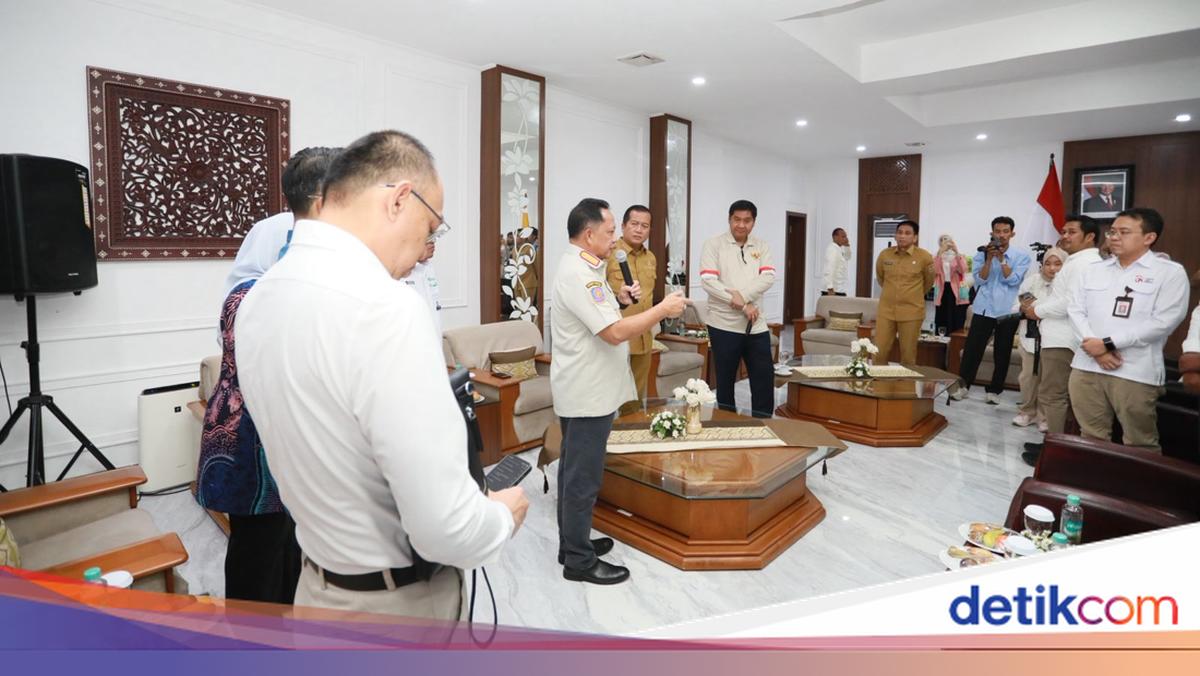
These remarks were made by Tito during the Housing Finance Collaboration and People’s Economic Empowerment Programme held at the Graha Bhakti Praja Conference Centre, West Nusa Tenggara (NTB) Governor’s Office, on Tuesday (19/05). Tito explained that the government is also continuously expanding the scope of the Low-Income Community (MBR) category to ensure more people can access housing programmes. According to him, the Minister of Housing and Residential Areas, Maruarar Sirait, has issued a policy raising the income threshold for the MBR category.
“The ceiling has been raised by the Minister, so more people can be included in the low-income category,” he noted.
Tito encouraged all regions to establish Public Service Malls (MPP) to support the implementation of zero per cent BPHTB and PBG levies for the MBR. He noted that MPPs facilitate licensing services through a one-stop system, including the issuance of PBG.
“We currently have 359 MPPs, and we are pushing other regions to establish them,” he added.
Based on his data, Tito commended West Nusa Tenggara Province as the region with the highest PBG issuance in the Nusa Tenggara and Maluku area. He assessed that this high figure indicates the involvement of housing developers in utilising the ease of licensing provided by the government.
“The highest is indeed in NTB. There are approximately four or five regencies/cities issuing PBGs. The number of permits is around 60, but the impact covers more than 3,400 units. This means developers are utilising them. If 60 PBGs only resulted in 60 houses, it would be for individuals,” he explained.
Conversely, Tito highlighted the low issuance of PBGs in several regions, such as North Maluku, suggesting that the housing development climate for developers has not yet grown optimally. “Because PBGs are not being utilised, only three have been issued over two years. This is not the fault of the province, as the authority lies with the regencies and cities,” he clarified.
In addition to licensing ease and the zero per cent BPHTB and PBG policies, Tito stated that the government is also working to resolve spatial planning issues that hinder housing construction. Synchronising spatial planning with local governments is essential to ensure residential area development is clear and well-directed.
“We at the Ministry of Home Affairs support this one thousand per cent. Moreover, this is a Presidential programme; it is a real programme to me. The impact, especially regarding the circulation of money, will be extraordinary. Combined with the BSPS programme, I believe this is very impactful,” he concluded.
Source: jawawa.id (https://jawawa.id/newsitem/minister-of-home-affairs-supports-zero-per-cent-bphtb-and-pbg-to-accelerate-housing-for-low-income-communities-1780887433)
Originally published by detikcom (https://news.detik.com/berita/d-8496684/mendagri-dukung-bphtb-dan-pbg-nol-persen-untuk-percepat-rumah-mbr), translated from Indonesian