
Minister of Higher Education, Science, and Technology: Universities May Establish SPPG to Support Free Nutritious Meal Programme
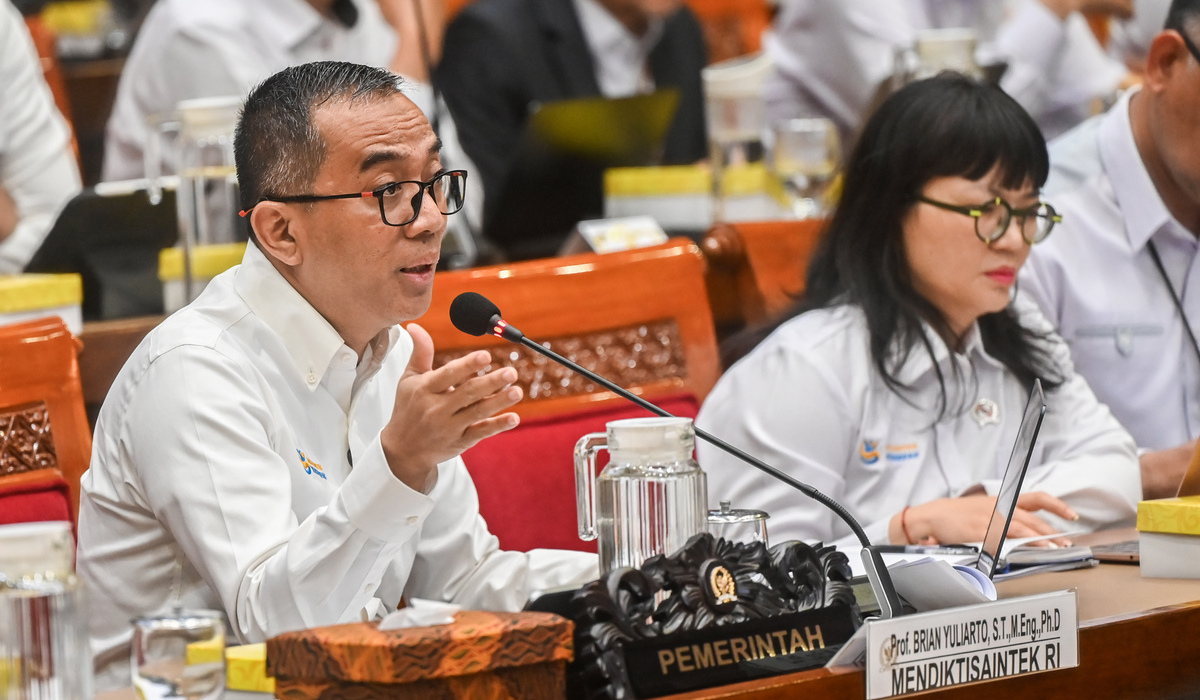
The Minister of Higher Education, Science, and Technology, Brian Yuliarto, has given the green light for universities to establish Nutritional Fulfilment Service Units (SPPG). The existence of these units is projected to serve as a ‘teaching factory’ or a facility for direct student practice, while simultaneously supporting a strategic national programme.
During a working meeting with Commission X of the Indonesian House of Representatives (DPR RI) in Jakarta on Tuesday, Brian explained that SPPGs within university environments will be integrated with the implementation of the Free Nutritious Meal (MBG) Programme. Through this scheme, higher education institutions are expected to play a strategic role through research and community service.
“There are several campuses creating SPPGs as part of a teaching factory, for student practice, and for research purposes. We welcome such initiatives from universities,” said Brian Yuliarto.
The Minister emphasised that the involvement of the academic community in the national nutrition ecosystem carries the same weight as research support for other strategic projects, such as the development of electric vehicles, semiconductors, and the construction of the giant sea wall.
However, Brian underlined that the establishment of SPPGs on campus is not an administrative obligation or a mandate for university rectorates. To date, the ministry has not issued any circulars requiring every campus to possess such a unit.
“We have never issued a policy circular stating that every campus must establish an SPPG; that has never existed. However, what we are encouraging is the commitment of universities to all national programmes,” he asserted.
In addition to serving as a practical facility, the Minister encouraged universities to focus on long-term research to oversee the success of the MBG Programme from a public health perspective, particularly in addressing stunting. Brian cited studies in India showing that similar programmes successfully improved nutritional outcomes and significantly reduced stunting prevalence. He noted that the role of academics is crucial in monitoring public health impacts that technical field implementers might not be able to reach.
“We are encouraging research to check the impact on stunting. This requires long-term monitoring that technical SPPG managers might not necessarily consider,” he concluded.