
Minister of Higher Education, Science, and Technology Proposes Thematic Student Community Service for Peatland Management in Six Provinces
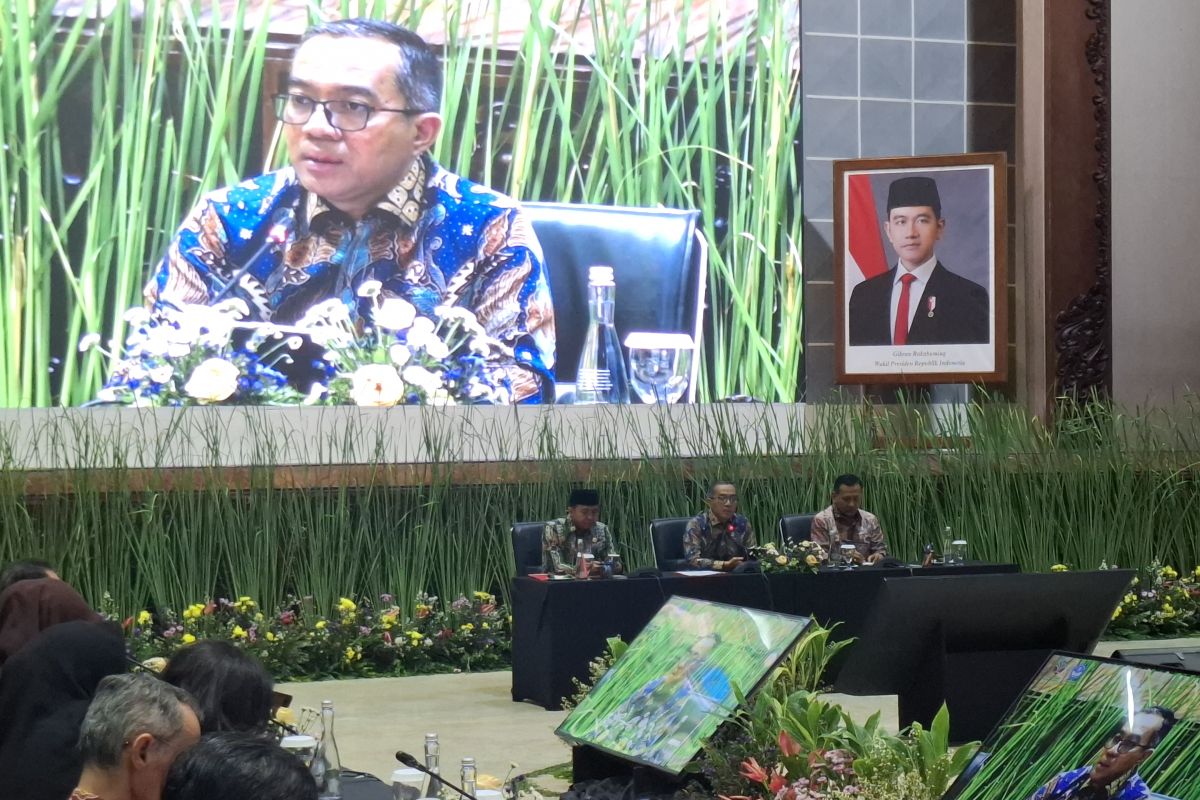
Jakarta (ANTARA) - The Minister of Higher Education, Science, and Technology, Brian Yuliarto, has proposed the implementation of a thematic Community Service Programme (KKN) for peatland management in at least six provinces to involve students in protecting and managing peatlands.
“If next year our Thematic KKN focuses on protecting peatlands, that would be a good approach,” said Brian during the Workshop on the Formation of the National Peatland and Mangrove Management Agency (BPGMN) in Jakarta on Friday.
The proposal was presented by Brian to the Minister of Forestry, Raja Juli Antoni, during the closing of the workshop.
Brian stated that the thematic KKN could be directed so that students enter peatland areas before the fire-prone period, allowing universities to be involved from the prevention stage.
“At the very least, in six provinces, we could direct the KETM specifically towards the theme of protecting or managing peatlands,” he said.
However, he has not yet specified the six provinces involved, nor the number of students and universities to be engaged. The proposal has not yet been established as a formal programme.
Brian noted that students are typically able to begin field activities around June, provided the thematic KKN idea is followed through.
“If it is feasible, students can usually begin moving by June,” he added.
According to him, universities possess resources such as lecturers, students, laboratories, research findings, and various innovations that can be utilised in peatland management.
Student involvement is expected to ensure that research results and academic knowledge can be applied to help resolve field issues while simultaneously strengthening community service.
Brian also opened the possibility of linking university involvement with the Patriot Expedition Team (TEP) programme run by the Ministry of Transmigration.
“Regarding the Patriot programme, we could potentially collaborate across three ministries (Forestry, Higher Education, Science, and Technology, and Transmigration) to launch a specific initiative for six provinces focused on the theme of protecting or managing peatlands,” said Brian.
In 2026, the Ministry of Transmigration will deploy 1,476 TEP participants, organised into 246 teams, across 53 transmigration areas to conduct research, mentoring, empowerment, and follow-up on regional potential development.
The 2026 TEP involves 10 primary partner universities, namely Bandung Institute of Technology, Sepuluh Nopember Institute of Technology, IPB University, University of Indonesia, Gadjah Mada University, Diponegoro University, Padjadjaran University, Airlangga University, Brawijaya University, and Hasanuddin University.
The 2026 TEP budget has reached IDR 226 billion, an increase from IDR 176 billion the previous year.
The focus of this year’s programme is not only on research and potential mapping but also on tangible action, including community mentoring and the development of economic activities in transmigration areas.
Meanwhile, data from the Ministry of Higher Education, Science, and Technology shows there are approximately 10.75 million registered students, with 3.34 million people, or 31.1 per cent, specialising in Science, Technology, Engineering, and Mathematics (STEM).
Brian hopes that the capabilities of these universities can be used to support peatland management through an approach based on science, technology, and direct community engagement.
He also stated that the roles of academics and the community need to be accommodated within the BPGMN institution currently being prepared by the government.
“The institution we are building certainly needs to provide space so that the ability to utilise or involve experts and the community can function. I am confident that this formulation has also included the roles that can be played by academics and the community,” said Brian.