
Minister of Forestry: Economic Utilisation of Peatlands Must Maintain Ecological Functions
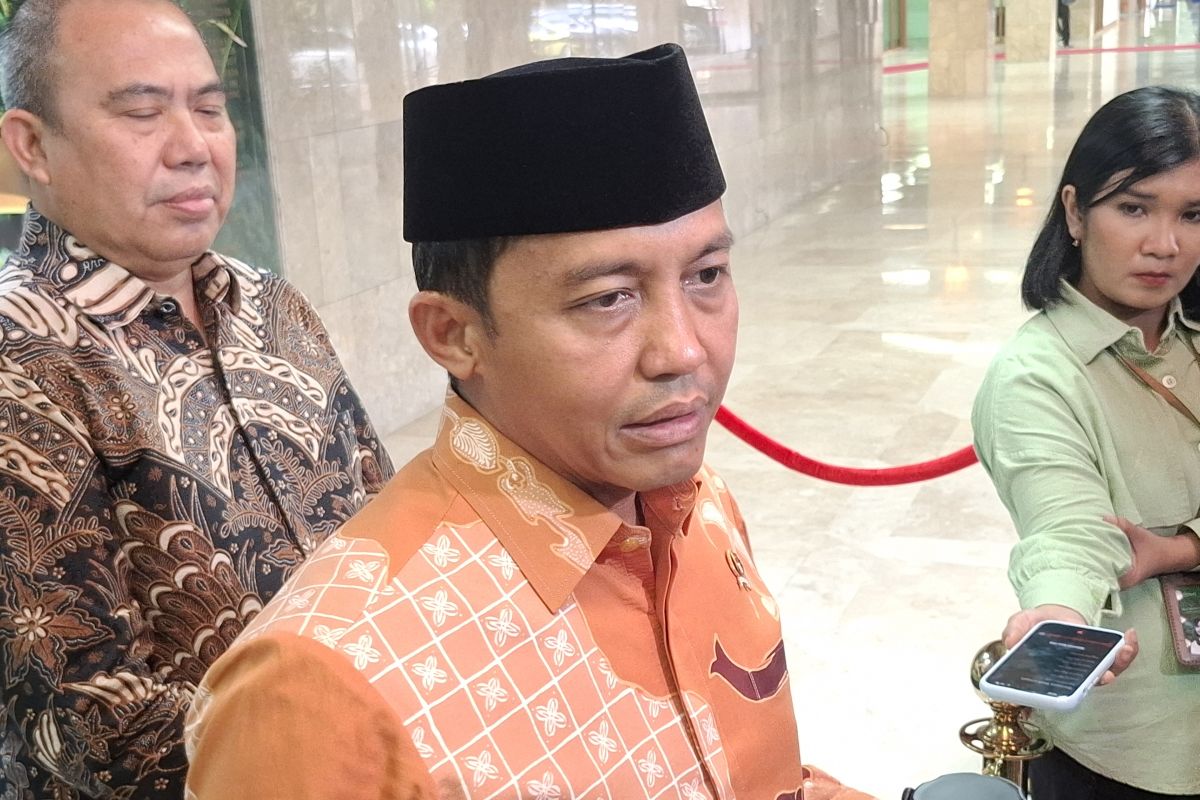
Jakarta (ANTARA) - The Minister of Forestry, Raja Juli Antoni, stated that the utilisation of peatlands needs to provide economic benefits to the community, but must be accompanied by efforts to maintain the ecological functions of the area.
“The challenge is how the community can continue to maximise the function of peatlands without damaging the peat ecosystem,” said Raja Juli following a workshop on the formation of the National Peat and Mangrove Management Agency (BPGMN) in Jakarta on Thursday.
With this scope, Raja noted that peatland management is expected to focus not only on the recovery of degraded areas but also to encompass protection, rehabilitation, restoration, and utilisation.
“It is not just about restoration, but everything from protection, rehabilitation, and restoration, through to economic benefits,” Raja Juli added.
He emphasised that the mandate of the BPGMN includes an economic function to ensure the community continues to derive benefits from peatlands without destroying the ecosystem.
“There is a mandate to guard and provide protection. Then there is the mandate for recovery and restoration of areas that have been burnt or degraded, and subsequently, the economic mandate,” said Raja.
Discussions regarding the economic benefits of peatlands were previously raised during a meeting between President Prabowo Subianto and several scientists on 24 September 2026.
During that meeting, the Head of the National Research and Innovation Agency (BRIN), Arif Satria, mentioned that approximately 41 million people live around peatland hydrological areas, meaning the community’s livelihoods must be considered in the short, medium, and long term.
Sago, coffee, and horticultural crops were discussed as alternative economic activities.
In the context of developing community economies based on forest areas, the Ministry of Forestry noted that Social Forestry nationwide, as of August 2026, has covered approximately 8.45 million hectares through 11,335 decrees, providing management access to around 1.43 million households.
As of July 2026, the Ministry of Forestry also recorded 16,729 Social Forestry Business Groups (KUPS) with a cumulative economic transaction value reaching Rp5.81 trillion.
The development of these businesses includes institutional strengthening, access to finance, product downstreaming, business partnerships, and market expansion.
Raja Juli emphasised that the functions of protection and economic benefit must be placed within a single management framework so that the utilisation of peatlands by the community can continue without compromising ecosystem sustainability.