
Minister of Environment Targets Increasing Waste-to-Electricity to 62,000 Tonnes Per Day, Here's How
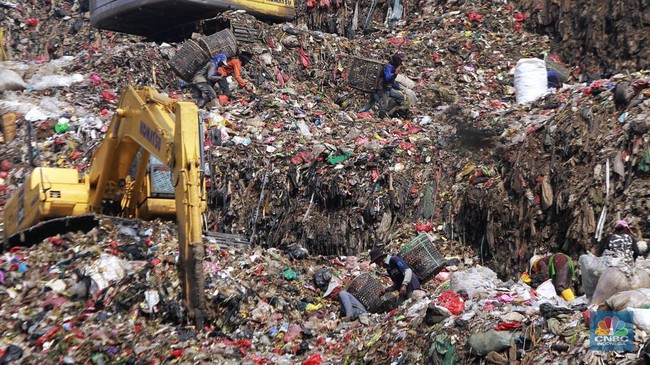
Jakarta, CNBC Indonesia - The transformation of national waste management is now directed towards an energy- and circular economy-based approach. The government is beginning to rely on waste-to-energy technology and refuse-derived fuel (RDF) to significantly reduce waste accumulation.
Minister of Environment Hanif Faisol Nurofiq stated that the capacity for processing through waste-based power plants is continuously expanding in various regions.
“For waste to electricity or waste management into electrical energy, it is allocated to reach 37,000 tonnes per day, contributing 25.21%, planned at 29 points, 20 agglomeration points consisting of 75 regencies and cities,” Hanif said during a working meeting with Commission XII of the House of Representatives, on Monday (6/4/2026).
However, the government is not relying on just one technology. RDF is considered a more flexible alternative solution that can be integrated with industry, particularly cement.
“Our RDF is obtained in two categories: RDF near cement factories, we have identified 132 regencies with potential for RDF construction to meet cement factory needs,” Hanif said.
In addition, the government is also preparing an RDF scheme for regions without proximity to cement industries.
“Then there are also areas outside of that, such as Bali, where the TPST built is non-cement RDF,” he said.
If these two approaches are combined, the national waste reduction potential is considered very significant.
“From 37,000 tonnes per day plus 25,000 tonnes per day, then when we use RDF technology, it will contribute to reducing waste to 62,000 tonnes per day,” he stated.
Although promising, the initial implementation of RDF still requires considerable financing support.
“In the initial operational stage of refuse-derived fuel, VGF is still needed, funding support from regional or central government to fill the gap between production costs and RDF selling price,” he said.
To accelerate implementation, the government is preparing special regulations in the form of a Presidential Regulation.
“For that, we request support to roll out the draft presidential regulation related to RDF to accelerate national waste handling,” Hanif said.
This step is considered important so that investments and facility developments can proceed more quickly and in a coordinated manner. With this technology combination, the government hopes to reduce reliance on landfills while creating economic value from waste.
“If we can agree on this, it will reduce waste generation by 62,000 tonnes per day, greater than waste to energy,” he said.
Source: jawawa.id (https://jawawa.id/newsitem/minister-of-environment-targets-increasing-waste-to-electricity-to-62-000-tonnes-per-day-heres-how-1775623935)
Originally published by CNBC Indonesia (https://www.cnbcindonesia.com/news/20260406171204-4-724312/menlh-bidik-sampah-jadi-listrik-naik-jadi-62000-ton-hari-ini-caranya), translated from Indonesian