
Minister of Culture Urges Protection of Communal Intellectual Property at Global Forum
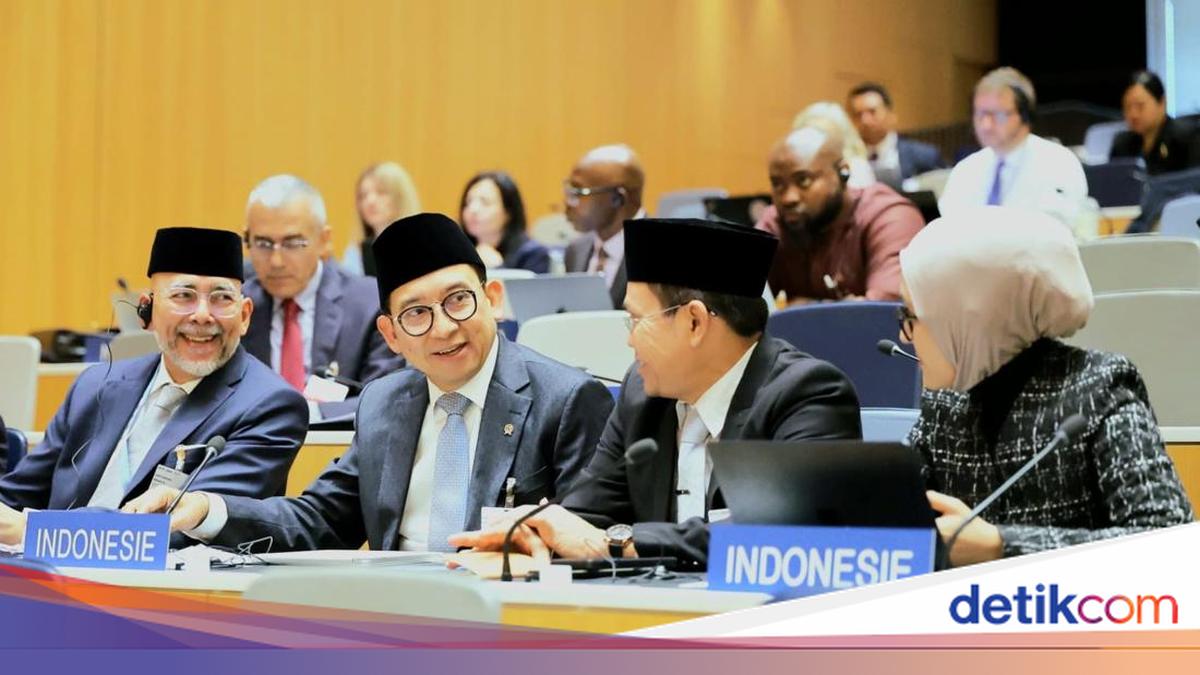
The Minister of Culture of the Republic of Indonesia, Fadli Zon, delivered the Indonesian National Statement at the 53rd Session of the World Intellectual Property Organization (WIPO) Intergovernmental Committee on Intellectual Property and Genetic Resources, Traditional Knowledge and Folklore (IGC on GR-TKF) in Geneva, Switzerland.
Running from 16–25 September 2026, this forum is a vital part of international negotiations regarding the protection of traditional knowledge (TK), traditional cultural expressions (TCEs), and genetic resources (GRs).
“Indonesia emphasises the importance of an international legal framework capable of providing fair and effective protection, especially for indigenous peoples and local communities as the owners, guardians, and heirs of traditional knowledge and cultural expressions,” Fadli Zon stated in a written release on Thursday (17/9/2026).
The 53rd session of the WIPO IGC on GR-TKF is attended by 93 countries, special delegations, 9 intergovernmental organisations, 39 non-governmental organisations, and indigenous groups. The meeting is chaired by Laine Fisher from New Zealand, accompanied by Vice-Chairs Alhanoof Aldebasi from Saudi Arabia and Pablo Latorre Tallard from Chile, and Secretary Ann Edillon.
Fadli Zon added that for Indonesia, discussions on intellectual property cannot be separated from a cultural perspective. Traditional knowledge and traditional cultural expressions are not merely intellectual products, but are part of the identity, collective memory, knowledge systems, values, and life practices of communities passed down through generations.
“Traditional knowledge and traditional cultural expressions are more than just intellectual property. Within them lie the identity, knowledge, history, and collective memory of a community. Therefore, protection must place the community as the primary owners and guardians of this cultural heritage, while ensuring that the benefits return to the people,” Fadli Zon explained.
He noted that this commitment is strategically significant for Indonesia as one of the most culturally diverse nations in the world. Indonesia possesses 1,340 ethnic groups and 718 local languages, which produce a wealth of traditional knowledge, cultural expressions, oral traditions, arts, rituals, traditional technologies, crafts, textiles, music, and various living cultural practices.
“The commitment to culture is further strengthened under the leadership of President Prabowo Subianto through the establishment of the Ministry of Culture as a standalone ministry for the first time since Indonesia’s independence. The presence of the Ministry of Culture affirms the position of culture as one of the foundations of national development and Indonesian diplomacy on the global stage,” he said.
“By the end of 2025, Indonesia has designated 2,727 Intangible Cultural Heritages. This wealth exists in various forms and continues to be passed down by communities across the archipelago, ranging from the Saman Dance in Aceh, Batik in Java, weaving traditions in various regions including Kalimantan and East Nusa Tenggara, Kolintang in North Sulawesi, to Noken in Papua,” he continued.
According to the Minister, this diversity demonstrates that Indonesian culture is not static. Culture is living heritage; it lives because it is continuously practised, inherited, developed, and interpreted by its supporting communities. Therefore, international protection systems must be able to respect cultural dynamics without severing the link between a cultural expression and its community of origin.
Indonesia also emphasised that the documentation or adaptation of knowledge or cultural expression must not automatically sever the cultural connection to the community of origin or render it free to be utilised without considering community rights. Furthermore, Indonesia is pushing for an international framework that provides certainty regarding consent, attribution or recognition of the origin community, and equitable benefit-sharing.
Stronger protection is also required for knowledge or cultural expressions that possess sacred, secret, or restricted characters, in accordance with the values, norms, and social systems applicable within the owner communities. The government also continues to strengthen the protection ecosystem for indigenous peoples, including through the discussion of the Indigenous Peoples Bill.
In the WIPO negotiations, Indonesia highlighted four essential aspects that should be reflected in the international legal framework: regarding the objectives of protection, it must guarantee cultural sustainability, community empowerment, prevention of misuse, and equitable benefit-sharing; regarding eligibility, the development, adaptation, documentation, or recognition of a tradition must not automatically sever the cultural link with the community of origin; regarding beneficiaries, indigenous peoples and local communities must be placed as the primary beneficiaries of the protection system; and regarding the scope of protection, Indonesia encourages mechanisms that suit the character and cultural values of each community, including stricter protection for sacred or secret materials and clarity regarding consent, attribution, use, and benefit-sharing.
“Indonesia also brings a cultural economy perspective to the discussions at WIPO. The protection of traditional knowledge and traditional cultural expressions needs to go hand-in-hand with efforts to create fair economic benefits for the owning communities and cultural practitioners,” he stated.
He added that the economic value arising from culture must continue to respect the origins, moral rights, and the interests of the communities that have guarded this knowledge from generation to generation.
Source: jawawa.id (https://jawawa.id/newsitem/minister-of-culture-urges-protection-of-communal-intellectual-property-at-global-forum-1789613915)
Originally published by detikcom (https://news.detik.com/berita/d-8666304/menbud-dorong-perlindungan-kekayaan-intelektual-komunal-di-forum-global), translated from Indonesian