
Minister of Culture Promotes Indonesian Language as a Cultural Bridge Between Indonesia and Egypt
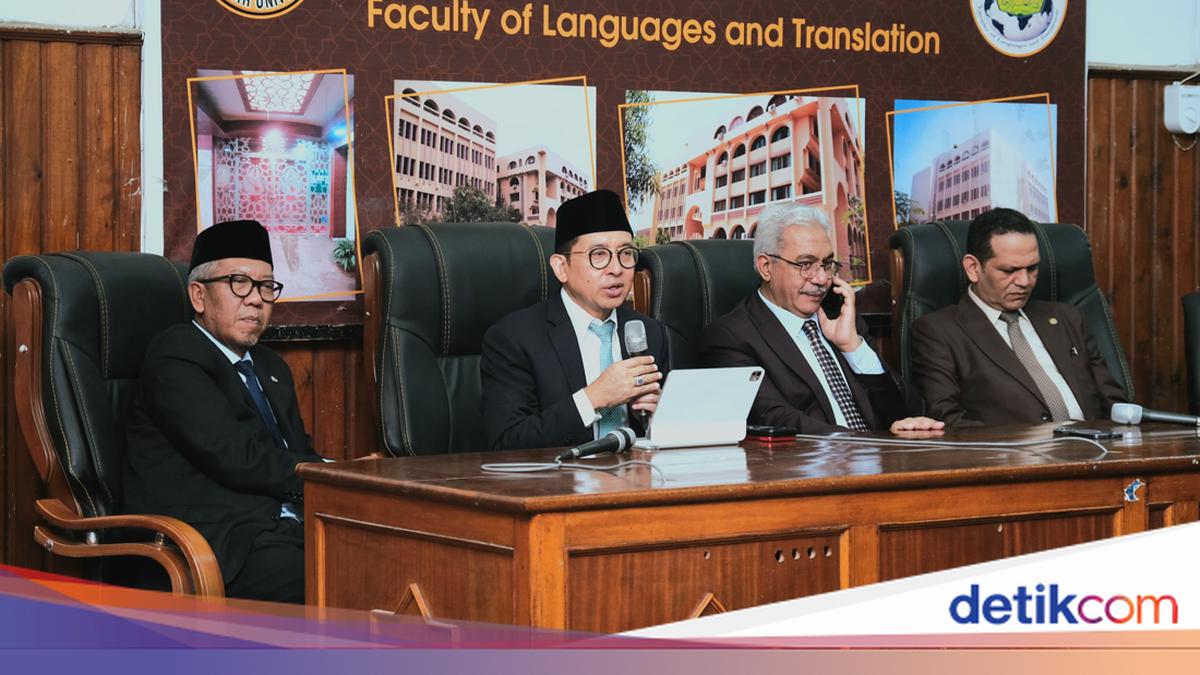
The Minister of Culture of the Republic of Indonesia, Fadli Zon, has emphasised the importance of the Indonesian language as a cultural bridge. Furthermore, he noted that it serves as a means to strengthen the relationship between the Indonesian and Egyptian people, which has endured for over a century.
“Language is not merely a tool for communication. Language is a gateway to understanding the culture, history, way of thinking, and identity of a nation. Therefore, the existence of the Indonesian Language and Literature Study Programme at Al-Azhar holds very significant meaning for the relationship between Indonesia and Egypt,” Fadli stated in a written statement on Monday (21/9/2026).
He shared these sentiments during a cultural public lecture delivered to approximately 250 undergraduate students of the Indonesian Language and Literature Study Programme, Faculty of Languages and Translation, Al-Azhar University, Cairo, on Sunday (20/9).
He expressed his appreciation to Al-Azhar for establishing the Indonesian Language and Literature Study Programme in October 2025. According to him, the launch of this programme is a strategic step in strengthening educational and cultural ties between Indonesia and Egypt.
He also commended the enthusiasm of the students who have chosen to study Indonesian language and literature at one of the world’s oldest and most influential Islamic educational institutions.
“You are part of the cultural bridge between Indonesia and Egypt. When you study the Indonesian language, you are essentially studying Indonesia, its people, its history, and its highly diverse culture,” said Fadli.
In his lecture, Fadli Zon highlighted the immense potential for the Indonesian language to develop into an international language. He noted that Indonesian possesses a large speaker base spread not only within Indonesia but also across various overseas communities.
This condition serves as vital capital for strengthening the position of the Indonesian language in international affairs.
“The Indonesian language has a very large number of speakers. This is a strength that we must promote so that Indonesian becomes more widely known, studied, and used in the international arena,” he stated.
He expressed his aspiration for the Indonesian language to gain a greater place within the international community, including the hope that it may one day become one of the official languages of the United Nations.
“You are part of the future of the Indonesian language in the world. The more people study Indonesian, the more open the path becomes to introducing Indonesian culture,” he remarked.
Fadli Zon encouraged students not only to study grammar and literature but also to understand Indonesia more broadly, ranging from history, art, and tradition to culinary arts and contemporary cultural developments.
He also introduced Indonesia as a nation with immense cultural diversity, possessing over 1,300 ethnic groups and more than 700 local languages living within a single unified nation.
“Indonesia is a very diverse country. We have thousands of islands, more than 1,300 ethnic groups, more than 700 local languages, as well as various traditions and cultural expressions. All live under the spirit of Bhinneka Tunggal Ika (Unity in Diversity),” he explained.
In his view, this diversity is not merely a demographic fact but an essential part of Indonesia’s identity and cultural wealth. Indonesia’s experience in managing diversity can also serve as a component of cultural dialogue with the international community.
He continued that both Indonesia and Egypt share long histories of civilisation. Therefore, the relationship between the two nations is built not only through formal diplomacy but also through the exchange of knowledge, language, art, literature, and culture.
Addressing the students, Fadli Zon reminded them of the long history of relations between Indonesia, Egypt, and Al-Azhar. He noted that these ties existed long before Indonesia gained independence.
Scholars and students from the Nusantara archipelago travelled to Egypt to seek knowledge and subsequently brought that knowledge back to Indonesia.
“The relationship between Indonesia and Al-Azhar has existed for a very long time. Indonesian scholars and students came here, studied, and then returned to Indonesia, making great contributions to education, religious life, and culture,” he added.
He also reminded the audience that Egypt was the first country to recognise Indonesia’s independence. The relationship between the two nations has continued to evolve through various historical milestones, including the Asian-African Conference and the Non-Aligned Movement.
He invited the students to view themselves not merely as learners of the Indonesian language, but as part of the cultural connection between Indonesia and Egypt. He believed that mastering the Indonesian language could serve as an entry point to understanding Indonesian society and culture more deeply.
“Study Indonesia earnestly. Get to know its language, literature, history, and culture. Because every time you use the Indonesian language and speak about Indonesia, you are truly becoming part of the bridge that connects the Egyptian and Indonesian people,” said Fadli Zon.
He expressed hope that the relationship established between Indonesia and Al-Azhar for over a century could continue to flourish through the younger generation.
“Thank you to Al-Azhar and to all the students who have chosen to study Indonesian language and literature. We entrust the Indonesian language and culture to all of you,” he concluded.
Source: jawawa.id (https://jawawa.id/newsitem/minister-of-culture-promotes-indonesian-language-as-a-cultural-bridge-between-indonesia-and-egypt-1789995479)
Originally published by detikcom (https://news.detik.com/berita/d-8672928/menbud-dorong-bahasa-indonesia-jadi-jembatan-kebudayaan-ri-mesir), translated from Indonesian