
Minister of Culture Emphasises Role of Museums as Cultural Economic Infrastructure
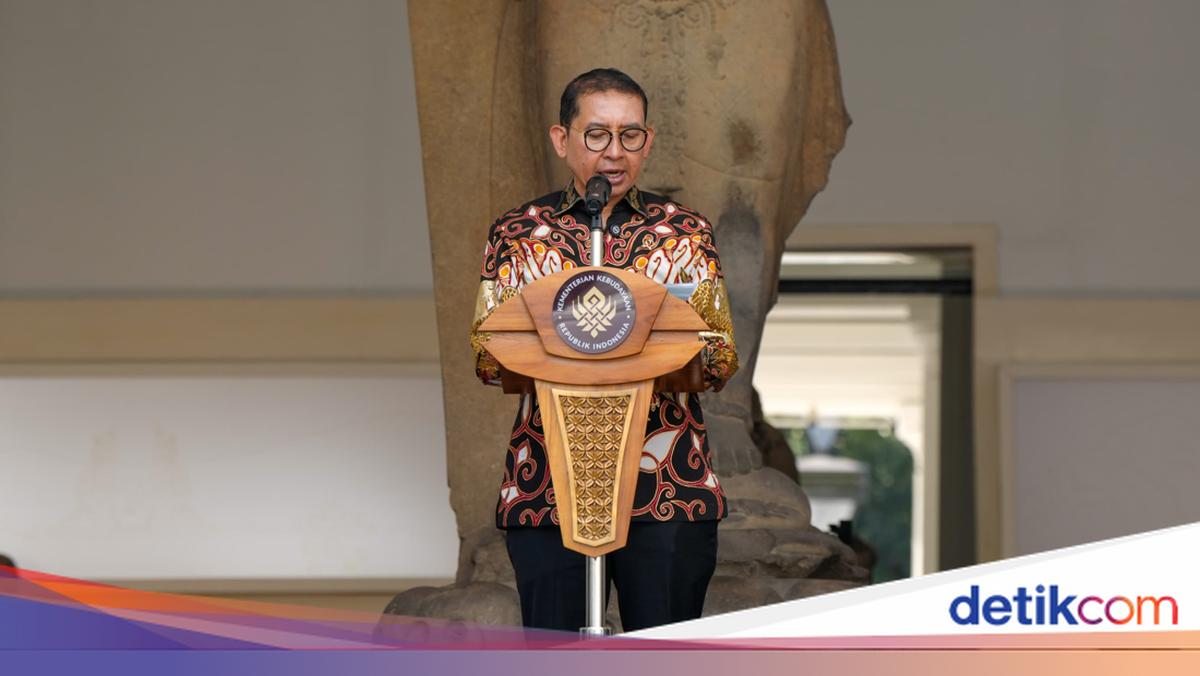
The Minister of Culture has stated that museums are no longer merely repositories for historical artefacts, but are also cultural public spaces that build trust, strengthen national identity, and preserve Indonesia’s collective memory and civilisation.
“In a world that is increasingly connected yet fragmented by conflict, inequality, and polarisation, museums must serve as public spaces that rebuild trust, bridge differences, and connect the younger generation with their history and heritage,” he stated in a written release on Monday (18/5/2026).
Speaking during a cultural oration at the National Museum of Indonesia in Jakarta, he added, “Museums are not just places to store historical objects, but are part of the cultural and democratic infrastructure of a nation.”
This year, the International Council of Museums (ICOM) has adopted the theme ‘Museums Uniting a Divided World’ for International Museum Day. Fadli Zon further explained that Indonesia’s museum policy is built upon four main pillars: museums as instruments for shaping national identity, spaces for citizenship that strengthen social cohesion, spaces for restoring cultural sovereignty, and upstream infrastructure for the cultural economy.
He noted that museums play a vital role in developing cultural capital into both public and sustainable economic value. Consequently, the valorisation of museums and cultural sites must be consistently encouraged to ensure they are more accessible, engaging, and possess healthy financing models. He believes museums can serve as a source of knowledge and inspiration for cultural and creative industries, ranging from film, animation, and gaming to textiles, culinary arts, and digital content.
“Museums must be culturally sustainable, socially relevant, and economically viable. They must be understood as upstream infrastructure for the cultural economy, where cultural capital is developed into public and economic value sustainably. From museums, the knowledge, imagination, and narratives that form the foundation of our cultural and creative industries will emerge,” he added.
Fadli Zon pointed out that the global cultural and creative sectors contribute approximately USD 4.3 trillion, or about 6% of the world economy. He believes Indonesia possesses great potential to utilise museums as drivers of the national cultural economy.
As of April 202able, the Ministry of Culture recorded 516 museums across various regions in Indonesia. Of these, 373 are registered in the National Museum Registration Number, and 234 have been standardised as Type A, B, or C museums. The Minister hopes the number of museums in Indonesia will continue to grow, reaching regions, villages, universities, communities, and the private sector.
To strengthen the national museum ecosystem, the Ministry of Culture is pushing four priority agendas: strengthening museums as infrastructure for public knowledge and learning, increasing museum relevance for the younger generation, accelerating the digital transformation of museums, and strengthening financing and partnerships through cross-sector collaboration and public-private partnership schemes.
In his closing remarks, Fadli Zon invited all stakeholders—including the government, museum managers, academics, communities, the private sector, media, and the youth—to work together to strengthen museums as spaces of civilisation and pillars of Indonesia’s future. He expressed hope that visiting museums would become a new habit for the public, particularly the youth, to ensure museums live as vibrant public spaces and pillars of the nation’s future.
Meanwhile, Esti Nurjadin, Head of the Bureau for Museum and Cultural Heritage Services, noted that this year’s theme emphasises the role of museums in bridging the past and the future, tradition and innovation, and knowledge and empathy. She stated that museums can bridge diverse perspectives through dignified and inclusive conversation.
As part of the event, the ‘Museum Passport’ was launched, a collaborative initiative between the Bureau for Museum and Cultural Heritage Services and Paperina. The Museum Passport is a participatory travel log that invites the public to explore Indonesian museums and heritage sites by collecting cultural stamps and recording personal experiences. The initiative is expected to be accessible to the public by June 2026.
Source: jawawa.id (https://jawawa.id/newsitem/minister-of-culture-emphasises-role-of-museums-as-cultural-economic-infrastructure-1780908095)
Originally published by detikcom (https://news.detik.com/berita/d-8493910/menbud-tekankan-peran-museum-sebagai-infrastruktur-ekonomi-budaya), translated from Indonesian