
Minister of Basic and Secondary Education: WFH Policy Excluded for Education Sector
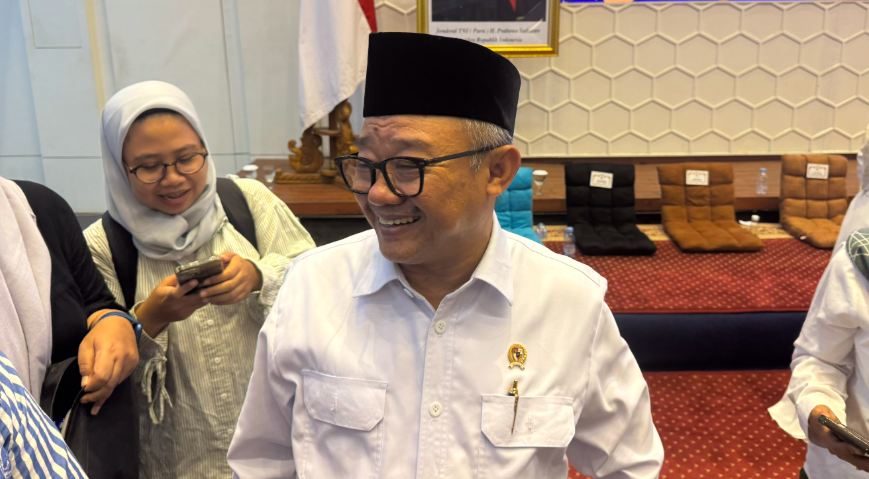
Minister of Basic and Secondary Education, Abdul Mu’ti, has emphasised that the government’s policy of working from home every Friday does not apply to the education sector. Therefore, educational personnel will continue to work normally. “So, the WFH is in line with what was mentioned by the Coordinating Minister for the Economy and also the joint decision from the ministerial-level meeting, where education is exempted. Thus, it remains five days as usual, and since schools are in session, teachers and educational staff will also carry out their duties as normal,” he stated during a visit to the implementation of the Academic Ability Test at SMP Negeri 2 Curug, Tangerang, on Monday (6/4). Furthermore, he assured that schools which typically have a six-day school week policy will adjust to the central government’s policy. “Alhamdulillah, this is also running well and there is already an understanding from local governments because some still have the six-day school policy. I met with several regional heads who have that policy. They have already and will make policies to adjust to the central government’s policy,” said Abdul Mu’ti. Previously, the Ministry of Basic and Secondary Education emphasised that teaching and learning activities at all levels of basic and secondary education will continue to take place in person (offline) and run normally, in line with the implementation of the national work culture transformation policy and the energy policy. This affirmation refers to the government’s policy direction in the 8 Transformations of National Work Culture, which places the education sector as one of the priority sectors that continue to provide direct services in educational units. Abdul Mu’ti conveyed that the work culture transformation is a strategic step by the government in building a more adaptive and sustainable work system, without reducing the quality of educational services. In that policy, the government implements a flexible work pattern in the form of work from home (WFH) for civil servants (ASN) for one day a week, and encourages efficiency in various sectors, including energy use and mobility. However, the basic and secondary education sector continues to carry out learning activities directly in each educational unit. The Ministry of Basic and Secondary Education views the continuity of in-person learning as part of efforts to maintain the stability of public services in education, while supporting the development of quality human resources. In addition, non-academic activities such as sports, extracurriculars, and student achievement development can also continue without restrictions, as part of holistic learning. On the other hand, the Ministry of Basic and Secondary Education also supports the national energy efficiency policy through the implementation of an energy-saving culture in educational units. Schools are encouraged to optimise wise energy use, such as regulating electricity usage, utilising natural light, and promoting environmentally friendly habits among the school community. These efforts can also be strengthened through the implementation of the Gerakan Indonesia ASRI (Safe, Healthy, Clean, and Beautiful), which encourages educational units to create a safe, comfortable, clean, healthy, and sustainable learning environment. Through the implementation of Gerakan Indonesia ASRI, schools are expected to build positive habits such as maintaining environmental cleanliness, waste management, greening, and efficient use of resources. A safe and healthy school environment not only supports optimal learning processes but also shapes students’ characters who care about the environment and quality of life. The Ministry of Basic and Secondary Education also invites all education stakeholders, from local governments, school principals, teachers, to parents, to jointly maintain the continuity of learning and support national policies aimed at maintaining economic stability and energy resilience. Furthermore, what is currently more prioritised by the Ministry of Basic and Secondary Education in the implementation of the Academic Ability Test is areas affected by disasters. Minister of Basic and Secondary Education Abdul Mu’ti inspected the implementation of the SMP Academic Ability Test in Tangerang. He emphasised that the Academic Ability Test is not a determinant of graduation but rather a quality mapping. The Ministry of Basic and Secondary Education recorded that 98% of SMP students participated in the Academic Ability Test. Minister Abdul Mu’ti emphasised that the Academic Ability Test is not mandatory and is optional.