
Minister of Basic and Secondary Education discusses fate of non-civil servant teachers with relevant ministries
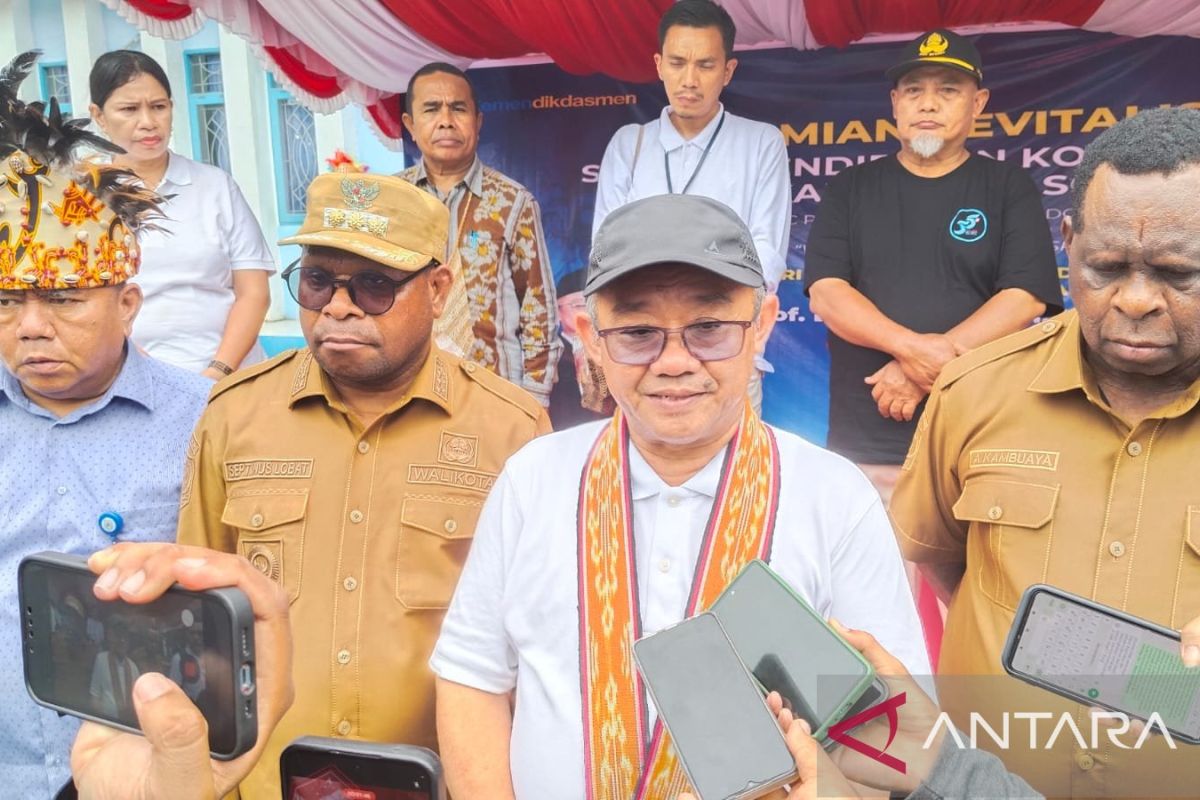
The government recognises the critical role of non-civil servant teachers in maintaining education continuity, particularly in regions with teacher shortages.
Sorong - Minister of Basic and Secondary Education Abdul Mu’ti stated that the future of non-civil servant teachers in 2027 will be addressed in discussions with relevant ministries.
Abdul Mu’ti confirmed that non-civil servant teachers will continue working until the end of 2026, despite the government’s national restructuring of honours staff.
‘Non-civil servant teachers can continue working until the end of this year. Discussions with relevant ministries regarding 2027 are ongoing, and results will be communicated once finalised,’ Abdul Mu’ti said during his visit to Sorong, Southwest Papua, on Tuesday.
He added that the government acknowledges the vital role of non-civil servant teachers in sustaining education, especially in remote areas with teacher shortages.
According to Abdul Mu’ti, non-civil servant teachers remain essential for delivering education services across regions, including remote and outermost areas.
In addition to addressing the status of honours teachers, the ministry is also advancing teacher quality and welfare through strategic programs.
One such initiative is the Recognition of Prior Learning (RPL) programme for teachers without a Diploma IV or Bachelor’s degree.
The government aims to have 150,000 teachers participate in the RPL programme this year, with a scholarship of Rp3 million per semester.
He explained that improving educational qualifications is crucial for teachers to join the Professional Teacher Education (PPG) programme and obtain certification, which enhances their welfare.
‘Once they have a Diploma IV or Bachelor’s degree, they can join the PPG programme and, upon meeting requirements, receive certification allowances,’ Abdul Mu’ti said.
Additionally, the ministry is enhancing teacher competencies through training in deep learning, coding, artificial intelligence, counselling, and STEM (science, technology, engineering, and mathematics).
Abdul Mu’ti stressed that teacher quality is the key factor in improving national education standards.
‘No matter how advanced school technology and infrastructure are, if teachers lack quality, education will not reach its full potential,’ he said.