
Minister of Basic and Secondary Education Affirms SMP Academic Ability Test as Component of High School/Vocational Selection
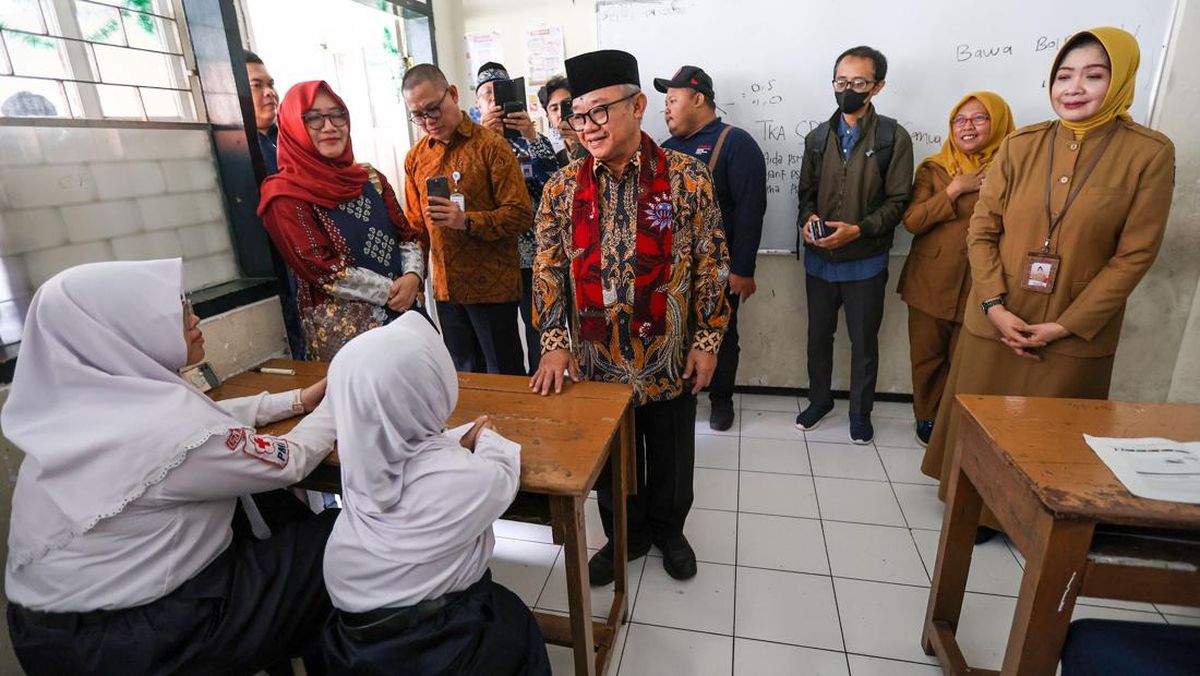
Minister of Basic and Secondary Education (Mendikdasmen) Abdul Mu’ti inspected the second day of the Academic Ability Test (TKA) for junior high school level at SMPN 1 Surabaya, East Java, on Tuesday (7/4).
During the visit, Mu’ti emphasised that TKA scores are now officially an important variable in the New Student Admission System (SPMB) for the next level of schooling.
Mu’ti stated that integrating TKA into the achievement pathway selection system aims to create a more inclusive evaluation standard compared to relying solely on report card grades.
“If previously academic assessment was only based on report cards, now it is supplemented with TKA scores as part of efforts to introduce a more inclusive and fair system,” said Mu’ti.
Unlike previous national examinations (UN), TKA is designed to measure literacy, numeracy, character, and learning environments.
For the junior high school level, question preparation involves the central and provincial governments to map students’ abilities regionally.
“For the junior high school level, questions are prepared by the central and provincial governments, allowing measurement of students’ abilities at the provincial level, particularly in East Java. Meanwhile, for primary schools, questions are prepared by district/city governments so that achievements can be measured at the local level,” he explained.
Mu’ti claimed that the national implementation of TKA is running smoothly with an emphasis on integrity aspects. He hopes the test results will serve as a basis for evaluating central and local education policies.
“TKA is expected not only to be an academic measurement tool but also a means to instil values and shape students’ personalities,” he stated.
Additionally, Mu’ti expressed being impressed by the enthusiasm and optimism shown by the student participants of TKA in Surabaya.
“I had a chance to dialogue with the students, and they appeared very spirited. Even when I asked about the questions, they said the questions were relatively easy,” he said.
He assessed that this positive response indicates that TKA functions not merely as an academic measurement tool but also as something that can spark learning enthusiasm.
The inspection also covered the readiness of facilities and infrastructure, from examination rooms to computer laboratories. Mu’ti ensured that all technical aspects were running optimally.
“The arrangement of rooms, computer readiness, and other technical aspects have been well prepared. I am confident that TKA is an important part in realising quality education for all,” he said.
Although it is a new evaluation instrument, Head of the Surabaya City Education Office Febrina Kusumawati stated that students in Surabaya are claimed not to feel burdened. According to her, students’ enthusiasm is quite high because the exam format is seen as a positive challenge.
“He has been present since morning and directly dialogued with the students. They appeared happy and enthusiastic, even like missing the evaluation atmosphere as before. Interestingly, students participated in TKA without feeling forced,” said Febri.
Furthermore, she emphasised that although TKA scores become an additional point in the achievement pathway of SPMB, the test results do not become the sole determinant of student graduation. Graduation authority remains with each educational unit.
“TKA does not determine graduation. Graduation remains the authority of the school through the learning process. However, TKA scores will be an added value, especially in the achievement pathway of SPMB,” Febri stressed.
In agreement, Cila, one of the female students from SMPN 1 Surabaya, admitted to not encountering significant obstacles in working on the TKA questions administered.
“Alhamdulillah, the two days of TKA implementation have gone smoothly overall. I was able to complete the TKA smoothly over these two days,” said Cila.