
Minister of Basic and Secondary Education Affirms Schools Will Continue Face-to-Face Learning
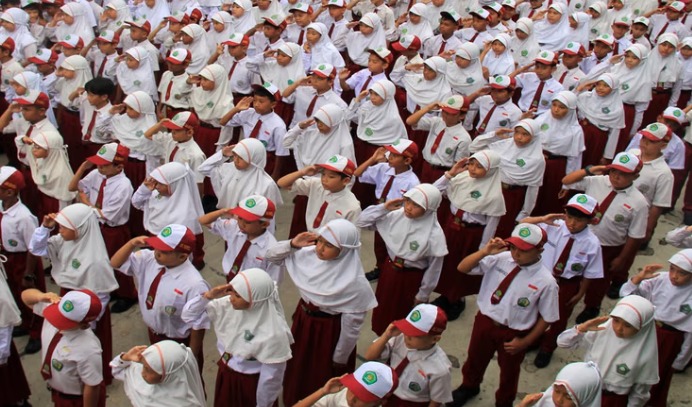
The Ministry of Basic and Secondary Education (Kemendikdasmen) has affirmed that teaching and learning activities across all levels of basic and secondary education will continue face-to-face (in-person) and operate normally, in line with the implementation of the national work culture transformation policy and energy policy. This affirmation refers to the government’s policy direction in the 8 National Work Culture Transformations, which positions the education sector as one of the priority sectors that continue to provide direct services in educational units.
Minister of Basic and Secondary Education (Mendikdasmen), Abdul Mu’ti, stated that the work culture transformation is a strategic step by the government to build a more adaptive and sustainable work system without reducing the quality of educational services.
“The work culture transformation currently being implemented by the government is a strategic step to build a more adaptive, productive, and sustainable work system. However, the basic and secondary education sector has service characteristics that place direct interaction as the main element in the learning process. Therefore, face-to-face learning remains a priority. At the same time, we encourage educational units to actively participate in supporting energy efficiency policies through the habituation of thrifty and environmentally friendly behaviour in schools,” he explained on Wednesday (1/4).
Under this policy, the government is implementing a flexible work pattern in the form of work from home (WFH) for civil servants (ASN) for one day per week, as well as promoting efficiency in various sectors, including energy use and mobility. Nevertheless, the basic and secondary education sector continues to conduct learning activities directly in each educational unit.
Kemendikdasmen views the continuity of face-to-face learning as part of efforts to maintain the stability of public services in the education sector, while also supporting the development of quality human resources. In addition, non-academic activities such as sports, extracurriculars, and student achievement development can still be carried out without restrictions, as part of holistic learning.
On the other hand, Kemendikdasmen also supports the national energy efficiency policy through the implementation of an energy-saving culture in educational unit environments. Schools are encouraged to optimise energy use wisely, such as regulating electricity usage, utilising natural light, and promoting environmentally friendly habits among school communities.
These efforts can also be strengthened through the implementation of the Gerakan Indonesia ASRI (Safe, Healthy, Clean, and Beautiful), which encourages educational units to create safe, comfortable, clean, healthy, and sustainable learning environments. Through the Gerakan Indonesia ASRI, schools are expected to build positive habits such as maintaining environmental cleanliness, waste management, greening, and efficient use of resources. A safe and healthy school environment not only supports optimal learning processes but also shapes students’ characters who care about the environment and quality of life.
Kemendikdasmen also invites all education stakeholders, from local governments, school principals, teachers, to parents, to jointly maintain the continuity of learning and support national policies aimed at preserving economic stability and energy resilience. With synergy from all parties, it is hoped that educational services will continue to operate optimally, while contributing to national efforts to achieve efficiency and sustainability.
In addition, Mu’ti urged local governments to improve public transportation services in their respective regions. He also added that local governments must be able to optimise the use of public vehicles so that they can be utilised by students. The government ensures that schools continue face-to-face amid the global crisis, with a focus on academic achievements and strengthening students’ character education.