
Minister of Basic and Secondary Education Addresses Rumours that Honorary Teachers Cannot Teach After 2027
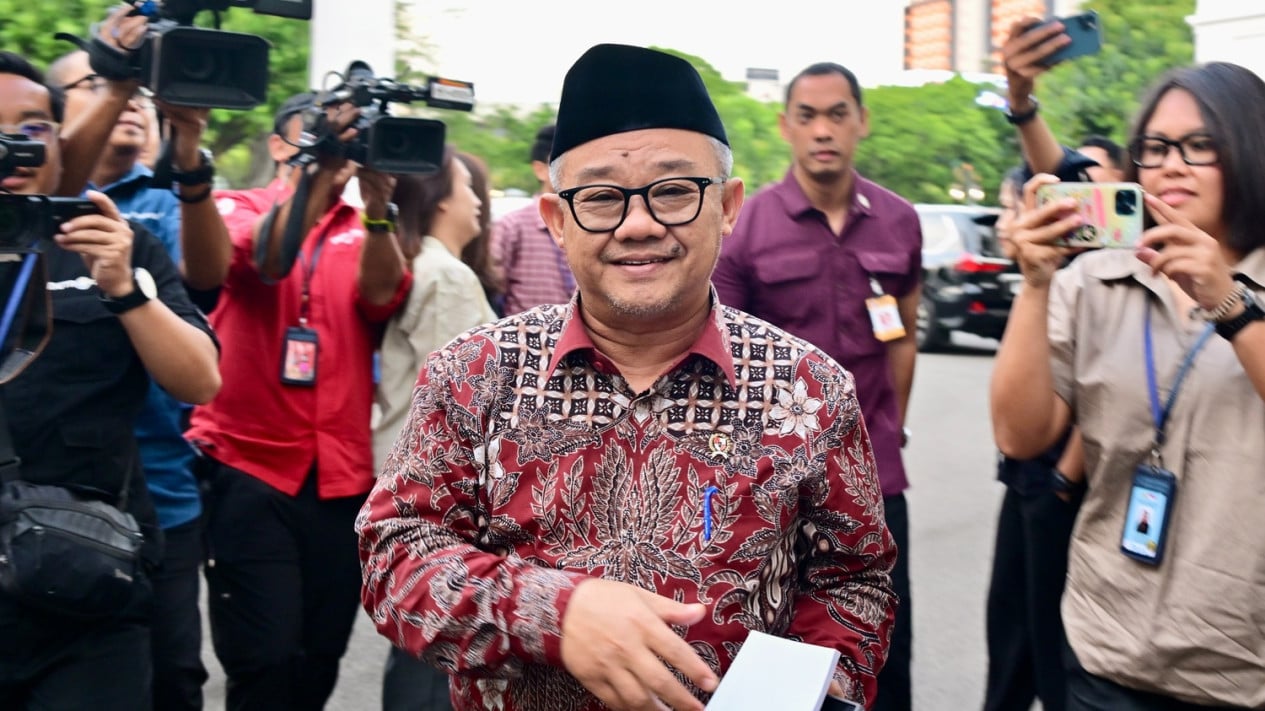
Minister of Basic and Secondary Education (Mendikdasmen), Abdul Mu’ti, has spoken out regarding rumours that honorary teachers will no longer be able to teach in public schools after 31 December 2026. He stated that the issue arises from the impact of Law Number 20 of 2023 on the Civil Service Apparatus (ASN).
“This is related to the widespread rumours about non-ASN teachers not being assigned after 31 December, which actually refers to the ASN Law. The ASN Law states that the term ‘honorer’ will no longer exist,” Mu’ti said at the Government Communication Agency office in Jakarta on Wednesday, 6 May 2026.
“So, this is actually a consequence of implementing the ASN Law, which was supposed to apply fully in 2024, but due to various considerations, it will be effectively implemented starting in 2027. That’s the gist of it,” he added.
He emphasised that there is no term for honorary teachers in the law. There are only ASN teachers and non-ASN teachers as per the legislation.
“We need to convey that teachers, the system, recruitment, assignment, and development are handled by institutions involving local governments and the Ministry of Basic and Secondary Education,” he said.
Mu’ti stated that the Ministry of Basic and Secondary Education has the task of developing teachers in terms of meeting qualifications and improving competencies.
Once the term honorary teacher is eliminated, the government has introduced a policy for non-ASN teachers to register as Government Employees with Work Agreements (PPPK).
“Those who do not pass the PPPK selection and fail the test are then given the status of part-time PPPK. So, the origin of part-time PPPK is from non-ASN teachers who participated in the PPPK selection and did not pass,” he said.
“To avoid problems in terms of civil service or in the context of education delivery, they will continue teaching with the status of part-time PPPK teachers. Part-time PPPK teachers are indeed partially the responsibility of local governments for salary payments,” Mu’ti explained.
Furthermore, Mu’ti conveyed that some local governments are now beginning to struggle to pay salaries for part-time PPPK teachers. The Ministry of Basic and Secondary Education is then providing solutions to regional heads to submit reports.