
Minister of ATR states land services will remain optimal despite WFH
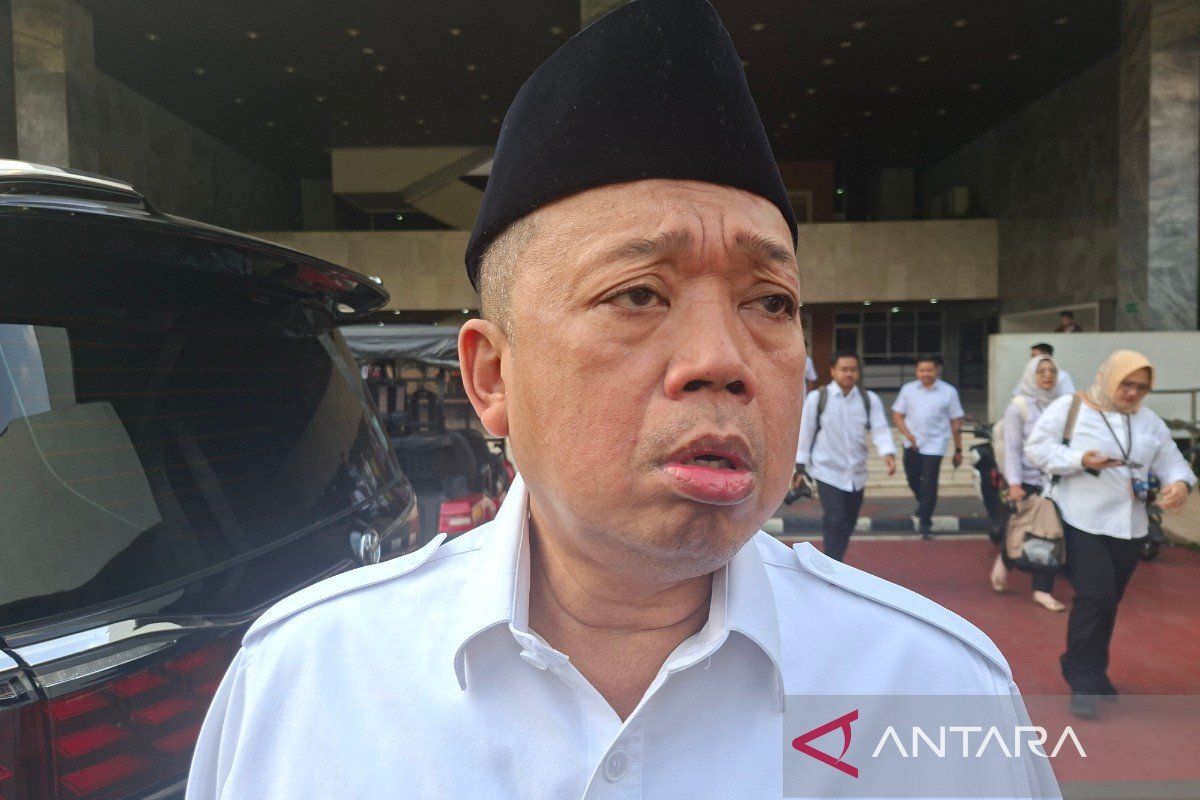
Jakarta (ANTARA) - Minister of Agrarian Affairs and Spatial Planning/Head of the National Land Agency (ATR/BPN) Nusron Wahid has stated that land services will remain optimal for the public despite the planned work-from-home (WFH) policy for civil servants from the central government.
“Insya Allah, Insya Allah. We have already simulated it. Insya Allah, it can be done,” said Nusron when met in Jakarta on Tuesday.
Entering the beginning of 2026, Minister of Agrarian Affairs and Spatial Planning/Head of the National Land Agency (ATR/BPN) Nusron Wahid emphasised the importance of changes and improvements in land and spatial planning services to the public.
This is considering that most business processes in the Ministry of ATR/BPN are oriented towards public services.
According to Nusron, the public as users of land services in the Ministry of ATR/BPN must experience certainty, not only legal certainty but also certainty in the time of service completion.
For information, Coordinating Minister for the Economy Airlangga Hartarto has ensured that the work-from-home (WFH) policy will be established in March 2026.
Airlangga said the establishment of the policy will be carried out within the remaining time this month.
The government ensures that the WFH policy will begin to be implemented after Eid, as an effort to save energy amid the rise in world oil prices.
Airlangga stated that this policy applies to civil servants and is also encouraged for the private sector.
Meanwhile, Finance Minister Purbaya Yudhi Sadewa assessed that the work-from-home (WFH) policy being prepared by the government will not disrupt national economic productivity and even has the potential to provide energy efficiency.
According to him, from both a fiscal and economic activity perspective, the WFH policy will not have a significant impact on national productivity if implemented selectively.
He explained that strategic sectors such as manufacturing industry and public services will continue to operate normally because not all types of work can be done remotely.
In addition, the implementation of WFH is seen as potentially suppressing fuel oil (BBM) consumption due to reduced societal mobility, although the amount of savings still depends on oil prices.