
Minister of Agriculture Engages 150 Papuan Students in 'Back to Farming' Movement
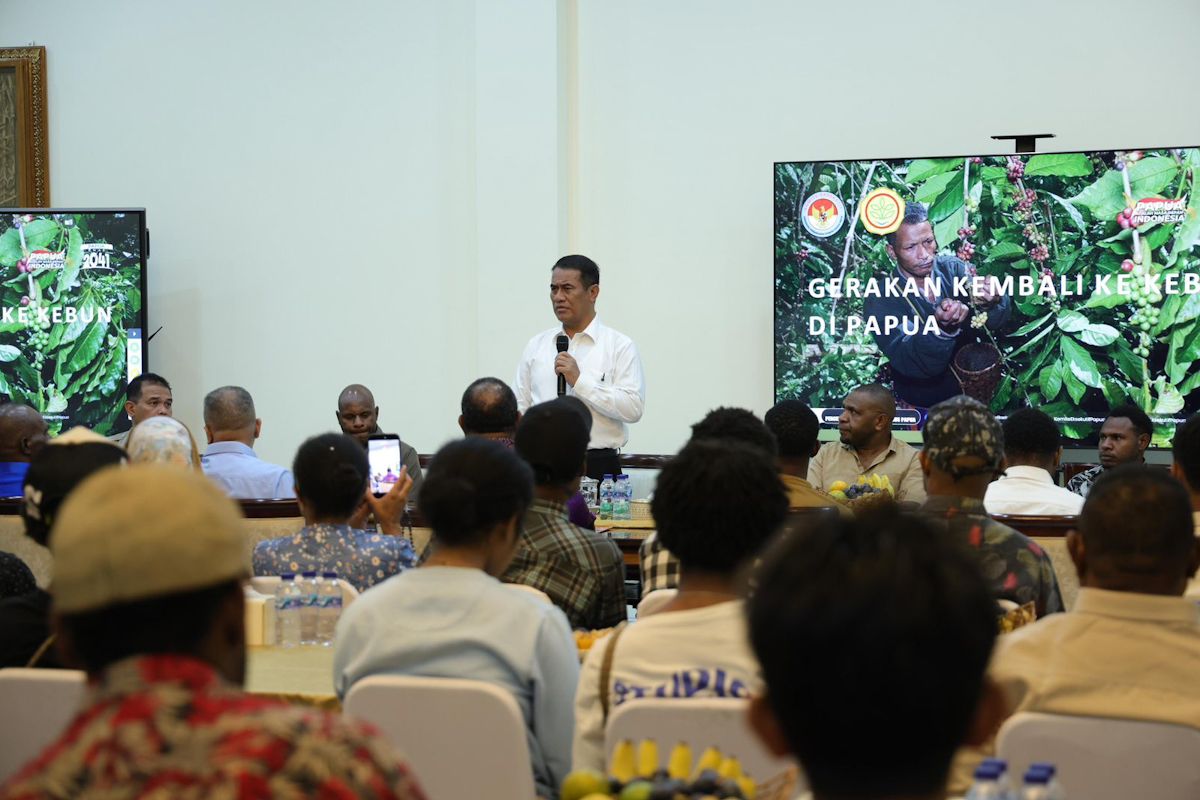
Jakarta (ANTARA) - Minister of Agriculture Andi Amran Sulaiman has engaged 150 Papuan students in a ‘Back to Farming’ movement, an effort to build the community’s economy from their own land through the development of superior commodities based on local potential.
“This movement is expected to give rise to a young generation of Papuans capable of driving agricultural development while creating jobs in their regions,” Minister Amran said during a dialogue with the Indonesian Papuan Students Association in Jakarta on Thursday.
The meeting, held at the minister’s residence, was attended by students from various regions, including Papua Pegunungan, Central Papua, West Papua, Southwest Papua, and Papua proper. During the dialogue, the students presented a variety of potential regional commodities, ranging from sweet potatoes, sago, nutmeg, cocoa, and coffee to livestock.
Responding to this, the minister stressed that agricultural development in Papua must rely on the strength of local commodities and the utilisation of land owned by the community. “We must build the economy from the village. Students like you are the best sons and daughters of the Land of Papua. You can lift Papua’s economy because you have the knowledge, intelligence, and land that must be developed,” he said.
As a form of tangible commitment, the minister immediately provided support to one Papuan student, Anton, who already owns 7 hectares of agricultural land and mentors a farmers’ group in his hometown. Seeing his dedication, Minister Amran decided to add support for the development of an additional 5 hectares of land. “The important thing is that it is done well and can become an example for other young Papuans,” he stated.
According to him, student involvement is a crucial strategy in creating new sources of economic growth in Papua. The government wants the young generation of Papua not only to be job seekers but also to become job creators through modern agriculture based on regional potential. He therefore invited students who still have family land to start managing it while still pursuing their education.
“I want to build a Papuan Young Farmers Movement. If you students have land in your villages, let’s plant it now. By the time you graduate, your income could be higher than an employee’s,” Amran said. He cited plantation commodities such as coffee and nutmeg, which have high economic value. By using family land as initial capital, students can build productive and sustainable agricultural businesses.
“If a student has 2 hectares of land and plants coffee or nutmeg, by the time they finish university, the yield can already be a source of income. We must build the economy from the village, build the economy from our own land,” he asserted.
The minister also decided to add coffee development assistance for 100 hectares for a young farmers’ group in Papua Pegunungan, which had previously cleared 48 hectares of land for coffee. Additionally, the government is preparing agricultural tools such as crowbars, machetes, and shovels to support the development of local food, particularly sweet potatoes in Central Papua and Papua Pegunungan.
“For Papua Pegunungan and Central Papua, we are preparing agricultural tools as needed because their main commodity is sweet potato. This is a special programme to strengthen local food development,” Minister Amran said.
One of the dialogue participants, Ronaldo Jakub Inesta, a student from Southwest Papua, expressed appreciation for the minister’s swift response to the students’ aspirations. He noted that the forum provided a valuable space for Papuan students to convey regional potential directly to the government. “What we conveyed was immediately noted and followed up. An opportunity like this is very good because it is rare for students to be able to dialogue directly with a minister,” Ronaldo said.
Meanwhile, Velix Wanggai, Chair of the Committee for the Acceleration of Special Autonomy Development for Papua, assessed that the movement is not solely about the economy but also an effort to revive the cultural identity of the Papuan people, which has a strong connection to customary land and local commodities. “We want to revive local commodities that are part of the noble culture of the Papuan people, while making customary land a source of welfare for present and future generations,” he said.
Velix added that each region in Papua has different commodity advantages, from sweet potatoes in the highlands and sago in the swampy areas to coffee, cocoa, nutmeg, and various other plantation commodities. Therefore, agricultural development based on local potential is the right strategy to create inclusive and sustainable economic growth.