
Minister Muhaimin: Pesantren transformation can break the poverty chain
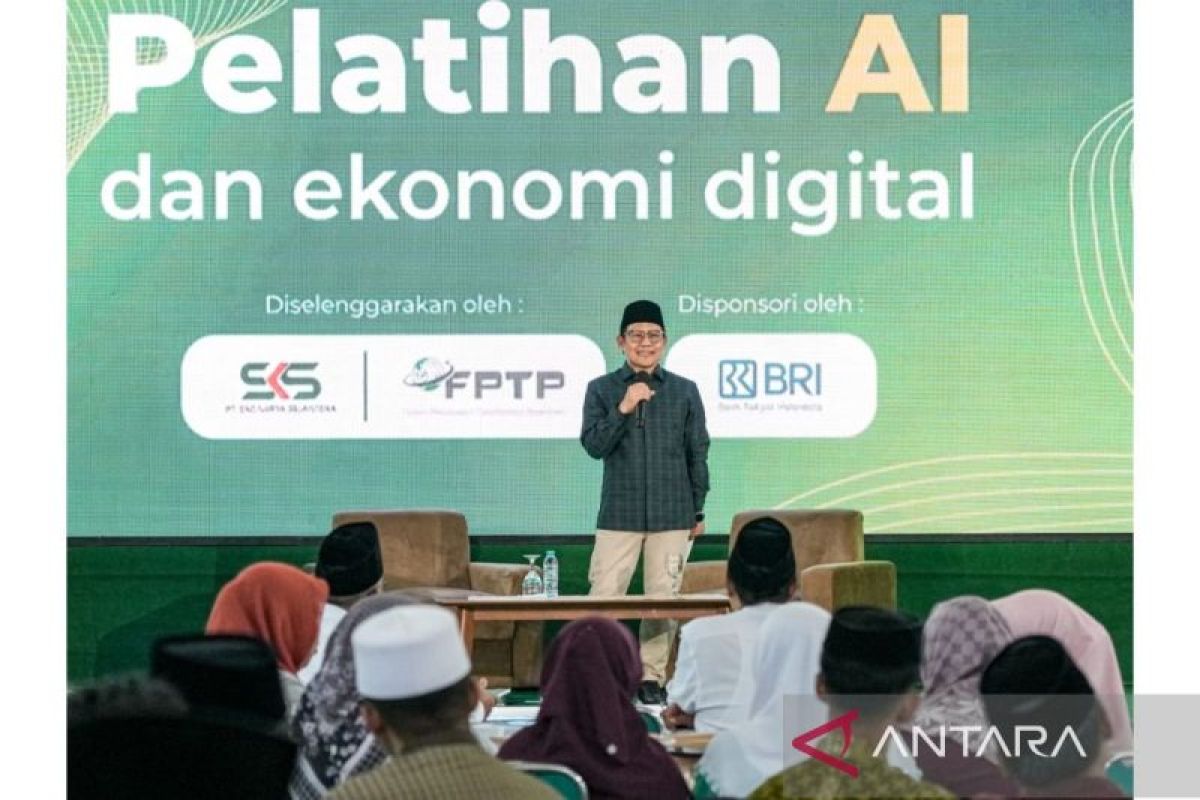
Jakarta (ANTARA) - Coordinating Minister for Community Empowerment Abdul Muhaimin Iskandar has said that transforming pesantren through strengthened education is one way to improve people’s living standards while breaking the chain of poverty.
“Pesantren were born to become centres of study and knowledge, not merely places for reciting the Quran. Pesantren must continually recognise their obligation to position themselves as centres of knowledge,” said Coordinating Minister Muhaimin Iskandar in a statement in Jakarta on Friday.
He made the remarks while attending an Artificial Intelligence (AI) and digital economy training session organised by the Forum of Pesantren Caregivers and Managers (FPTP) in Jombang, East Java.
According to him, pesantren hold a strategic position because they are not only centres of religious education but also possess strong social and economic ecosystems that directly influence the surrounding communities.
He said education plays an important role in improving people’s ability to escape economic limitations.
“I told the President that one of the doors to overcoming poverty is pesantren. One way to overcome poverty is through education. Education is the fastest way to break the chain of poverty,” said Muhaimin Iskandar.
For this reason, he is encouraging pesantren to continue transforming so they can respond to the changing times.
Pesantren need to broaden their mastery of science and technology while ensuring that the education provided equips students with skills relevant to future needs.
The acceleration of technology, particularly AI and the digital economy, is one of the major changes that cannot be avoided.
He assessed that mastery of AI and the digital economy can become part of the transformation process of pesantren education.
Technology should not only be understood as a tool, but also be utilised to expand access to knowledge, improve the quality of learning, and open economic opportunities for the pesantren community.
“Pesantren are expected not only to produce graduates with religious knowledge, but also a generation with skills, adaptability, entrepreneurial spirit, and economic independence,” he said.
Muhaimin Iskandar also appreciated FPTP for continuously promoting the capacity building of pesantren through various programmes, including AI and digital economy training.
According to him, these efforts are important to accelerate the transformation process so that pesantren can keep pace with increasingly rapid technological change.