
Minister: Mangroves Could Become Engines of Green Economic Growth
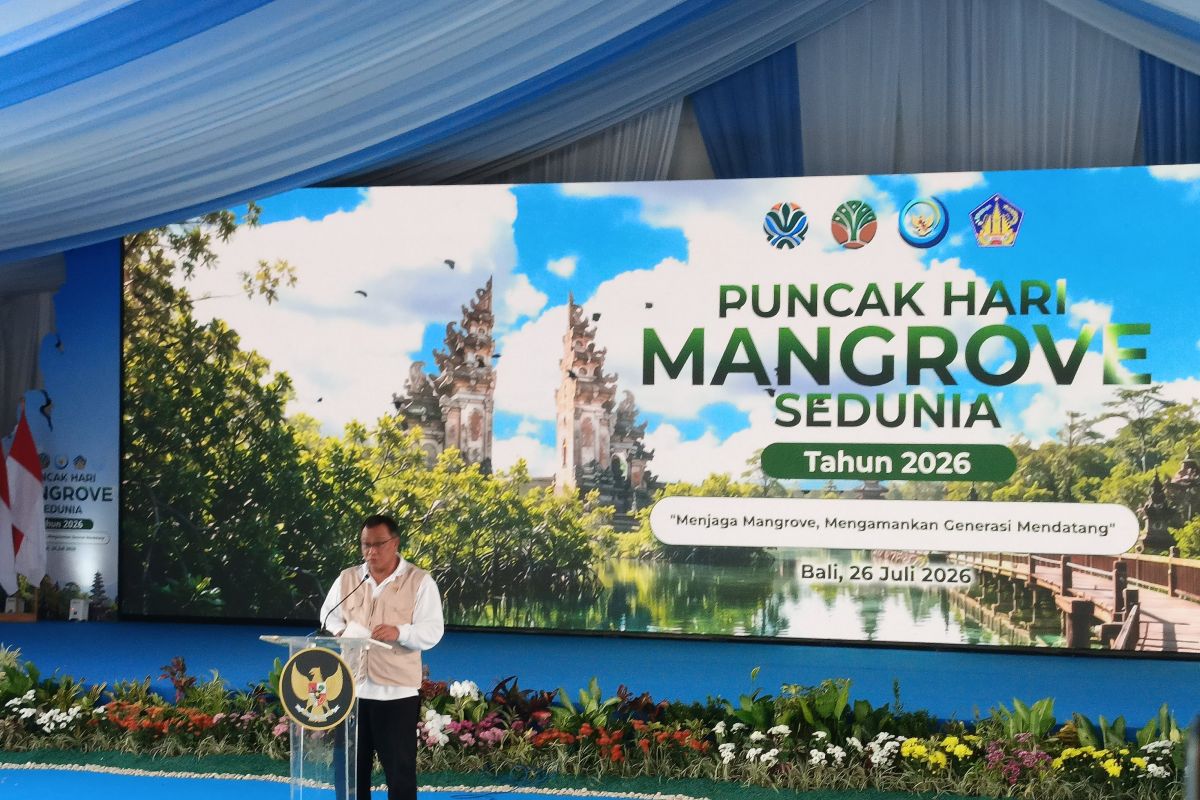
Denpasar, Bali (ANTARA) - Minister of Environment and Head of the Environmental Control Agency, Moh Jumhur Hidayat, has stated that mangrove rehabilitation is not only important for restoring the environment but also has the potential to become a driver of green economic growth through international carbon trading mechanisms.
Speaking at the peak event of World Mangrove Day in South Denpasar, Bali, on Sunday, Jumhur said the government is building a national mangrove restoration movement involving various ministries, regional governments, and the community.
"Mangrove planting can be collaborated with business activities through the international carbon market mechanism. Activities that produce carbon can be compensated through the carbon market, thereby generating substantial funding," he said.
According to him, mangrove rehabilitation is now being carried out simultaneously at 162 points spread across 37 provinces, involving around 2,000 direct participants and tens of thousands of other participants from various regions.
Jumhur emphasised that mangroves have the capacity to absorb carbon four to five times greater than terrestrial vegetation in general. Therefore, planting one hectare of mangrove is considered equivalent to about four hectares of terrestrial plants in terms of absorbing carbon emissions.
He assessed that this capability makes mangroves one of the important solutions to offset the increase in carbon emissions due to economic activities while supporting climate change control targets.
In the future, mangrove rehabilitation will not only rely on financing from the state budget (APBN) or regional budgets (APBD) but will also be collaborated with the business sector through international carbon market mechanisms.
According to Jumhur, this scheme will attract investment for large-scale mangrove planting while providing economic benefits to communities involved in maintaining mangrove areas. He revealed that a number of major investors have expressed interest in investing in the rehabilitation of hundreds of thousands of hectares of mangroves in Indonesia.
Beyond providing returns for investors, the programme is projected to create green jobs, provide wages to the community during the maintenance process, and introduce a benefit-sharing scheme from carbon trading results.
The government is currently calculating the contribution of the carbon market-based environmental restoration sector to national economic growth over the next one to two years, including the potential to absorb millions of workers.
"Based on various calculations we have made, building Indonesia through environmental restoration by utilising the carbon market mechanism is a profitable business activity," he stated.
Jumhur noted that Indonesia has a major advantage because it is supported by vast marine areas, abundant mangrove ecosystems, and geographical conditions that make the green economy a promising new economic potential. He invited all parties to protect and restore the mangrove ecosystem so that Indonesia’s natural wealth can provide environmental benefits while improving the welfare of the community.
Source: jawawa.id (https://jawawa.id/newsitem/minister-mangroves-could-become-engines-of-green-economic-growth-1785052336)
Originally published by Antara (Indonesian) (https://www.antaranews.com/berita/5666512/menteri-lh-mangrove-berpotensi-jadi-mesin-pertumbuhan-ekonomi-hijau), translated from Indonesian