
Minister: Main Challenge for Indonesian Migrant Workers is Competence, Not Just Opening Job Markets
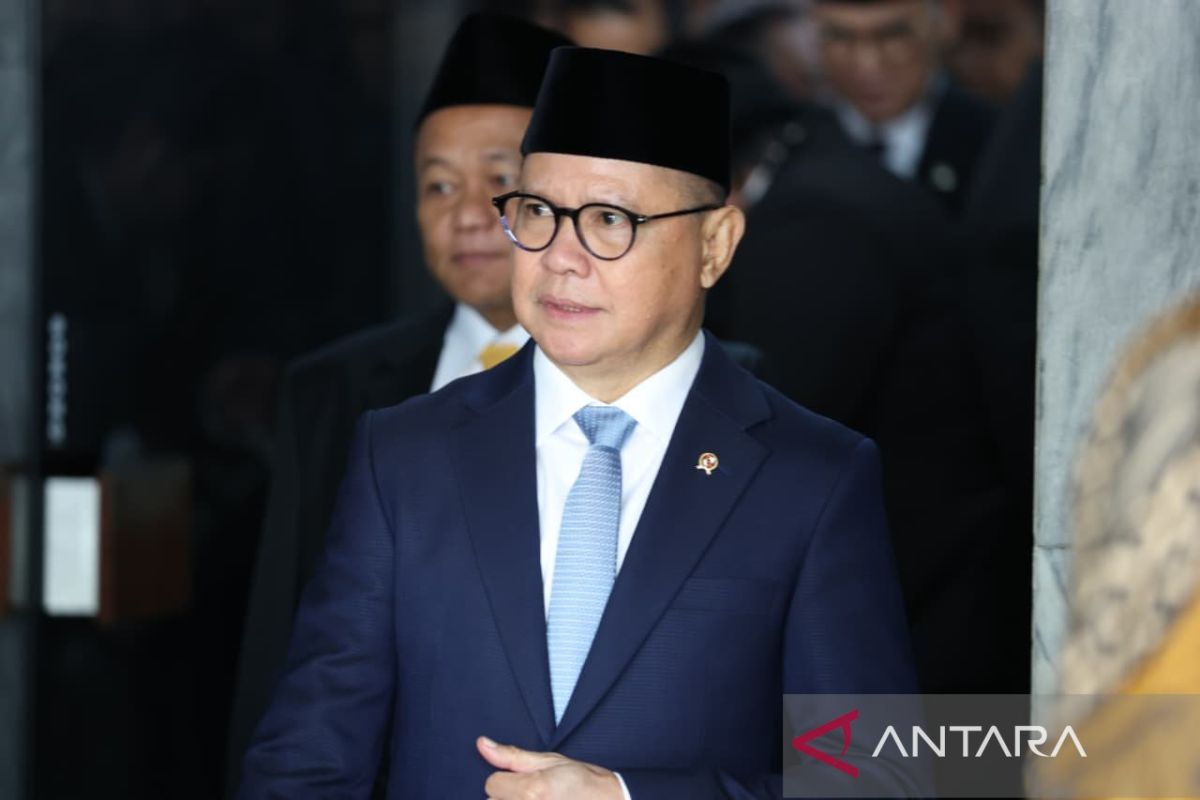
Jakarta (ANTARA) - The Ministry for the Protection of Indonesian Migrant Workers (P2MI) has affirmed that the biggest challenge currently faced is ensuring Indonesian Migrant Workers (PMI) possess competencies that match the needs and standards of destination countries.
“The challenge now is not only opening new job markets, but also ensuring Indonesian workers have competencies that match the needs and standards of destination countries,” said P2MI Minister Mukhtarudin to ANTARA after the 2026 MPR/DPR annual session in Jakarta on Friday.
According to Mukhtarudin, current labour demand is found in manufacturing, construction, agriculture, hospitality and tourism, care and health, transportation, as well as the maritime and shipbuilding sectors.
“Going forward, we will also continue to promote opportunities in professional and skilled jobs that have higher added value,” said Mukhtarudin.
He stated that verified job vacancy data in SISKOP2MI serves as an important basis for preparing Indonesian human resources; vocational education, training, certification, language skills, and non-technical skills must be directed according to the needs of the overseas labour market.
“Our strategy is not just opening as many vacancies abroad as possible, but ensuring those vacancies can be filled by Indonesian workers who are competent, work-ready, and have global competitiveness,” said Mukhtarudin.
Based on job vacancy data in SISKOP2MI that has been verified by KP2MI, there are currently 294,221 overseas job opportunities. Of that number, 76,342 positions already have applicants, or around 25 percent.
In addition, Mukhtarudin mentioned that the Indonesian government continues to expand and develop job market access through cooperation with various countries.
According to him, there are currently 28 cooperation agreements still in force and 19 others under discussion.
He also said that the expansion of access is directed towards Japan, South Korea, Germany, Australia, Malaysia, Singapore, Türkiye, as well as European countries and other regions that have labour needs and placement opportunities matching the competencies of Indonesian Migrant Workers.