
Minister Issues Warning: Toll Road Tariffs Must Not Rise Due to Buton Asphalt
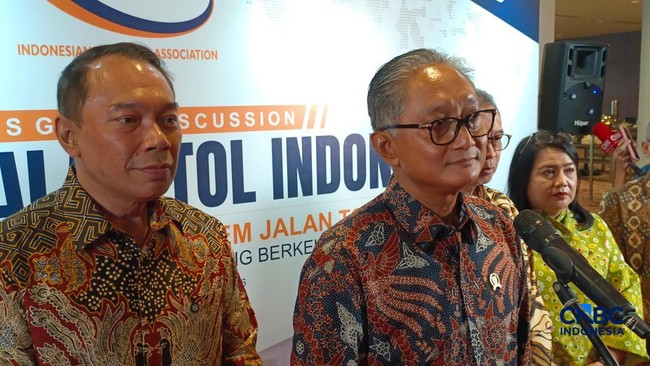
Public Works Minister Dody Hanggodo has reminded that the use of Buton asphalt for toll road construction projects must not become a reason for cost increases that are then transferred to road users through higher toll tariffs. He made the remarks following the government’s move to strengthen self-sufficiency in road construction materials by promoting the use of Buton asphalt (Asbuton) as an import substitute.
This step is expected to strengthen self-sufficiency in road construction materials. The Ministry of Public Works is targeting an increase in Asbuton use in national road projects to at least 30%, up from the current utilisation of around 4% of total national demand.
The policy is expected to reduce dependence on imported asphalt while saving the country around Rp4 trillion in foreign exchange and encouraging the growth of the domestic Asbuton industry.
“We hope that by utilising Buton Asphalt we can reduce asphalt imports, strengthen domestic industry, promote equitable distribution and economic growth, and most importantly save foreign exchange, which is expected to reach approximately Rp4.08 trillion per year,” Dody said during a focus group discussion held by the Indonesian Toll Road Association in Jakarta on Wednesday (12/8/2026).
According to Dody, the government has issued Public Works Ministerial Regulation Number 10 of 2026, reinforced by Public Works Ministerial Decree Number 6950 of 2026 concerning the use of Processed Buton Asphalt. He expressed hope that toll road business entities (BUJT) would support the policy while still paying attention to technical and academic feasibility.
On the other hand, he cautioned that prioritising the use of Buton asphalt should not become a cost burden for companies.
“But I also do not want Buton asphalt to burden the costs of all of you. So the target for Buton asphalt itself is that it should at least be equal to today’s asphalt price, or if possible, lower,” he stressed.
“So if it is higher, I hope that our friends at the toll road business entities and ATI are obliged to reject it. Obliged to reject it! Because it will have an impact on the tariff itself. I do not want to raise toll road tariffs just because your costs have gone up. That cannot happen; it is not in my vocabulary,” Dody said.
The utilisation of Buton asphalt, he added, must still be directed towards providing greater economic benefits. Besides reducing imports, the policy is expected to strengthen domestic industry and lower the Incremental Capital Output Ratio (ICOR).
Meanwhile, Dody reminded that existing toll road investments must be safeguarded. Indonesia currently has around 3,100 kilometres of operating toll roads, comprising around 76 sections managed by 54 toll road business entities, with an investment value of nearly Rp779 trillion.
“Behind that figure there is one asset that must be jointly protected, namely trust. Toll road concessions operate within a very strict and comprehensive regulatory framework and are based on long-term contracts. Toll road concession agreements must serve as the guiding reference for both the government and toll road business entities,” he said.
According to Dody, the government also needs to maintain legal and contractual certainty in toll road concessions. Any new policy relating to toll road business entities is expected to be discussed first so that it can be refined together.
“So I hope that if there are new policies, please invite the toll road business entities to discuss them first, let us talk about them first, then refine them together. I apologise for any mistakes that are difficult for us to correct at this time,” he said.
Dody stressed that the government and toll road business entities must continue to respect contracts that have been made, including contracts originating from previous administrations. If adjustments are needed, the process must be carried out through the applicable legal and contractual mechanisms.
“We in the government must maintain legal and contractual certainty. Toll road business entities are obliged to fulfil their obligations, and contracts that have been made by the government must be equally respected and upheld, including contracts made by previous governments,” he concluded.