
Minister: Introducing Students to the World of Work Is a Key Part of ‘Deep Learning’
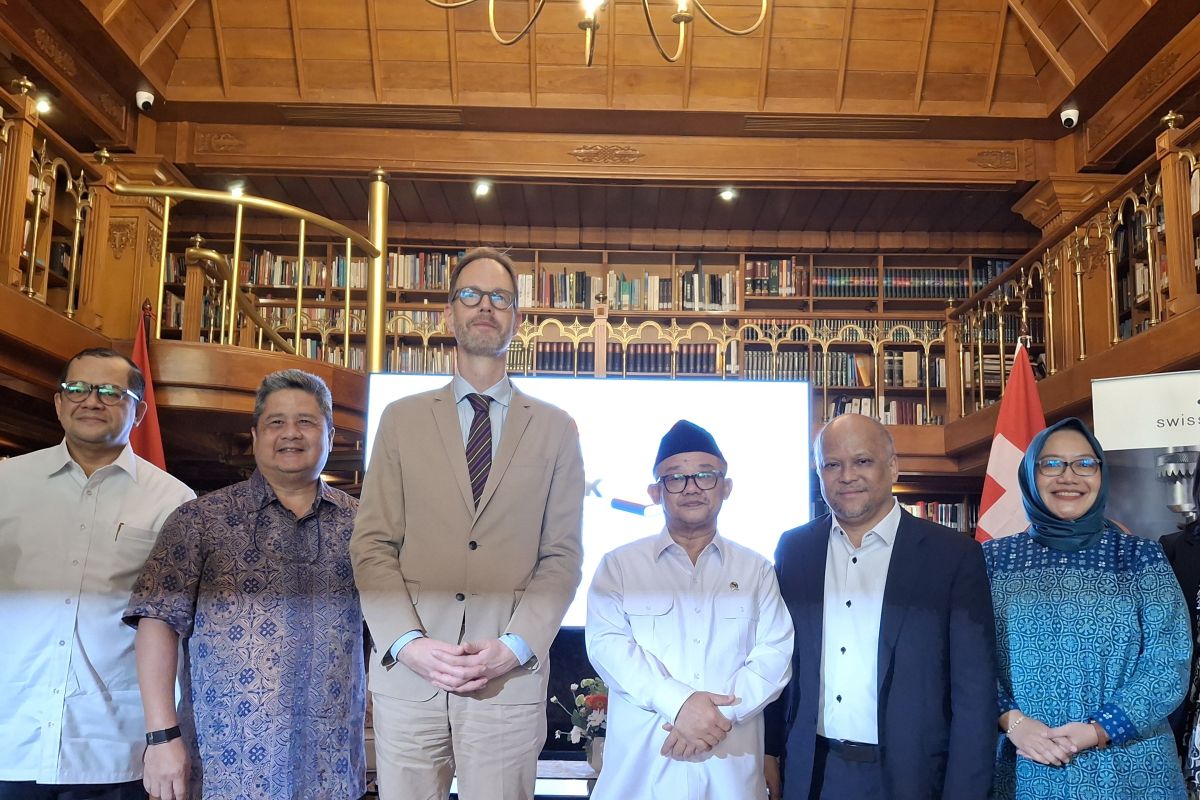
Jakarta (ANTARA) – Indonesia’s Minister of Primary and Secondary Education, Abdul Mu’ti, said introducing pupils to the world of work from an early age is an important part of implementing deep learning.
Direct experience of different professions and workplaces can help pupils discover their interests, understand their potential and see the links between school subjects and real life, he said.
“Swiss Future Week introduces pupils in grades 4 to 9 to the world of work, from health and nutrition to industrial technology, logistics and financial services,” Mu’ti said in remarks at the opening of Swiss Future Week 2026 in Jakarta on Monday.
He said children would find it difficult to imagine a future they had never seen. Visits to laboratories, factories and logistics centres can broaden their horizons and introduce them to a range of careers they might pursue.
At this age, exposure to workplaces is intended to help pupils identify their interests, ask questions and understand the value of what they learn in class.
Through these experiences, pupils can see how science supports healthcare, how mathematics improves production processes and how teamwork helps ensure the smooth distribution of goods.
“This is the spirit of the deep-learning approach: learning that is mindful, meaningful and enjoyable. What children learn in the classroom becomes real through experience,” he said.
Mu’ti said the government was continuing to improve the quality of education, particularly in developing human resources, science, technology and education, in line with President Prabowo Subianto’s priorities.
In vocational education, the Ministry of Primary and Secondary Education is developing several models for vocational secondary schools (SMKs), including four-year programmes, schools based on local potential, schools partnered with industry, and programmes that prepare graduates to enter the workforce.
He stressed the importance of partnerships between schools and industry so that pupils gain learning experiences aligned with workplace needs.
Switzerland’s dual vocational education system, he said, could offer lessons for Indonesia, particularly in linking classroom learning with direct workplace experience.
The government will also reintroduce academic specialisations in senior high schools (SMAs) from the 2027/2028 academic year, covering natural sciences, social sciences and languages.
The policy is intended to strengthen pupils’ foundational knowledge while helping prepare them to choose their future fields of study.
Mu’ti said he hoped introducing pupils in grades 4 to 9 to the world of work would help them identify their interests and find inspiration before choosing their next educational pathway.
He also praised the Swiss Embassy, SwissCham Indonesia, Swisscontact and the companies taking part in Swiss Future Week 2026 for giving pupils and teachers the opportunity to experience workplaces first-hand.
Looking ahead, he hoped the collaboration would continue through programmes placing teachers in industry, regular company visits for pupils, and classroom projects inspired by real workplace challenges.
“Our ministry welcomes further discussions to explore how this collaboration can be sustained and expanded,” he said.
He added that the collaboration reflected a participatory approach, involving a range of stakeholders in the delivery of education.
Mu’ti urged pupils taking part in the programme to observe carefully, be bold in asking questions and aspire to a bright future.
Source: jawawa.id (https://jawawa.id/newsitem/minister-introducing-students-to-the-world-of-work-is-a-key-part-of-deep-learning-1794236016)
Originally published by Antara (Indonesian) (https://www.antaranews.com/berita/5842459/menteri-kenalkan-dunia-kerja-ke-siswa-bagian-penting-deep-learning), translated from Indonesian