
Minister: Interactive Flat Panels Positively Impacting Student Learning Quality
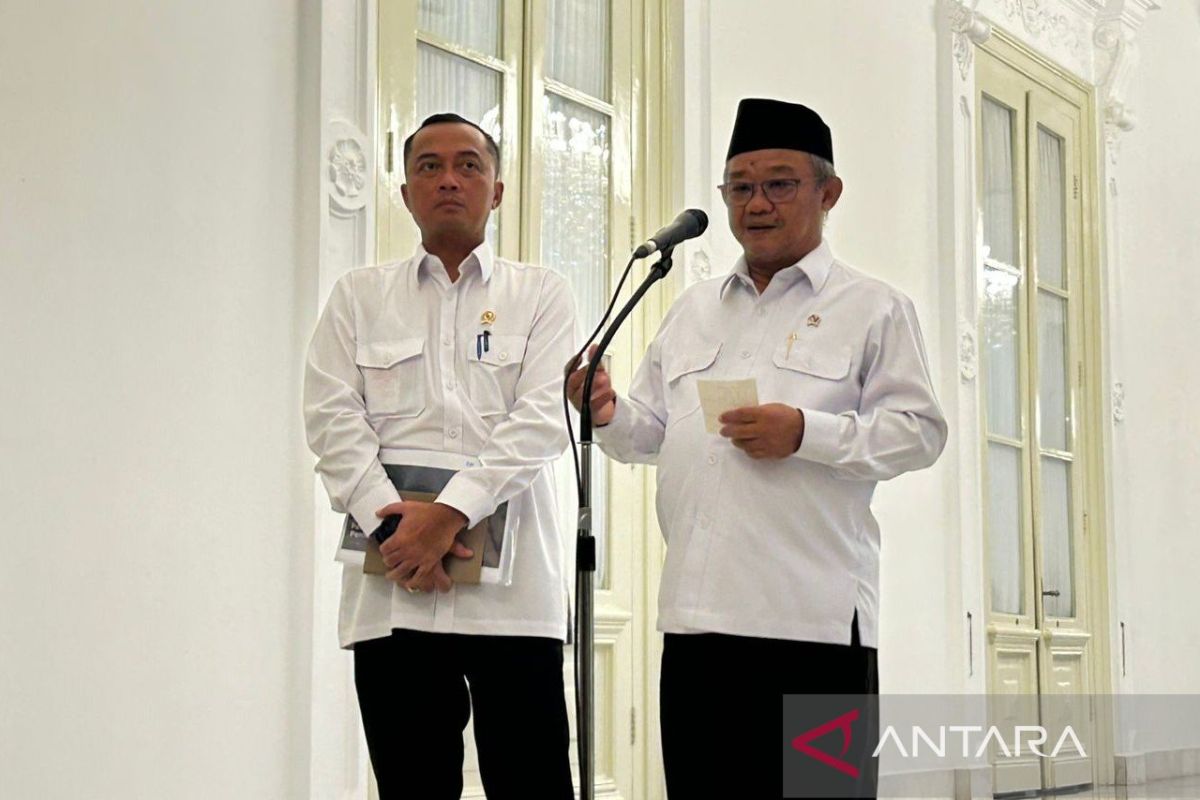
Jakarta (ANTARA) - The Minister of Primary and Secondary Education, Abdul Mu’ti, stated that the use of Interactive Flat Panels (IFP) in educational units has had an impact on the quality of learning and student motivation.
“There is already research showing the impact of IFP on learning quality and also on learning motivation,” said Abdul Mu’ti after meeting President Prabowo Subianto at the Presidential Palace Complex, Jakarta, on Thursday.
He noted that in 202<0xC2>5, the Ministry of Primary and Secondary Education distributed 288,865 IFP units to educational units across Indonesia. He added that the distributed IFP devices are now being utilised by recipient educational institutions in various regions.
“In 2025, we distributed 288,865 IFPs to educational units throughout Indonesia. They are now in use,” he said.
“We hope that within three years, all schools in Indonesia will have at least six classrooms equipped with digital interactive panels,” stated the President during the World Economic Forum (WEF) 2026 in Davos, Switzerland, on Thursday (22/1) local time.
Prabowo stated that the government plans to add approximately one million smart interactive panels in 2026. This addition is intended to ensure that every school has at least three to four classrooms equipped with IFPs, before increasing that number to a minimum of six classrooms within a three-year period.
The President explained that through this programme, the government can directly monitor the quality of teacher instruction and student responses in various regions.
“This means that I, for example, in Jakarta, can enter any school in Indonesia and observe the quality of teaching by the teachers. I can see the children’s reactions, and in the first few weeks, we have seen the enthusiasm of the children, the teachers, and the villagers,” said the President.
According to him, human resource development is a determining factor for long-term growth and returns, including for the confidence of global investors.
The distribution of IFP devices is a follow-up to Presidential Instruction Number 7 of 2025 regarding the Acceleration of the Implementation of Development and Revitalisation Programmes for Early Childhood, Primary, and Secondary Education Units, the Development and Management of Garuda Excellence Senior High Schools, and Learning Digitalisation.
In practice, the presence of IFP devices assists teachers in delivering material more dynamically through multimedia displays, simulations, and the integration of digital teaching materials.