
Minister: Indonesia Shifting from Automotive Market to Production Base
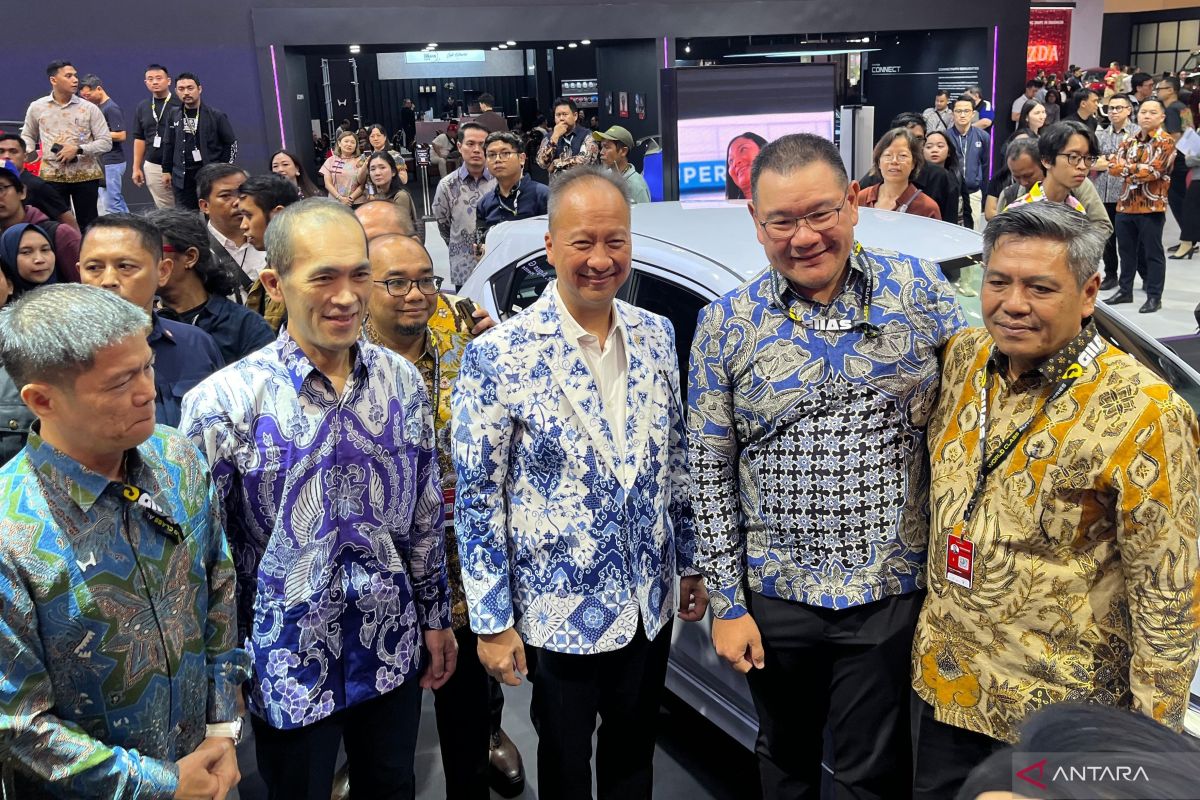
Industry Minister Agus Gumiwang Kartasasmita has stated that Indonesia is in the process of transforming from merely an automotive market into a production base. Speaking at the Gaikindo Indonesia International Auto Show (GIIAS) 2026 in Tangerang, Banten, on Thursday, he delivered this as part of three key messages from the government to the national automotive industry. “Indonesia is in the process of shifting from a market base to a production base,” he said.
In his first message, the Minister stressed that the automotive industry is not just a matter of market, but a component of national economic resilience. He noted that amidst geopolitical uncertainty and a global economic slowdown, Indonesia’s economy grew by 5.6 percent in the first quarter of 2026. The processing industry remains the backbone of the economy, contributing 19.07 percent to the gross domestic product (GDP) and over 82 percent to total national exports. Agus stated that the transportation equipment industry provides added value of more than IDR 285 trillion, but he emphasised that the strength of the automotive industry is not solely reflected in the size of its GDP contribution.
In his second message, Agus stressed that Indonesia is entering a new phase as an automotive production base, reflected in national motor vehicle production figures. During the first half of 2026, motor vehicle production reached 615,000 units, an 11.3 percent increase compared to the same period the previous year. Wholesale sales rose by 15.9 percent to 436,000 units. With this trend, Agus is optimistic that the domestic sales target of 850,000 units for 2026 can be achieved. He noted that the national market potential remains vast, given that Indonesia’s car ownership ratio is only about 99 units per 1,000 people, far below Thailand’s 275 units and Malaysia’s 490 units per 1,000 people. “This means that with a population of around 284 million, an increase of just one unit in that ratio equates to an additional 280,000 vehicles, almost a third of our entire domestic market today. The figure of 850,000 units is not the upper limit. It is just the starting point. Our automotive market is far from saturated; it is just beginning,” he said. Agus asserted that this market growth opportunity must be seized by the national industry and not filled by imported products. “And that is precisely why the government’s message is becoming firmer: that growth space must not be filled by imported products. That space must be filled by domestically produced goods,” he stated.
Furthermore, he explained that exports of completely built-up (CBU) vehicles grew by 7.7 percent, completely knocked down (CKD) exports increased by 38 percent, and component exports surged by 46 percent. In contrast, imports of CBU vehicles fell by 49 percent. “These four variables form a single pattern, and that pattern is the real message: the deeper our position in the value chain, the faster our growth. Indonesia is no longer just exporting vehicles. We have begun to export the capability to make vehicles. The supply chain architecture we agreed upon is on the right track, and this is the direction we must seriously maintain,” he said. In his third message, the Minister affirmed that the energy transition in the automotive sector is being pursued through a multi-pathway approach that prioritises national sovereignty. He noted that sales of electrified vehicles in the first half of 2026 increased by 69.4 percent to 117,000 units, representing 26.8 percent of total national passenger vehicle sales. Of that number, 69,000 units were battery electric vehicles (BEV).
Source: jawawa.id (https://jawawa.id/newsitem/minister-indonesia-shifting-from-automotive-market-to-production-base-1785416166)
Originally published by Antara (Indonesian) (https://www.antaranews.com/berita/5672988/menperin-sebut-ri-berpindah-dari-pasar-ke-basis-produksi-otomotif), translated from Indonesian