
Minister Highlights Mochtar Kusumaatmadja’s Intellectual Legacy for Indonesian Diplomacy
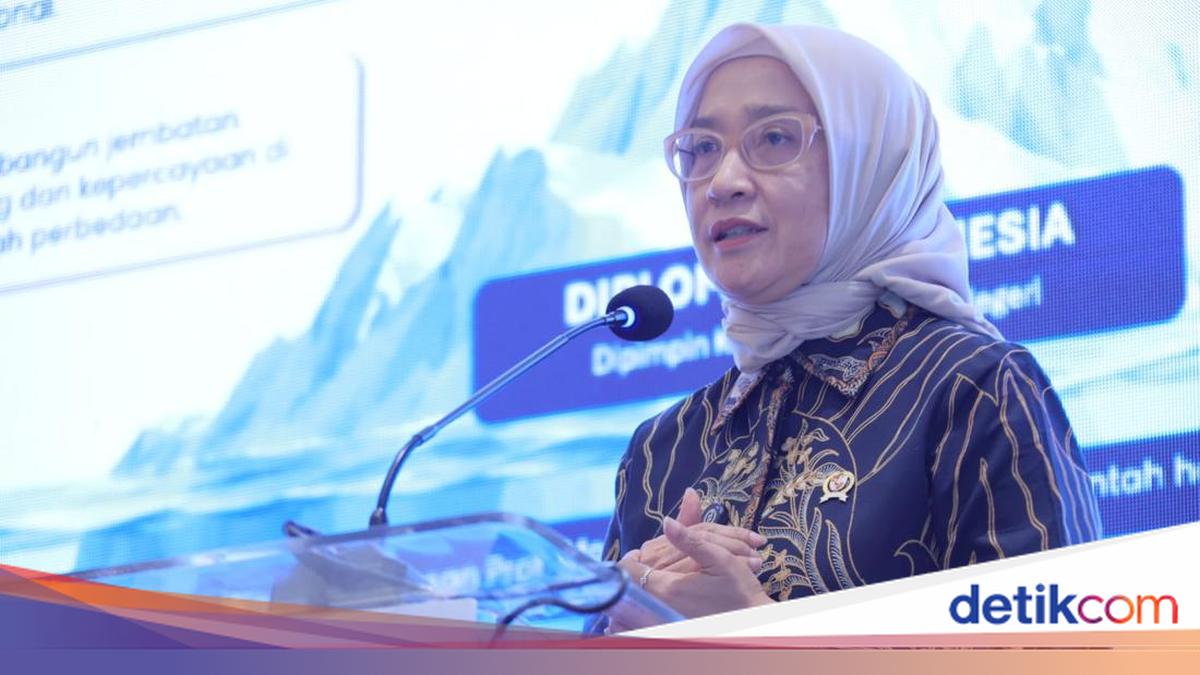
Administrative and Bureaucratic Reform Minister Rini Widyantini said successful diplomacy cannot rely solely on good ideas; it must also be supported by institutions and processes capable of sustaining them consistently.
She made the remarks while speaking at The Mochtar Kusumaatmadja Forum 2026 in Jakarta on Thursday (22 October).
Rini said Mochtar Kusumaatmadja’s thinking offered an important lesson: behind major ideas, there must be systems capable of putting them into practice.
“Indonesia’s diplomacy is formally led by the Ministry of Foreign Affairs. But behind the diplomacy on display are ideas and domestic state capacity that support it. This is where Professor Mochtar’s intellectual legacy remains relevant,” she said in a written statement on Friday (23 October 2026).
Rini identified three aspects of Mochtar Kusumaatmadja’s thinking that remain relevant as Indonesia pursues its Golden Indonesia 2045 vision. First, evidence-based policymaking enables the government to make sound decisions using data and analytical capabilities.
Second, collaborative governance strengthens coordination across government agencies and supports talent development. Third, knowledge management preserves institutional memory and policy continuity despite changes in leadership.
“These three things are part of the state capacity needed to support Indonesian diplomacy. Ultimately, diplomacy aims to fulfil national interests and improve public welfare,” Rini said.
She said the state capacity underpinning Indonesian diplomacy is also attracting international attention, including through Indonesia’s process of acceding to membership of the Organisation for Economic Co-operation and Development (OECD). OECD accession, she said, is not merely an effort to meet international standards but also provides Indonesia with a forum for policy diplomacy.
Rini acknowledged that the global landscape continues to change. Challenges such as geoeconomic confrontation, information disruption, great-power rivalry and mounting pressure on the international order lie ahead.
She said three mutually reinforcing bureaucratic reform agendas would build state capacity to meet those challenges. The first is governance with integrity, supported by stronger institutions, accountability and consistent government processes.
The second is a connected government, using data and technology and improving policy coordination across agencies. The third is an adaptable civil service, supported by a merit system and future-ready capabilities, including analytical skills, data literacy and artificial intelligence, as well as talent mobility, succession planning and continuity of institutional knowledge.
Rini said these three agendas are aligned with the National Grand Design for Bureaucratic Reform towards a World-Class Bureaucracy 2045, which aims to create a collaborative, capable and integrity-driven bureaucracy that serves the public.
She said Mochtar Kusumaatmadja’s legacy teaches that strong diplomacy requires not only big ideas but also knowledge, patience and consistency in pursuing national interests.
Behind major ideas, she added, lie collective effort, institutional support and a sustained commitment maintained across changes in leadership.
“Strong diplomacy rests on strong institutions. May Professor Mochtar’s spirit and legacy continue to inspire us to build an Indonesia that is increasingly sovereign, advanced and dignified,” she concluded.