
Minister: Gen Z Needs Life Readiness, Not Just Job Readiness
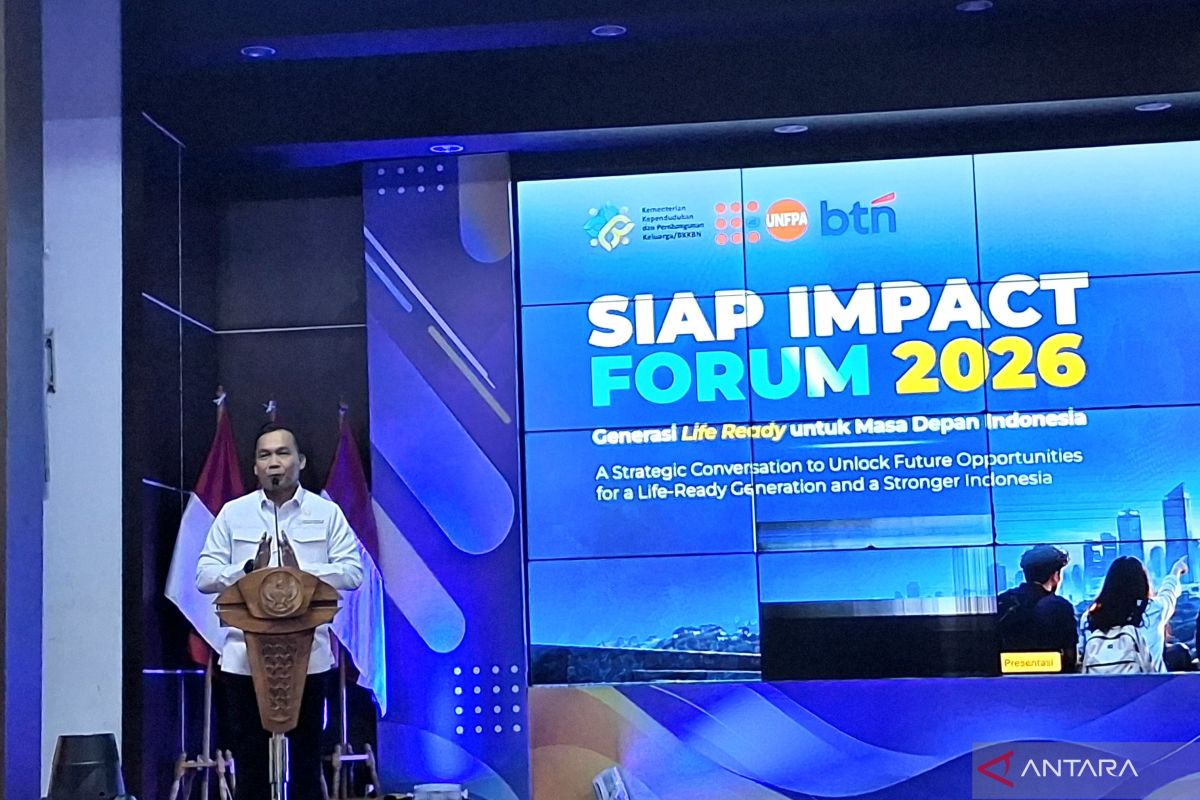
The Minister of Population and Family Development (Mendukbangga) and Head of BKKBN, Wihaji, believes that Generation Z requires life readiness for a higher quality future, rather than just being prepared for work.
Consequently, the Ministry of Population and Family Development/BKKBN is organising the ‘Siap Impact’ Programme to prepare adolescents, particularly university graduates, to be more optimal in facing the professional world and post-university life.
“Final-year students need to be prepared so they possess the ability to face various stages of life, ranging from education, employment, and family to community life,” Wihaji stated in Jakarta on Monday.
Based on the results of the 2025 Intercensal Population Survey (SUPAS) released by Statistics Indonesia (BPS), the population aged 15-64 reaches approximately 196 million people, or about 68 per cent of Indonesia’s total population of 284 million.
“If we think about the future of the nation, then being life-ready becomes a primary necessity,” he said.
Wihaji explained that there are five stages that need preparation: ensuring health, continuing education, securing employment, building a family, and being able to lead a social life within society.
On the other hand, Wihaji highlighted the character of Generation Z, which possesses a different perspective due to rapid technological developments and access to information.
“Technology has no heart; technological transformation does not eliminate human values, integrity, and social functions. Industry players require human resources with integrity, honesty, and a high work ethic,” he noted.
Therefore, according to him, the expectations of the younger generation must also be considered to ensure that professional relationships can be sustained.
Through the Siap Impact Programme, the Ministry of Population and Family Development/BKKBN brings together final-year students, universities, the government, and industry players as part of an effort to build human resources capable of facing life.
Wihaji stated that the activity was previously attended by 893 final-semester students.
“This activity must not stop at a forum; it needs to provide follow-up and certainty for participants, including through industry involvement,” said Wihaji.
He hopes that cross-sector collaboration can help students acquire relevant skills while providing industries with access to human resources that meet their specific needs.