
Minister: 'GAMAS' Programme Builds Strong Emotional Bonds Between Fathers and Children
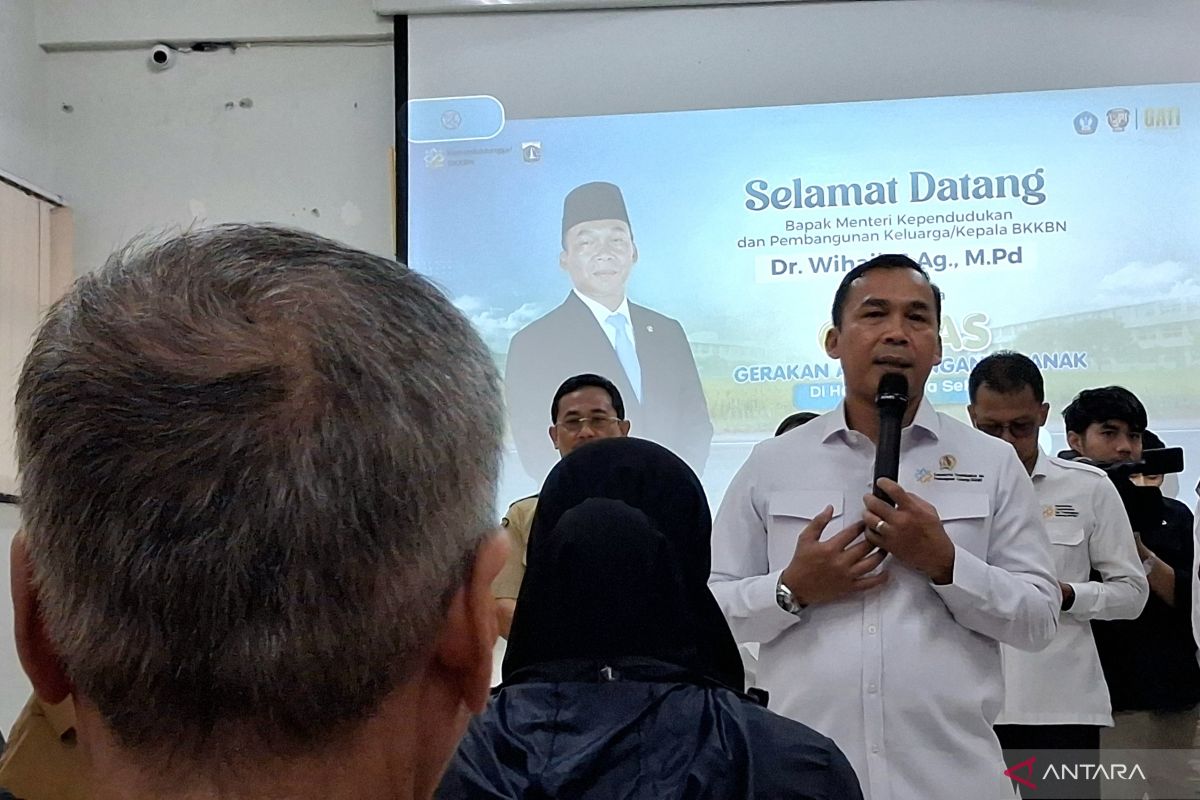
Minister of Population and Family Development Wihaji has stressed the importance of the Father Takes Child to School on the First Day Movement (GAMAS) in building stronger emotional and psychological bonds. “The journey to school is an opportunity for fathers to build communication with their children, because if a father does not invite his child to talk, the child will spend more time ‘talking’ with their mobile phone,” he said while reviewing the GAMAS programme at SLB Negeri 2 Jakarta on Monday. Circular Letter Number 17 of 2026 concerning the Father Takes Child’s Report Card Movement (GEMAR) and GAMAS is being implemented sustainably, including on today’s first day of school. This step was taken by the government to address the challenge of the lack of paternal involvement in parenting, or ‘fatherless’ phenomenon, in Indonesia. Based on 2025 Family Data Collection, the rate of limited paternal roles has now reached 25 per cent. Wihaji reminded that when parents are difficult to talk to, children will seek answers through social media or artificial intelligence (AI). Therefore, parents need to take the time to put down their mobile phones and talk directly with their children. “A father’s presence has a major influence on a child’s psychological condition. The phenomenon of mobile phone dependency is not only happening in Indonesia, but is a global challenge and part of a ‘new civilisation’. Developed countries also face similar challenges regarding children’s use of devices,” he said. Consequently, the Minister reaffirmed that the main objective of the GEMAR and GAMAS programmes is to encourage parents, especially fathers, to talk more and be emotionally present for their children. The programme is part of the government’s efforts to build quality families through strengthening communication and parenting within the family. Wihaji also stressed that the GAMAS programme is not merely ceremonial, but will be followed up through various family development programmes, including the Youth Family Development programme (BKR), Joint Parenting Schools, Father’s Schools, Family Academies, and other programmes aimed at strengthening parenting within the family.