
Minister for Migrant Worker Protection Encourages Poltekkes Students to Enhance Global Competence
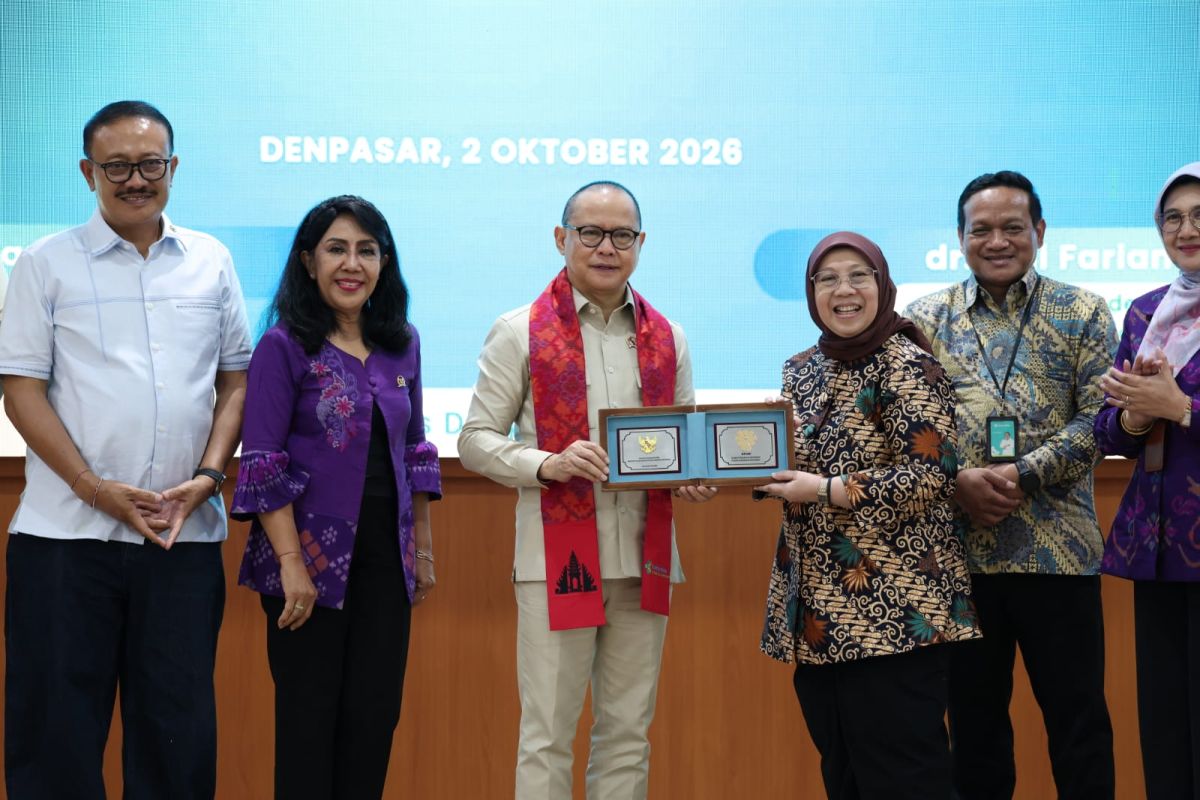
Jakarta (ANTARA) - The Minister for the Protection of Indonesian Migrant Workers (P2MI), Mukhtarudin, has encouraged students and alumni of the Ministry of Health’s Health Polytechnics (Poltekkes) who wish to work abroad to continuously develop their competencies to meet international standards through the Migrant Centre.
In a statement received in Jakarta on Saturday, Mukhtarudin stated that the presence of the Migrant Centre within Poltekkes is of great importance.
“This facility can serve as a space for students and alumni to obtain accurate information regarding overseas job opportunities, understand placement requirements and procedures, and prepare themselves before making decisions,” said Mukhtarudin while inspecting the Ministry of Health’s Poltekkes Migrant Centre facilities in Denpasar, Bali, on Friday (2/10).
He also expressed hope that graduates of Indonesia’s vocational health education would not only be able to meet overseas labour needs but also uphold the reputation of Indonesian education and healthcare professionals on a global level.
“The Ministry of Health already has G-to-G (Government-to-Government) MoUs with several countries, namely Germany, Japan, Saudi Arabia, Singapore, Qatar, Australia, and the United Kingdom,” said Yuli.
According to Yuli, Japan is one of the countries with a significant absorption of Poltekkes graduates, particularly for caregiving or ‘kaigo’ roles.
However, she expressed hope that Diploma 3 (D3) and Diploma 4 (D4) health graduates could be directed towards nursing positions that align with their educational qualifications.
“We hope that not too many of our students go into kaigo. For kaigo, high school or vocational school graduates are actually sufficient; but for D3 or D4 graduates, we hope they enter as registered nurses,” said Yuli.
She assessed that this pathway could provide career development opportunities more appropriate to the educational level and competence of Poltekkes graduates.
The Ministry of Health also plans to develop a more integrated and centralised Migrant Centre system, so that graduate data and the demand for healthcare workers abroad can be managed more effectively.
“We will eventually have only one Migrant Centre, which will be based in Jakarta. Not all Poltekkes will have their own individual centres; this is so we can centralise it and maintain a database,” said Yuli.
According to her, this system will eventually be connected with the Ministry of P2MI’s data, allowing the Government to identify the demand for healthcare workers in each country while simultaneously aligning healthcare workforce preparation targets.